


| CARVIEW |
 In a Lonely Place (Criterion Collection)
Humphrey Bogart began his career playing B-movie heavies, and later built his movie star career upon an obvious dark side that brought even to his most romantic roles. But no director made better use of his scariness than Nicolas Ray did in this masterful dissection of toxic masculinity. (Please see Walter Chaw’s peerless analysis over at Film Freak Central for a more in-depth discussion of the film.) The stark cinematography is perfectly caught in a superb restoration, the plentiful extras add insight and commentary, and it’s even one of those recent Criterion Collection blu-rays that’s available on both sides of the Atlantic.
 Man With A Movie Camera and Other Works by Dziga Vertov (Eureka!)
This week, Martin Scorsese found occasion to criticize the current state of cinema, lambasting the industrial production of Hollywood franchises for their homogenizing effects on film aesthetics. And looking at the tedious and unimaginative pre-viz register that so many mainstream films have now embraced, you can sort of see his point. But wherever you stand on this most recent declaration of the “Death of Cinema,” even a quick look at something as radical as Vertov’s experimental masterpieces will make you gaze upon any given Marvel movie with fresh disdain. Any given sequence in Man with a Movie Camera contains more energy, more creativity, and more visual ideas than the entire MCU combined. UK label Eureka! offers a new restoration that is simply staggering to behold, packaging this best-known work alongside multiple shorter works by Vertov, an elaborate book, and generous supplements.
 Freaks and Geeks: The Complete Series (Shout Factory)
At least a decade before sophisticated, self-reflexive, and ironically nostalgic “Quality TV” became prestige television’s dominant register, Paul Feig and Judd Apatow pioneered the genre on network TV for a single season. With its cast and crew having moved on to dominate an entire generation of comedy in film and TV, the show has developed a strong cult following that hovers perpetually on the edge of mainstream awareness without quite breaking through. A terrific DVD box set full of high-end supplements has been around for years, but this year’s HD effort adds to the fun not only with a superlative HD restoration (and even more extras), but also with an additional widescreen option that opens up the 35mm frame horizontally without having to delete information (as with the widescreen reframing of The Wire).
 Blood Rage / Slasher / Nightmare at Shadow Woods (Arrow)
Where the Criterion Collection has long since established itself as the premium boutique home video label for classic cinema and contemporary arthouse, the UK-based Arrow has applied that cinephile’s devotion to collector’s editions of less reputable fare. Their growing range of exploitation cinema is truly impressive, and the loving care they devote to often-obscure genre films has provoked many a blind purchase. The limited edition two-disc release of 1980s slasher pic Blood Rage is one of the finest examples of their thrilling devotion to the grindhouse ethic: treating this endearingly silly “video nasty” with the kind of care usually reserved for a Terrence Malick masterpiece, we get three different versions of the film, a long list of newly produced interviews and documentaries, new and original cover art, a comprehensive booklet, outtakes, and more. The package as a whole thus functions as a veritable crash course in 1980s genre cinema.
 The Iron Giant – Signature Edition (Warner Home Video)
Writer/director Brad Bird’s first feature film is still his best: a perfectly-paced and deeply moving adventure story that mixes Cold War sci-fi with a coming-of-age tale set in small-town America. Bird strikes a perfect balance between cultural nostalgia, lovingly rendered in beautifully toned cell animation, and a critical perspective on the rampant paranoia and militarism of capitalism’s Golden Age. The film’s focus on the dangers of ignorance and prejudice in a toxic political environment of hyper-conservative propaganda now seems eerily prescient as we enter the Age of Trump – and while the brief scenes added into the new “Signature Edition” cut hardly seem worth the effort, the film’s original cut is thankfully also included.
 Dekalog and Other Television Works (Arrow)
It’s difficult to find the right words to articulate Polish grandmaster Krzysztof Kieslowski’s ten-hour meditation on the Old Testament’s ten commandments. The Dekalog itself consists of ten hour-long dramas, each of which provides a thoroughly ambiguous reflection of those famously ambiguous instructions from on high. With or without biblical context, this series of miniatures packs an incredible emotional punch with its instantly-immersive portraits of small-scale human hope and despair. Viewing these TV productions in glorious HD projection, their truly cinematic gifts are made much more apparent, while the wide-ranging supplemental material (especially with the beautifully packaged Arrow edition) provides abundant context and reflection.
 It’s Such a Beautiful Day (Bitter Films)
Genius animator Don Hertzfeldt’s self-produced Blu-ray came about as the result of a successful Kickstarter campaign to make a collection of his major works available in HD. The feature-length It’s Such a Beautiful Day would have made this worth the investment on its own, as it’s one of the most astoundingly original, truly heart-breaking works in the medium’s long and rich history. But the disc also gives the proud owner/investor easy access to his stunning recent sci-fi short World of Tomorrow, plus a generous helping of other originals. It’s truly the kind of art one is tempted to buy five copies of just to express your support – especially since you’re buying it directly from the artist.
 McCabe & Mrs. Miller (Criterion Collection)
A film of profound beauty and sadness was made even more sad and beautiful this year by Leonard Cohen’s passing. I’d seen the film many times over the years, but only ever on inferior video formats. Until this restored HD release, I therefore had to take it more or less on faith that Vilmos Zsigmond’s semi-experimental cinematography was indeed as extraordinary as critics, historians, and biographers always said it was, never having access to a version that could adequately represent the fine-grain flashed film stock. This new Blu-ray of course still isn’t the same thing as seeing a well-preserved 35mm projection, but for the first time, it feels like a close approximation rather than a very distant shadow.
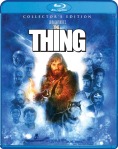 The Thing: Collector’s Edition (Shout Factory)
John Carpenter’s masterpiece of fear and paranoia has always played well, but it resonates especially powerfully in this increasingly terrifying age of societal despair and across-the-board institutional failures. The restored video transfer is a step up from previous HD master – though it still has a rather digital-looking sheen to my eyes. The key extras from the now-ancient DVD (the superb 90-minute documentary and deliriously entertaining Carpenter/Russell audio commentary) remain hard to beat in terms of supplemental material, but Shout’s impressively comprehensive new two-disc extravaganza goes for broke and throws in everything but the kitchen sink – including the infamous network broadcast edition of the film, and new interviews with most surviving principle figures.
 A Touch of Zen (Eureka!)
The kung fu epic to beat all others, A Touch of Zen is a stunningly crafted adventure movie that mixes up genre archetypes with uncanny ability. The action sequences have been justly celebrated for decades, but it’s above all a work of great visual richness and imagination, painting a luscious environment of bamboo forests, mountain springs, oases, and spectacular ravines that is a constant thrill to behold. I always felt bad for having missed this genre masterpiece for so many years, but in a way I was also happy to experience it for the first time in so perfect a form as the newly restored HD transfer (also available with identical video from the Criterion Collection) as this year’s re-release has to offer.
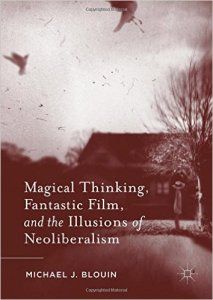 It’s a little unsettling for me to come across other books that are eerily close to my own work. Having written a PhD dissertation and subsequent monograph on superhero movies and neoliberalism, and more recently completed a book on fantastic fiction and global capitalism, I felt both excited and a little freaked out when I first heard about Michael Blouin’s new book-length publication, titled Magical Thinking, Fantastic Film, and the Illusions of Neoliberalism. According to the back cover blurb, this book “analyzes how contemporary popular films with fantastic themes, including Candyman, Frozen, The Cabin in the Woods, and The Incredible Burt Wonderstone, cultivate neoliberal subjectivities” – which not only sounds very similar to some of the things I’ve written myself, but which also uses case studies I’m very invested in. Therefore, while I do feel compelled to reflect on it a bit via this recently-revived blog of mine, I should also point out that the following response will mostly be a list of fairly minor quibbles about a truly terrific book that deals with subject matter (and theoretical frameworks) that I simply feel too close to in too many ways.
Blouin’s argument throughout the book is straightforward, and overall difficult to disagree with: his examples all illustrate the central point that mainstream Hollywood films offer powerful and attractive illusions of empowerment that simultaneously carry an ugly payload made up of neoliberalism’s basic cultural logic. Thus, even though these films appear to engage progressively and/or critically with topics like gender, climate change, and racism, they tend to do so in ways that systematically privilege subjectivities and social relations that are thoroughly immersed in neoliberalism’s core values.
The book’s own definition of neoliberalism is grounded in the familiar array of radical theorists in the field (Deleuze and Guattari, Slavoj Žižek, Dardot and Laval, Hardt and Negri, Maurizio Lazzarato), and the thematic approach to Blouin’s playful and eclectic selection of case studies works well – especially the less obvious ones, like Frozen as a reflection of neoliberal discourses about climate change. But there’s also something arbitrary about the book’s selection of movies, especially in relation to the title’s emphasis on fantastic film.
Perhaps it’s mostly a matter of a misleading title. But the first chapter makes for a somewhat shaky start, as it not only deals primarily with two novels (Shelley’s The Last Man and McCarthy’s The Road), but it also confusingly collapses the difference between liberalism and neoliberalism by constantly falling back on the term “(neo)liberalism” in order to talk about these two texts that are separated by over a century of history. Since both texts are (sort of) science-fictional, I suppose one might also describe them as being “fantastic” – though it doesn’t seem to me the most obvious moniker for either of them. But more importantly, both are discussed primarily as literary texts, which makes for a slightly awkward beginning for a book that’s otherwise wholly dedicated to film.
My other main quibble emerged while reading the chapter on Candyman and neoliberal racism. At first I thought I was being triggered by the author’s highly critical in-depth analysis of a horror film I’ve always admired for a variety of reasons. But at a certain point I realized that it wasn’t so much the book’s critique, as it was what felt like the chapter’s attempt to make everything in the film fit a particular definition of neoliberal thinking. It’s the kind of ideology critique that constantly promises to reveal the “real” meaning below the surface of the text – a familiar and well-established Marxist tradition that has long been my own bread and butter, and that certainly defined my own book on neoliberal superhero movies.
But in the case of a remarkably slippery film like Candyman, I had some difficulty going along with this kind of analysis – mostly because this argument seemed to be forcing a straightforward and ultimately reductive meaning on a film that seems to me to be so full of productive and uncanny contradictions. Therefore, even though I certainly enjoyed Blouin’s articulate, carefully structured, and thoroughly researched dissection of this fascinating film, I was also left feeling like he ended up pushing too hard in one particular interpretive direction.
In this sense at least, Blouin’s book sometimes feels a little too gung-ho in its determination to reveal neoliberal ghouls lurking beneath the surface of any given mainstream fantasy. So although I certainly don’t want to fault the book for being “too critical,” the ardent Raymond Williams fan in me kept insisting that surely there must be more complexity, more contradictions, and a more thoroughly felt tension between residual elements and the emergent culture of neoliberalism (and its under-theorized relationship to the longer history of capitalism). For my taste at least, Magical Thinking sometimes even veered dangerously close to Jonathan Beller’s rather bonkers (and frankly unreadable) The Cinematic Mode of Production, a book that blithely tosses out the baby with the bathwater by seeing commercial cinema as nothing but an extension of capitalist subjectivity.
But again: these are quibbles from someone who’s clearly unable to read a book like this without constantly obsessing over everything I would have done differently. Magical Thinking, Fantastic Film and the Illusions of Neoliberalism is an elegantly structured, compulsively readable, and impeccably researched work of film scholarship and critical theory, and it contributes substantially to current debates about popular culture and ideology in the age of global capitalism. It’s a real shame that publisher Palgrave Macmillan has only made it available for now in an expensive library edition, as it deserves a much wider readership – so I truly hope that they will follow up this first hardcover edition with a more reader-friendly paperback version. So for now, please make sure in any case that your library gets ahold of it.
]]> Last year, shortly after the first full trailer for The Force Awakens was released, news started circulating that a bunch of crazy white people had somehow taken offense about the decade’s most anticipated blockbuster. The trailer’s revelation that the two new Star Wars heroes were a black man and a young woman caused a bunch of MRA nuts and white supremacists to describe TFA as a form of “white genocide,” quickly thereafter launching a #boycottstarwarsVII hashtag campaign on Twitter. While they later bragged about having cost the movie over $4 million in ticket sales, the whole thing seemed quite obviously pathetic and even patently ridiculous to me at the time: from the comfort of my own filter bubble, these white supremacists were little more than a laughable and ultimately harmless fringe group, railing pointlessly against a popular culture that was slowly but surely becoming more diverse, more inclusive, and more progressive.
Writing an article for online sf journal Deletion in the month before the election, I was still roundly dismissive of these angry white men within fan culture, confidently stating that racism, misogyny, and other forms of toxic masculinity only really exist in the margins of a lively and dynamic global fan culture. Guided in part by a social media algorithm designed to give me a daily worldview that was inherently familiar and reassuring, I basked in the comfortable illusion that in this war at least, our side was all too obviously winning – and I didn’t mind gloating a bit about the enemy’s well-deserved and long-overdue comeuppance.
But when re-reading my words less than a month after I’d written them, a few weeks after the US election, they suddenly seemed profoundly naïve. My own circle of personal and professional peers, whom I interact with mostly via Facebook and Twitter, generally approach fandom as a transformative and progressive subculture, now finally liberated (more or less) from the many negative assumptions and stereotypes that used to bother us nerds. It seemed clear to us all that “geek culture” had finally triumphed, and bullies of all sorts were in the process of being relegated to the sidelines. Deplorable movements like GamerGate, the Sad Puppies, and Star Wars nazis were the pathetic final hold-outs of an all but defunct culture under white patriarchal hegemony.
 Of course we can now see more clearly that the democratizing impact of digital culture and media convergence cuts both ways: for every clever geek who can make (ambiguous) fun of Donald Trump by inserting him into Game of Thrones, there’s also a neo-nazi who produces a pro-Trump Terminator mashup called The Trumpinator. And while online culture surely fosters communities of transformative, subversive, and progressive fans, platforms like 4chan are at the same tie radicalizing and mobilizing men of all ages who use the same digital platforms to harass and humiliate anyone they see as a threat to white patriarchal supremacy.
So now that these radical “alt-right” fascist fans clearly feel legitimized and emboldened by Trump’s persona, by his tone, and by his election, it seems more dangerous than ever to continue to “misunderestimate” this dangerous strain of ideologically driven far-right fan culture. I was glad therefore that I had a chance to revise the wording of my original essay, changing it from a celebratory pat on the back of an implicitly progressive Star Wars fandom to a word of warning about a culture war that is clearly nowhere near over:
]]>Today, we need to learn to recognize and understand these new forms of online fan culture that are mobilizing under the neo-fascist “alt-right” banner in the Trump era.
America 2.0: The Uncivil Society
Night of the Living Dead (George A. Romero, 1968)
The first modern zombie movie isn’t about zombies. It’s about a society that has lost its ability to engage in productive dialogue in order to resolve its own internal tensions. The real tragedy of the zombie apocalypse is therefore not the appearance of flesh-eating ghouls. The survivors’ fundamental inability to function as a collective and maintain (in microcosm) the traditions of civil society is the real focus of this film’s political critique. This type of zombie movie thus articulates our worst fears about the fragility of our public sphere, and the seething antagonisms that lurk underneath it.
Children of Men (Alfonso Cuarón, 2006)
Better by a country mile than the rather tedious P.D. James novel, Cuarón’s film abandons the book’s Catholic allegory, using the basic conceit of an unexplained “infertility epidemic” as a potent symbol for the despairing mindset of post-industrial capitalism. As Slavoj Žižek has pointed out, the film continues to resonate so strongly because it offers a reflection of a Western culture that has become unproductive in the most literal sense of the word. The dramatic gap between rich and poor, the loss of civil liberties, and the growing pandemonium that has infected all of public space all overdetermine the film’s breathtakingly realized background. And while the uncomfortably phallocentric Hero’s Journey seems to offer some superficial shred of hope for the narrative’s future, it is the total breakdown of society that lingers in our memory after the film has ended.
Easy Rider (Dennis Hopper, 1969)
Long before filter bubbles, platform capitalism, and red and blue Facebook feeds, Dennis Hopper’s countercultural road movie mapped out the boundaries that separate two different Americas in very clear terms. Reflecting on the deteriorating civic environment, ACLU lawyer George Hanson (played by Jack Nicholson) reflects on the transition they’re witnessing: “You know, this used to be a helluva good country. I can’t understand what’s gone wrong with it.” The dialogue about freedom that follows this remark at first sounds like the usual self-aggrandizing rhetoric from white middle-class dropouts in the 1960s. But the resentment Nicholson’s character describes here is –of course– ultimately about labor: “It’s real hard to be free when you’re bought and sold in a marketplace.”
Fear and Loathing in Las Vegas (Terry Gilliam, 1998)
While Easy Rider attempted to document the culture war between 1960s alternative youth culture and the “square” status quo’s hostile response to their rebellion, Gilliam’s gloriously excessive Hunter S. Thompson adaptation shows a nation fully adrift in its own violence and hypocrisy. It’s a world where the drug-addled Thompson paradoxically functions as a lone voice of reason, constantly expressing the paralyzing sense of defeat that remains after a stubborn utopian dream has been definitively crushed: “We were riding the crest of a high and beautiful wave. So now, less than five years later, you can go up on a steep hill in Las Vegas and look West. And with the right kind of eyes, you can almost see the high-water mark: that place where the wave finally broke and rolled back.”
The Mist (Frank Darabont, 2007)
After The Shawshank Redemption and The Green Mile, Frank Darabont’s third Stephen King adaptation is by far the best of the bunch, and ultimately really the only one worth caring about. A dark and twisted Twilight Zone episode blown up to epic proportions, The Mist operates in the same register as Romero’s “living dead” cycle, mercilessly showing how seemingly strong civil and social bonds between neighbors are broken, and how long-standing resentments, frustrations, and suspicions grounded in race, class, and religion can rise to the surface at the drop of a hat. The film’s social critique is further strengthened by its use of grotesque Lovecraftian monsters as uncanny reflections of the barbarous histories of exploitation underlying America’s melting pot.
Gimme Shelter (Maysles Brothers, 1970)
A film that could easily top my lists of best documentaries, best concert films, and best horror movies, the Maysles’ filmic record of the Rolling Stones’ disastrous attempt to organize their own West-coast free music festival is also one of the most astonishing statements about violence in America. Where Michael Wadleigh’s utopian Woodstock film expressed an unshakable optimism about American youth culture, Gimme Shelter documents how quickly that dream evaporated in the face of commercial concerns, egomaniacal celebrities and entrepreneurs, and a deeply irresponsible and hedonistic drug culture.
South Park: Bigger, Longer & Uncut (Trey Parker, 1999)
My favorite-ever movie musical is still among the best things to come out of two decades of South Park. Without the self-imposed one-week production schedule of the TV show, Parker and Stone put together an acidic satire of American civil life that is taut as a drum and sharp as a razor blade. The fictional town of South Park may be a small community in rural America, but it is neither homogeneous, backwards, or “out of touch.” Instead, the town’s inhabitants are ruled by the many petty and selfish conflicts that underlie American civil life – with the deeply sociopathic Eric Cartman an uncanny embodiment of a truly Trumpian spirit. The film depicts its microcosmic examination of American political and civil life not as a melting pot, but as a seething cauldron of tensions informed by categories like race, gender, religion, sexuality, class, and age – all of which ultimately feed into a military-industrial complex that is always eager to locate a scapegoat for the country’s own irresolvable contradictions.
Race, Civil Rights, and White Supremacy
Back to the Future (Robert Zemeckis, 1985)
As someone who grew up loving Zemeckis’s time-travel masterpiece and adores it to this day, it pains me to use it as an example for Hollywood’s general tendency to privilege whiteness. But I can think of no better illustration of well-intentioned white supremacy than this Reagan-era fantasy of political and cultural conservatism. In just about every way, the small-town America of the 1950s that Marty unintentionally visits is superior to the dirtier, nastier, and much less pleasant Hill Valley of the 1985 “present.” The film’s many pleasures crucially hinge on its representation of an earlier age of plenty, when black people knew their place. (And if you think “Goldie” Wilson’s ascent to mayor is evidence of the film’s progressive attitude, consider also that this entire joke hinges on the notion that there is no such thing as political “progress,” and that Hill Valley has in fact clearly deteriorated over its past decades.) Combining an aggressively sexist attitude with a deeply patronizing approach to people of color, Back to the Future shows how the fantasy of “making America great again” is above all white people’s desire to return to an age of uncontested and “innocent” white supremacy.
Blue Collar (Paul Schrader, 1978)
In 1939, Max Horkheimer famously wrote that “whoever is not prepared to talk about capitalism should also remain silent about fascism.” While this line does seem eerily appropriate to a prospective Trump presidency, one could make the same connection between capitalism and institutional racism, as the two have been thoroughly intertwined throughout modern history. No film illustrates this more emphatically than Paul Schrader’s directorial debut, in which three Detroit auto workers hatch a plan to rob their employer, only to find themselves under increasing pressure from their union, from the factory owners, and from each other. Blue Collar is most effective when showing how these three men (two black, one white) initially share a natural camaraderie and intuitive solidarity, until economic and political pressures starts pitting them against each other, using race as a tool to break apart workers’ collective power.
Do the Right Thing (Spike Lee, 1989)
Does a more provocative, more complex, and more formally audacious film than Spike Lee’s undisputed masterpiece exist in cinema history? If so, I’d love to hear about it. Do the Right Thing marries classically Aristotelian structure to avant-garde stylization and complex characterization, yielding a filmic negotiation of race as a fluid, dialectical, and thoroughly political concept. Everything that happens in the film is neither self-evident nor pre-determined, but is fully contingent on a complex network of (human and non-human) actors. The ultimately tragic interaction between characters who are fully aware of (and often take advantage of) institutional racism results from the interaction between the members of a diverse and contested community, the media, the police, the neighborhood’s micro-economy, and the weather. But like Blue Collar, it also shows that irrespective of individual proclivities and intentions, when the cards are down, race becomes a determining factor in America’s socio-economic context.
Selma (Ava du Vernay, 2014)
When the great Muhammad Ali passed away earlier this year, Donald Trump tweeted his condolences, calling the lifelong radical, black activist, and world-famous muslim a “truly great champion and a wonderful guy.” One can only wonder what Ali might have said about a Trump presidency that threatens to enforce registration for all muslims, ban immigrants from certain muslim countries, and has received the enthusiastic endorsement of the KKK. But Trump’s tone-deaf response to Ali’s death also illustrates how even the most radical activists can become institutionalized and ossified in the public eye, even to the extent that perceptions by the public are altered and deprived of their political agency. A similar thing is at play with the legacy of Martin Luther King Jr., the radical civil rights activist who was mercilessly hounded by the FBI, commonly labeled a “domestic terrorist,” and perceived by a majority of white Americans as a publicity-hungry troublemaker. Du Vernay’s extraordinary film limits its focus to a key moment in King’s career as a civil rights leader, emphasizing the hard, long, and often dangerous work of political activism. It shows once more how white supremacy resides not only in the hateful acts of virulent racists, but equally in the complacency of a white populace that sees challenges to racism as an attack on its own social and moral order, and therefore tends to react defensively.
Space is the Place (John Coney, 1974)
Legendary jazz musician Sun Ra appears in this extraordinary cult film from the “blaxploitation” era as himself: a time-traveling deity from Saturn who has returned to Earth to recruit black people with no wish to remain trapped in a system of exploitation and racial oppression. An imperfect but hypnotic expression of the cultural logic of Afrofuturism, Space is the Place attempts to construct an alternative organization of space and time in which white supremacy and Eurocentrism are no longer taken for granted. Sun Ra’s alternative narrative of “MythScience” foregrounds the historic accomplishments of people of color, and promises a better future for those willing to abandon the artificial constrictions of race within capitalist history.
]]>
 For some years now, I’ve been a degenerate addict of social media. Hardly an hour goes by on an average day without checking my Twitter and Facebook feeds repeatedly. And as soon as some idea strikes me, I must confess that my first impulse is to formulate it right away in Twitter’s 140-character maximum – an arbitrary limitation that seems to have become hard-wired in my brain by now.
I indulge in this habit despite my own constant misgivings about the exploitative basic architecture of commercial social media, and my ambivalence about the self-reinforcing echo chamber and filter bubble syndromes that are suddenly under much wider debate following the many critical reports on viral fake news, alt-right Twitter bots, and all the other ways in which neo-fascists recently seem to have weaponized Web 2.0’s algorithm culture.
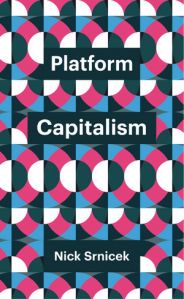
But this week, two things happened: first, I noticed that my longstanding ambivalence about my own hyper-engagement with social media seemed to be exacting a higher toll post-election. I noticed that I was finding little comfort in my usual social interactions, and that my suddenly-intensified addiction to news and opinions seemed to make my growing anxiety about the future more unescapable. And second, I was lucky enough to find an advance copy of Nick Srnicek’s eagerly anticipated new book Platform Capitalism in my office pigeonhole – a book that is being published just as we desperately need solid critical work on platforms like Facebook and Google.
Srnicek established himself in the world of critical theory with the Accelerationist Manifesto that he co-authored with Alex Williams, followed more recently by their best-selling book Inventing the Future – which I enjoyed immensely, and which is among the most practical and most readable theoretical interventions dedicated to imagining what a postcapitalist society might look like.
Compared with these earlier texts, the succinct, well-researched, and –again– compulsively readable Platform Capitalism is a lot less “manifesto-ish.” The book primarily offers a perspective on commercial digital platforms like Facebook, Uber, Google, and the Internet of Things that approaches them in the first place as actors within a specific phase of capitalism. As Srnicek puts it in his introduction:
The platform has emerged as a new business model, capable of extracting and controlling immense amounts of data, and with this shift we have seen the rise of large monopolistic firms. … The aim here is to set these platforms in the context of a larger economic history, understand them as means to generate profit, and outline some of the tendencies they produce as a result. (6)
A brisk but essential opening chapter therefore establishes the author’s historical-materialist perspective, as Srnicek effectively outlines how the 1970s crisis of industrial overproduction, the 1990s dot-com bubble, and the 2008 subprime mortgage crisis all played important roles in the rise of the digital platform as an economic phenomenon within post-industrial capitalism.
The book then touches on much-discussed concepts like immaterial labor, the sharing economy, the complex role of Big Data, privacy, advertising, and non-commercial alternatives to commercial behemoths like Google and Facebook. Looking at the various options and giving a quick but thorough survey of the current state of affairs, Srnicek is justifiably pessimistic – not only about the future of lean platforms like Uber, whose business strategy already seems to have overextended itself, but also and more fundamentally about the future of the internet as a free and democratic space.
Nevertheless, the book’s primary goal is not the presentation of a radical Marxian critique of digital platforms as a political economy. Above all else, it offers a plainly worded and startlingly convincing description of their histories, characteristics, and tendencies within our own capitalist system. Only by understanding these platforms as economic actors in global capitalism’s complex system can we hope to change our world for the better. So in spite of the unsurprisingly bleak analysis, the book’s conclusion elegantly articulates this hope for a real change in our digital lives:
Rather than just regulating corporate platforms, efforts could be made to create public platforms – platforms owned and controlled by the people. (And, importantly, independent of the surveillance state apparatus.) This would mean investing the state’s vast resources into the technology necessary to support these platforms and offering them as public utilities. More radically, we can push for postcapitalist platforms that make use of the data collected by these platforms in order to distribute resources, enable democratic participation, and generate further technological development. Perhaps today we must collectivize the platforms.
As remote and unlikely as this future might sound in the “post-truth” era of Facebook’s self-obsessed filter bubbles, it is all the more urgent to understand clearly not only why these digital platforms are currently part of the problem, but what kinds of affordances and opportunities they do ultimately offer for collaborative and democratic action.
For myself, reading this outstanding short book while simultaneously caught up in self-perpetuating feedback loop of intensified sharing, commenting, and retweeting as post-election online hysteria hit fever pitch, I finally decided to let go for now and step out of platform capitalism’s echo chambers – going cold turkey at least until I can re-accustom myself to having a thought without automatically feeling an impulse to post it on Twitter alongside some cleverly chosen animated GIF.
For what both this book and the always-already disastrous election of Donald Trump demonstrate above all is that our constant engagement with any kind of content on commercial digital platforms continues to drive a thoroughly rotten and undesirable system we’re only just beginning to understand. So even if alternatives still appear remote and all but impossible to realize, we also clearly can’t afford to continue playing by the rules of platform capitalism.
]]>Popular Fascism
Cabaret (Bob Fosse, 1972)
Bob Fosse’s elegantly directed adaptation of Isherwood’s writing about the rise of Nazism in 1931 Berlin is among the most unsettling depictions of emergent fascism. While we’re used to seeing Nazis as uniformed, mustache-twirling sadists in everything from WWII movies to Indiana Jones adventures, Cabaret presents it emphatically as the reactionary response to a permissive, hedonistic, and thoroughly liberal culture. By following the romantic and creative adventures of an Englishman visiting bustling Berlin, we see how a “new normal” slowly but surely creeps in, even as several of the main characters (like Liza Minnelli’s Sally Bowles) remain unaware and/or indifferent to it. The rise of fascism is witnessed in brief outbursts of anti-Semitic (and sometimes random) violence, but the most chilling scene is this outright appeal to nostalgia and nationalistic tradition.
The Sound of Music (Robert Wise, 1965)
Slavoj Žižek’s stupid and irresponsible “endorsement” of Donald Trump was roundly criticized, but his analyses of the latent fascist elements in American popular culture are spot-on. His brief dissection of The Sound of Music is especially keen, as he explains succinctly how the film stages a conflict between a rural family and Austria’s emergent Nazism that functions as a textbook fascist text, while simultaneously disavowing its ideological direction. It’s the same trick pulled by The Lion King, where Scar’s degenerate hyena forces are visualized as goose-stepping Nazis, while both the basic narrative of white supremacy and the Riefenstahl-esque opening sequence are as steeped in fascism as anything Goebbels ever produced.
The Wolf of Wall Street (Martin Scorsese, 2013)
Scorsese’s epic three-hour wallow in the ugliness and noise of American capitalism is well worth revisiting in light of the Trump phenomenon. For while he clearly doesn’t physically resemble either Leonardo DiCaprio or the real-life Jordan Belfort, his mythology is steeped in the same kind of bad-boy entrepreneurialism that is either satirized or celebrated in The Wolf of Wall Street. The film perfectly matches the completely divided cultures resulting (in part at least) from our social media bubbles, as audiences have enjoyed the film as an endorsement of capitalist excess and misogyny, while others have applauded Scorsese for providing such a merciless critique of corporate greed. But whichever way you view it, the culture surrounding Belfort’s authoritarian, dictatorial, and thoroughly corrupt regime provides a fascinating glimpse of the fascist tendencies in capitalist corporate (and popular) culture.
Blow Out (Brian de Palma, 1980)
The last –and greatest– of the conspiracy thrillers of the 1980s, Brian de Palma’s masterpiece pits John Travolta as a jaded and cynical sound engineer against ruthless executive power of a wholly corrupt political establishment. Having unwittingly witness (and recorded) a political assassination, his character comes alive for a moment as his ideals are momentarily re-awakened, and he comes to believe in a way of collaborating with America’s obviously inept news media to expose the real depths of corruption. State power in the film is exercised by a deeply unsavory –and ultimately uncontrollable– coalition between the political and the private sector, as entrepreneurial hit man John Lithgow soon finds unsurprisingly misogynistic ways of cleaning up this mess on the behalf of the deeply entrenched surveillance state he serves. It’s among the most despairing, most prescient films about American political life, revealing a state apparatus that maintains absolute control via the news media, while female bodies pay the price for its proto-fascism.
Starship Troopers (Paul Verhoeven, 1997)
When Paul Verhoeven’s third American sci-fi adventure film was released, most American critics dismissed it as a superficial and excessively violent action movie, while a few (most famously Time magazine critic Richard Schickel) lambasted it for its fascist elements. But even if it went largely unnoticed when the film was released, Starship Troopers is fully committed to its fascism, showing uneasy viewers how easy it is to cheer along gung-ho soldiers fighting a fully “othered” species under the command of a totalitarian state. Verhoeven consciously drew on the generically attractive cast members of shows like Beverly Hills 90210 and Melrose Place, so audiences would be lulled into identifying automatically with familiar faces. But not only does the elaborate world-building in the film slowly but surely identify itself as an ethnically diverse and gender-neutral fascist society, but the film also goes out of its way to show that the text itself is structured as an explicit propaganda film for that society. Would You Like To Know More?
Marvel’s The Avengers (Joss Whedon, 2012)
There is something intrinsically fascist about the aesthetics of the superhero genre. This doesn’t mean that all superheroes are fundamentally fascist: while Superman has often been compared (somewhat irresponsibly) to the Nietzschean Übermensch ideal, characters like Captain America, Spider-Man, and many, many others have historically embodied anti-fascist positions more strongly and more emphatically than any other. Nevertheless, there is something about the way in which violence is organized and framed in superhero comics, cartoons, and movies that has always reminded me of Susan Sontag’s famous definition of fascist art:
[Fascist aesthetics] flow from (and justify) a preoccupation with situations of control, submissive behavior, and extravagant effort; they exalt two seemingly opposite states, egomania and servitude. The relations of domination and enslavement take the form of a characteristic pageantry: the massing of groups of people; the turning of people into things; the multiplication of things and grouping of people/things around an all-powerful, hypnotic leader figure or force. The fascist dramaturgy centers on the orgiastic transactions between mighty forces and their puppets. Its choreography alternates between ceaseless motion and a congealed, static, “virile” posing. Fascist art glorifies surrender; it exalts mindlessness: it glamorizes death.
While this kind of aesthetic more clearly dominates Zack Snyder’s macho posturing in Man of Steel and Batman V Superman: Dawn of Justice, it is also clearly at play in the exquisitely choreographed action spectacles in otherwise more liberal-minded entertainments like The Avengers. Watch this climactic fight scene –especially the breathtaking “one-shot sequence” that begins in the sixth minute– and consider how its dramaturgy is indeed centered on those “orgiastic transitions between mighty forces and their puppets” – how its choreography does nothing but “alternate between ceaseless motion and a congealed, static, ‘virile’ posing.” It’s a troubling example of how certain fascist tendencies and preoccupations appear to be embedded deep within the visual and narrative vocabulary American popular culture thrives on, irrespective of the supposed ideological contents of the film in question.
]]>Commercializing Media
Network (Sidney Lumet, 1976)
Still the go-to satire of commercialization’s profound impact on news media, Paddy Chayefsky’s unfortunately also features some uncomfortable sexual politics: Faye Dunaway’s character personifies the cold, calculating, and somehow irresistible appeal of universal commercialization, while the patronizing “old guard” is identified in aging Hollywood actors William Holden and Peter Finch. Criticized for being too outrageous at the time, the film’s depiction of the effects of total commercialization on media content seems fairly in the age of Reality TV. At the same time, the appeal of Howard Beale’s populist mantra “I’m as mad as hell, and I’m not going to take this anymore!” resonates even more strongly in the age of white male rage.
Broadcast News (James L. Brooks, 1987)
Where Network mines the commercialization of television production for increasingly broad satire, James L. Brooks’ poignant comedy-drama condemns the hollowing out of television journalism by looking at it through a microscope: his insiders’ view of TV production, from editing room panics to the infrastructural complexity of live newscasting, documents the shift from in-depth but “unsexy” investigative journalism to the easily-consumed reassurance of sensationalistic “human interest” reporting. While the film uses its three main character to set up its main allegory of television in transition, it does so without reducing any of them to mouthpieces for any particular agenda. It is, in fact, the one film that is about ethics in journalism.
Anchorman 2: The Legend Continues (Adam McKay, 2013)
A deeply silly and self-indulgent sequel to an already-silly and indulgent cult hit, Anchorman 2 somehow finds its legs when it goes after the emergence of cable news and the concept of the 24-hour news cycle. Director Adam McKay and his cast refuse to pull any punches while “documenting” what happened to American TV news in the 1980s, and while there is a certain irony to the idea that this kind of lowbrow comedy has clearly flourished in this age of thoroughly commercial media, Anchorman 2 somehow manages to reflect critically on itself and its media-industrial context while educating its audience at least a little bit on media history.
The King of Comedy (Martin Scorsese, 1982)
One of Martin Scorsese’s most consistently underrated and overlooked masterpieces is a stunningly bleak portrait of toxic celebrity culture. Robert de Niro’s Rupert Pupkin is a dangerous sociopath not because he is driven by trauma or hateful ideology: he has clearly been spoon-fed a culture that celebrates and glorifies celebrity to the point that nothing else seems to matter. Pupkin will do or say anything to achieve the fame and adulation he sees as the only valid indication of human worth – and like the white male rage that fuels the alt-right movement, his sense of entitlement knows no boundaries.
The Running Man (Paul Michael Glaser, 1987)
An unassuming genre film that’s primarily a painting-by-numbers Schwarzenegger vehicle, complete with the cheesiest one-liners imaginable. But it’s also a fascinating precursor to dystopian franchises like The Hunger Games, with its gruesome gladiatorial combat staged as mass entertainment that also functions as a direct extension of state power. It’s a superficial and fairly flimsy satire, but also one that is unburdened by pretension or heavy-handed symbolism: the matter-of-factness with which a fascist America would thrive on sensational and “fun” death-matches between inmates makes it all the more convincing.
Gremlins 2: The New Batch (Joe Dante, 1990)
Director Joe Dante’s doesn’t just belong on this list because it is set in a thinly-veiled parody of Trump tower, presided over by the deeply-ridiculous and dangerously inept egomaniac “Daniel Clamp.” But beyond its (fairly toothless) needling of New York City’s least popular billionaire, Gremlins 2 works primarily as a deconstruction of Hollywood’s overwhelming commercial imperatives. Arriving at the end of the first decade of blockbuster-heavy “sequelitis” in the movie industry, Dante lets rip with a sequel determined to subvert every expectation fans of the original Gremlins might have.
The LEGO Movie (Chris Miller and Phil Lord, 2014)
Another film with a thinly-veiled spoof of Donald Trump, appearing here as dictatorial “President of the World” and CEO Lord Business. While the film’s opening has been praised for its playful critique of ideological power, the film also obviously represents the end-point of media commercialization: a 100-minute commercial for a global toy brand that simultaneously promotes (with knowing irony, of course) a wide variety of entertainment franchises. And while the film is often clever in its unrelenting barrage of metatextual irony, it is also telling that the screenplay ultimately descends into blatant sexism, while the evil capitalist overlord is –bizarrely– redeemed as a caring father figure who only really needed some down time with his favorite son.
]]>
I. Populism and Politics
A Face in the Crowd (Elia Kazan, 1957)
In one of the most cutting and prophetic films about the toxic effects of celebrity in US politics, Andy Griffith stars as a folksy, down-to-earth folk singer whose meteoric rise to fame is accompanied by increasingly egocentric and sociopathic behavior. Having established himself as an entertainer, others in power are quick to lure him towards a political career, where he proves to be as ruthless and cynical as he has been endearing and charismatic to the public. As in so many twentieth-century cautionary tales about populist heroes (see also: Citizen Kane and Batman Returns), all it takes to trigger his downfall is his inadvertent public revelation of his true nature – something that seems downright quaint in the age of Trump.
Bob Roberts (Tim Robbins, 1992)
Tim Robbins’ directorial debut is an on-the-nose but depressingly accurate “mockumentary” about a rightwing folk singer who soon becomes the figurehead of an alt-right political movement. While Bob Roberts himself is clearly inspired by Reagan, the ease with which his deeply sinister campaign manager helps him coast toward success also uncannily reflects the complete collapse of the political Left in the 1990s, with the sole investigative reporter (Giancarlo Esposito) determined to reveal Roberts’ true nature effortlessly marginalized and silenced.
The Great Dictator (Charles Chaplin, 1940)
Chaplin’s film heroically tries to fight fascism with an appeal to sentimentality and human decency: naïve, perhaps, but also understandable – if only because the full extent of fascism’s horrific nature wasn’t yet revealed in 1940. The thing that lingers most from this film in the Trump era are the scenes where Chaplin ridicules these dangerous and thoroughly evil dictators as thin-skinned, childish, and completely egomaniacal halfwits. It isn’t hard to see deeply inept but terrifyingly powerful morons like Rudolph Giuliani and Chris Christie in the dictator’s entourage.
Nashville (Robert Altman, 1977)
Altman’s swarming country-music microcosm of a bicentennial USA is easily and understandably interpreted as an allegory for Hollywood’s film industry. But Nashville also cuts more deeply into the complex intersections between entertainment and politics. Just as the music industry forms its own chaotic and porous ecosystem of personal and professional fears, abilities, and desires, the film constantly foregrounds how both the content of their work and the context in which it is developed is profoundly political. This is underlined by the ubiquitous presence of populist presidential candidate Hal Philip Walker, whose easily digestible campaign slogans mercilessly spoof the rhetoric of populist politicians.
Nixon (Oliver Stone, 1995)
One of the most disastrous US presidencies is approached by Oliver Stone as a Shakespearian drama about a doomed protagonist whose psyche is ruled by pettiness, low self-esteem, and spite. Portrayed as a hard-working man who feels cheated by those who achieve success “the easy way,” Nixon is motivated only by his bottomless desire for public validation, the insufficiency of which sends him spiraling off into paranoia, psychosis, and the systemic abuse of power. His monomaniacal obsession with John F. Kennedy brings to mind how Trump may have been similarly motivated to run for president to get even with a man who mocked him publicly and made him feel ridiculous.
Bulworth (Warren Beatty, 1998)
Beatty’s scathing satire of the American political establishment portrays a Senator with nothing left to lose: depressed, disillusioned, and in danger of losing his seat to a young populist, he plans to commit suicide by hit man, which suddenly frees him from the deadening weight of hypocrisy and corruption that has become the bread and butter of his political life. Re-discovering the progressive values of his younger years, he finds sudden succes (and a new will to live) by speaking his mind plainly – but unlike the cynical and incoherent populism of his rival (and, indeed, of Trump), Bulworth’s new political program is grounded in his growing awareness of and solidarity with the black community.
]]>