Overland Park Arboretum & Botanical Gardens in Early October

carview.php?tsp=

October at the Overland Park (Kansas) Arboretum & Botanical Gardens

In the collage, beginning at the top left, going left to right: A garden bell; flower arrangement in an urn overlooking the lake; a male Monarch Butterfly drinking nectar from a tropical milkweed flower with a honeybee on a flower in the left of the photograph; a sculpture of French artist Claude Monet; Geoff Hamilton rose, a pink English shrub rose introduced by David Austin in 1997, Geoff Hamilton was a noted gardener; Planted along a pond with a waterfall are some Gomphocarpus physocarpus plants, commonly known as hairy balls, balloonplant, balloon cotton-bush, bishop’s balls, nailhead, or swan plant,is a species of plant in the Milkweed subfamily Asclepiadoideae of the Dogbane Family (Apocynaceae), the only sign under the plant said “Hairy Balls.” Click on the thumbnail at the bottom to see a larger version of this photograph.

A friend and I are lucky to live close to the Overland Park Arboretum & Botanical Gardens. We try to visit several times a year in all seasons. There is an admission charge but the first Tuesday of the month is free. The photographs in the collage of our recent visit on October 7, 2025.

Overland Park Arboretum & Botanical Gardens Link on Wikipedia.
The Overland Park Arboretum and Botanical Gardens (120 hectares / 300 acres) is an arboretum and botanical garden, which opened in 1991. It is located a mile west of U.S. Highway 69 on 179th Street, Overland Park, Kansas. It is operated by the City of Overland Park, Kansas, a city in the greater Kansas City metropolitan area.

At present, 8 ecosystems have been identified within the arboretum:

Dry-Mesic Prairie – grasses such as big bluestem, little bluestem, and Indian grass.
Dry Oak-Savanna – widely spaced oaks in a prairie invaded by woody species.
Dry Oak-Hickory – shagbark hickory, black oak, and post oak.
Mesic Oak-Hickory Forest – white ash, bitternut hickory, shagbark hickory, hackberry, leatherwood, bur oak, red oak, chinquapin oak, pawpaw, and black walnut.
Riparian Woodland – green ash, eastern cottonwood, elm, hackberry, bitternut hickory, silver maple, honey locust, red mulberry, bur oak, osage-orange, sycamore, black walnut, and black willow.
Wooded Draws – juniper, rough-leaf dogwood, red elm, and buck brush as well as pale purple coneflower, milkweeds, prickly pear, and grasses.
Dry Wooded Swales – Similar to the Wooded Draws but with dryer, shallower soil.
Old Field – a severely disturbed zone due to over-grazing and cropping.

Gardens as of 2025:

Betsy and Gordon Ross Herb Garden (unknown opening) – shows a variety of common (and uncommon) herbs.
Welcome Garden (1991) – welcomes visitors with a colorful arrow of plants and flowers.
Erickson Water Garden (1996) – unusual aquatic and bog plants, a Buddleia collection, wildflowers and ornamental grasses.
Marder Woodland Garden (1999) – a woodlands trail through ferns, dogwoods, native understudy, and a rhododendron and azalea garden.
Legacy Garden (2000) – plants native or naturalized to Kansas.
Children’s Discovery Garden (2000) – a story tree, frog pond, mulberry wood, and other amusements for children.
Cohen Iris Garden (2001) – a colorful showcase of Iris Varieties.
Monet Garden (2003) – a one-acre recreation of the famous Water Lilies series by Claude Monet. It attempts to emulate the style of Monet’s famous paintings of the gardens at Giverny.
Train Garden (2012) – The first railroad layout, The Leaky Roof Line, was completed in 2012. Soon the Leatherwood Depot – a sheltered area with picnic tables was constructed in 2013. The Arboretum’s version of Old Downtown Overland Park and the Strang Line Trolley was opened in 2014. The final phase of the garden opened in 2019.
Stous Promenade (2015) – a collection of trees, open to reserve for weddings.

carview.php?tsp=

Gomphocarpus physocarpus plants, commonly known as hairy balls, balloonplant, balloon cotton-bush, bishop’s balls, nailhead, or swan plant, is a species of plant in the Milkweed subfamily Asclepiadoideae of the Dogbane Family (Apocynaceae). Milkweed is the only type of plant that a Monarch butterfly caterpillar will eat.

Click on this thumbnail to see a full-size version of this photograph.

Franz Liszt is High on the List

carview.php?tsp=

Franz Liszt, Hungarian composer and musician, is honored with public artwork in Hungary and Slovakia. On the left a stone statue of a seated Liszt is set within an arched alcove on the front of the historic Hungarian State Opera House in Budapest. In the upper right, a bronze bust of Liszt is displayed in an ornate architectural niche at the corner of Zrinyi and Nador streets in Budapest. In the lower right, a memorial plaque on an exterior wall of the Leopold de Pauli Palace on Ventúrska Street in Old Town, Bratislava, Slovakia, commemorates Liszt’s concert there in 1820 at the age of nine years old.

I took four years of piano lessons while in elementary school, but I didn’t get much past “Autumn Leaves.” My piano teacher, Rosalie Waugh, really tried to coax some virtuosity from me. My mother bribed me with new Barbie doll clothes if I would practice. I was no musical prodigy! I practiced sporadically on an upright piano which we inherited from a bar and dance hall in my grandparents’ hotel, the Fruth Hotel in Sturgis, South Dakota. Franz Liszt’s great music was not even in my universe, except as a soundtrack to some cartoons. And cartoons are where I was introduced to the magic of classical music.

I’m grateful so many others have the expertise, creativity and perseverance to create and play music.

Forty Videos of Classical Music in Cartoons

Cartoonist breaks down how a whole generation learned classical music from watching old cartoons

A movie I enjoyed is “Impromptu,” (1991), which features the friendship of Franz Liszt and Frédéric Chopin, as well as the writer George Sand’s romantic pursuit of Chopin. You could call it the Chopin Liszt movie. George Sand was the pen name of Amantine-Lucile-Aurore Dupin. The 1991 movie “Impromptu,” which is about Franz Liszt, Frédéric Chopin and George Sand.


Where’s My Freebie!

carview.php?tsp=

One of the six donuts from my “freebie” stash on National Donut Day.

It was National Donut Day and Freebie Friday. There were at least a dozen of us standing in the bakery area in a grocery store in my town, strangers but united in our passion for getting something free. We were waiting for our “freebie” half-dozen of frosted raised donuts with sprinkles, which we had earned or would earn by spending at least $25 in the store. It’s embarrassing to admit, but I had already been to another store in the same chain, but it had run out of donuts with no plans to bake more (no rain checks!). And I wasn’t going to buy a thing until I knew there were donuts to be redeemed, so here I was in the second store.

The baker in this store was baking more donuts. She said she had been completely caught off guard by the great demand. She’d already distributed about a hundred boxes of a dozen donuts. She had to bake, frost and sprinkle all of them. She said the next batch would be ready in thirty minutes. Thirty minutes! And yet most of us stayed. I did a little shopping, but what if the donuts came out and you weren’t there!

People were watching the bakery door as if we were waiting for royalty to appear. There she was! Everyone surged to the baker, including a woman who had just arrived on the scene and nabbed the first box from the stack of white boxes that the baker balanced in her hands. Line jumper! I was one of the lucky few. The baker promised the disappointed that more were coming out. She said she had already distributed 230 boxes that day.

One woman left for a few minutes, and when she returned, she saw the box in my cart. She bemoaned her fate. “I just stepped away for a few minutes.

The last thing I needed was a donut. I’m not even a fan of donuts. So why?

It must be in my genes to go after these freebies and bargains, though I’m not nearly as good or as devoted as my mother was.

My mother was an avid couponer and discount shopper. One of her favorite activities in her last years was to get the weekly “freebie” at her local grocery store. She accumulated points online to redeem the item that was offered for free every week. I wasn’t sure of the details, but I saw the rewards, because she handed them out to us. She also got discounted gas. Since she didn’t drive very often or very far, she offered the discount to her children from out of town.

On one of my visits to her many years earlier when paper coupons were widespread, I was just about to pull out of her driveway to go to the grocery store when she hurried out with three recipe boxes full of coupons, organized by category and expiration date. I had a recipe box like that, too, and almost never shopped without it. I’d hand coupons to my husband with his shopping list, and he’d forget to use them. They’d still be in his pocket when he got home.

Sometimes I’ve used not having a coupon as a reason not to buy something. When I took my two young children to the grocery store they would beg for sugary cereal. One child wanted to put a box of some luridly colored sugar cereal into our shopping cart. I shook my head and said “I don’t have a coupon for that.” My two children walked up and down the aisles and wouldn’t you know they found some coupons that someone had dropped, and one was for sugary cereal. Did I buy it? I think I had some other excuse not to. Maybe I said it was expired… Remember when coupons had no expiration date!

Now that we don’t subscribe to an actual newsprint newspaper, we don’t get advertising supplements full of coupons. I doubt paper coupons even exist in any significant amount. I don’t want sign up to each company’s website for discounts. I do belong to a few grocery store shopping rewards programs. Maybe that’s why when there is finally some discount or freebie I jump on it like a voracious weasel!

And today, I was going for a free 1.5 quart carton of ice cream, but when I paid, I was 46 cents short of the $25 when all of the sales discounts were subtracted. So horror of horrors I had to pay for the $3.99 carton of ice cream that I thought was going to be free. When the items were all rung on the digital cash register (self-checkout), I was a few dollars ahead, but the cash register didn’t ring up some of the discounts until after I checked out, which took me below the $25 threshold! I was robbed! Will I learn my lesson? Probably not.

Television Tower in Berlin

carview.php?tsp=

The Television Tower (Fernsehturm) is visible everywhere in central Berlin, Germany, and can also be seen in the suburbs.

My friend Anita and I spent a couple of days in Berlin, Germany, in October 2024. We stayed in a hotel in central Berlin, which was in the middle of many historic sights including the Brandenburg Gate, Museum Island, The Berlin Wall, historic cathedrals and churches and the Holocaust Memorial. The central part of the city was easy to get around, but if we ever got disoriented, we had the looming presence of the Television Tower to guide us.

The Television Tower — the Fernsehturn — was constructed between 1965 and 1969 by the government of the German Democratic Republic, or East Germany, as both a functional broadcasting facility and a symbol of Communist power. It is the tallest structure in Germany at 1,207 feet (368 meters) including antenna and the third-tallest structure in the European Union.

When the sun shines on the Fernsehturm’s tiled stainless-steel dome, the sun’s reflection sometimes looks like a Greek cross. Berliners have nicknamed the luminous cross “Rache des Papstes,” or the “Pope’s Revenge,” because the communist government had removed crosses from East Berlin’s churches. In the photo in the top left of the collage, two crosses appear overhead as seen from Berlin’s Unter den Linden Avenue — one atop the Berlin Cathedral Dome and the other is “The Pope’s Revenge” on the tiled stainless steel ball of the Fernsehturm (Television Tower).

The Berlin Cathedral, also known as the Evangelical Supreme Parish and Collegiate Church, is a monumental German Protestant church and dynastic tomb (House of Hohenzollern) on the Museum Island in central Berlin. It is the largest Protestant church in Germany and one of the most important dynastic tombs in Europe. In addition to church services, the cathedral is used for state ceremonies, concerts and other events.

Top Right in the collage is St. Mary’s Church near the Television Tower. The original construction of the building is unknown.  It was reconstructed in the late 19th century and in the post-war period. The church was originally a Roman Catholic church, but has been a Lutheran Protestant church since the Reformation in 1539.

Bottom right is the Television Tower’s location next to Alexanderplatz in the city’s Marien Quarter, part of the district of Mitte, visible across most suburban districts of Berlin.

Bottom center is the television tower looming over a street crisscrossed with electrical wires.

Bottom left is the television tower standing guard over a busy boulevard.

More photographs of the Television Tower (Fernsehturm) on my Zazzle website.

Book Cart in Budapest

carview.php?tsp=

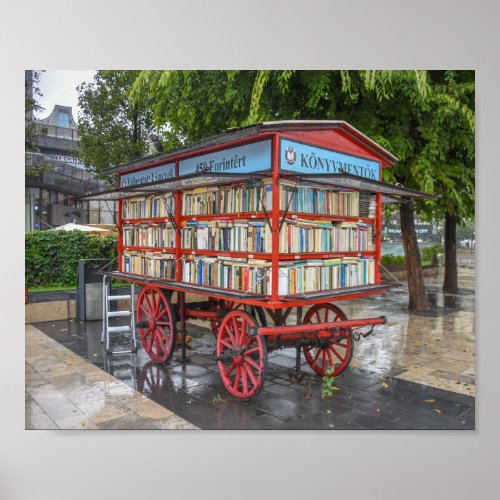
One of several book carts in Budapest, Hungary, offering used books for sale. The carts are designed after vintage postal carriages. Hungary for Literature sponsors the book carts.

My friend Anita and I were wandering around Budapest on a rainy day in October 2024 when we saw this colorful book cart. The vintage cart, which I later learned was designed like an old postal carriage, was filled with numerous books.

When we got home from our trip, I learned that the carts are operated by a non-profit organization called Hungary for Literature. They have nine book carts positioned in squares across Budapest, from which they sell hardbacks and paperbacks. The books are mostly priced at 500 forints ($1.50), with the aim of making reading more accessible to people.   I saw clerks sitting on step ladders in photographs that I saw online, but there wasn’t an attendant that day, maybe due to the rain.

Article about the Book Carts in Budapest, Hungary.

I’ve been slowly editing my photographs from that trip for a photo book and also to upload to Print on Demand sites. On a Gate 1 Tour, we visited Budapest, Hungary; Vienna, Austria; Bratislava, Slovakia; Prague, Czech Republic; Dresden, Germany; and Berlin, Germany.

Click here to see this photograph of a Book Cart in Budapest available on a wide range of products, including Wall Art, Mugs, Jigsaw Puzzles, Home Décor, Greeting Cards, Bags and More.


Missing, Broken, Destroyed or Lost

carview.php?tsp=

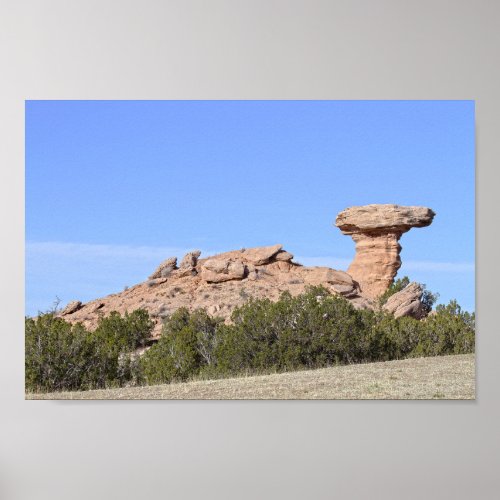
Camel Rock resembles a seated camel near Tesuque Pueblo in New Mexico. The rock is about 40 feet high and 100 feet long. This photograph was taken in April 2014. In 2017, the formation lost the end of the snout.

“Nothing in the world is permanent, and we’re foolish when we ask anything to last, but surely we’re still more foolish not to take delight in it while we have it.”

― W. Somerset Maugham, “The Razor’s Edge” (1943)

I haven’t traveled on photography trips in more than a year, but I’ve working on the large file of photographs I took on older trips. It’s been a lot of fun re-living these adventures and researching more about the places I traveled. Much of the information I’ve learned recently would have been very helpful to know before I traveled. Oh, well…

Photography has been one way to for me to hold onto past experiences.  To enjoy the lost moments again, maybe even for the first time, because the camera captured more than what I saw. Plus you can’t beat a free trip, even if it is just in your head.

A good snapshot keeps a moment from running away.

Eudora Welty

One of my 2024 New Year’s resolutions was to edit and post at least one photograph a day to my Catherine Sherman on Fine Art America website, and so far I’ve done that except for one day.

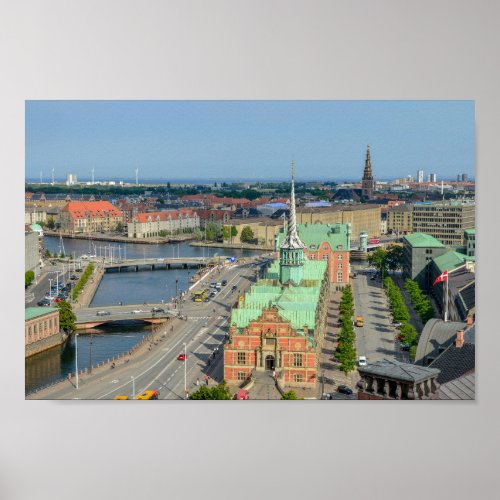
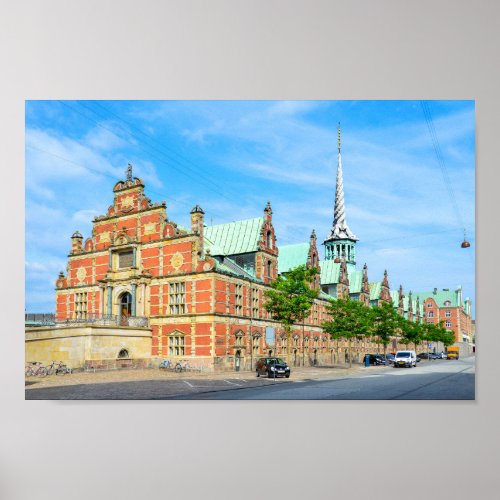
Some of the sights I photographed no longer exist, which prompted this blog idea. For example, in April 2024, the Stock Exchange building (dating from 1615)  in Copenhagen, Denmark (shown above from a photograph I took in July 2014) was severely damaged by a fire, which toppled the 184-foot (56 meters) spire of four entwined dragon tails. Many people enjoyed looking at this distinctive building (the Boersen or Børsen in Danish) from the Christiansborg Palace tower, where you could get a great view of the distinctive green copper roof and ornate unique spire.  Copenhagen is  known as the “City of Spires.”

Another sight that has changed since I photographed it is Camel Rock, a sandstone formation resembling a seated camel near Tesuque Pueblo in New Mexico. The rock is about 40 feet high and 100 feet long. This photograph was taken in April 2014 before the camel lost most of its snout, which happened in 2017. The rock is easily visible from U.S Highway 285, north of Santa Fe, New Mexico. Exit 175 leads to the rock, where visitors can park in a small lot and take a trail to the rock for a better view.

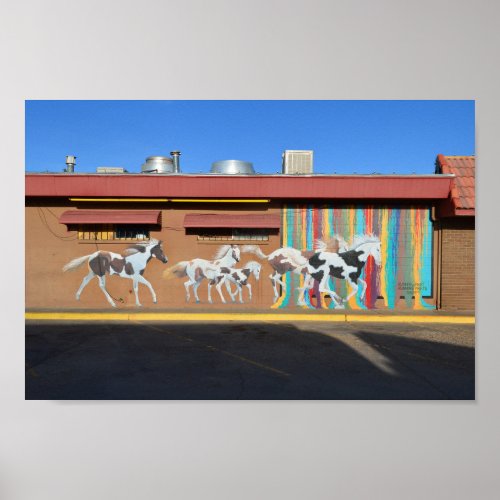
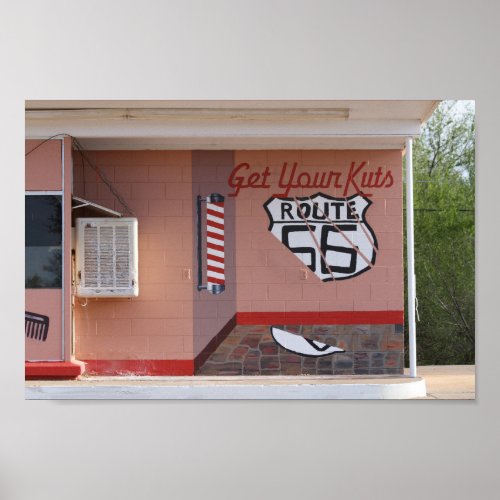
I like to photograph murals, and Tucumcari, New Mexico, is a great location to enjoy these wall paintings, many along Route 66, which has also partly disappeared. One of my favorite murals was of “Running Horses” on the side of a restaurant. I went to google maps to “walk around” the town to find the locations of these murals that I photographed in 2014. I couldn’t find the “Running Horses” mural at the intersection where I was sure the building stood. But the building was gone. An older google maps snapshot showed the “Running Horses” mural on the now missing building. The restaurant had been torn down since my visit there.

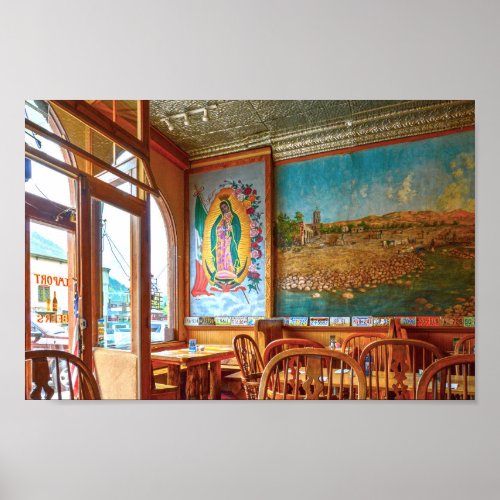
In June 2015, I took this photo of a brightly colored mural of the Virgin of Guadalupe with the Mexican flag in a Mexican restaurant wall in Silverton, Colorado. The Mexican restaurant has since closed and was replaced by a Brewpub with a skiing theme. Maybe the mural was spared and moved elsewhere?

Our Lady of Guadalupe Mural in a Restaurant

Our Lady of Guadalupe Mural in a Restaurant

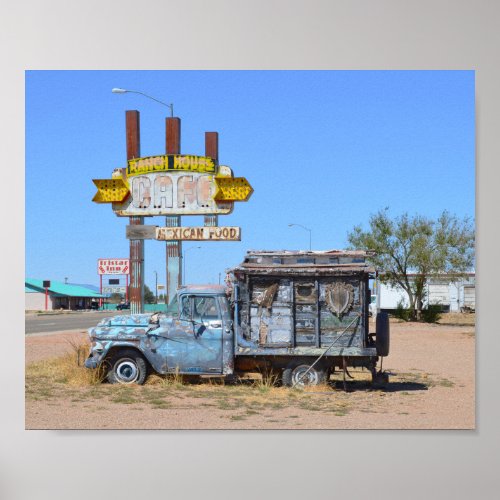
A decrepit Chevrolet Apache truck with a decorated wooden camper shell is parked under an old neon sign at the abandoned 1950s Ranch House Café along Route 66 in Tucumcari, New Mexico, in this photograph from April 2014. The years have taken a further toll since then, and google maps shows that most of the wooden camper shell has disappeared.

Links to some of these photographs on Fine Art America.

Stock Exchange, Copenhagen, Denmark
Christiansborg Palace Tower View of the Stock Exchange Building, Copenhagen
Camel Rock, New Mexico
Hair Salon Mural on Route 66, Tucumcari, New Mexico.

Ranch House Truck, Route 66, Tucumcari, New Mexico.
Running Horses Mural in Tucumcari, New Mexico

Last Old-Fashioned Optician

carview.php?tsp=

Steve Grabowski, the “Last Old-Fashioned Optician,” stands in front of his shop, “The Spectacle Emporium” in the Laramie Downtown Historic District of Laramie, Wyoming.

 
My husband and I were strolling the Laramie Downtown Historic District in September 2022 when we met Steve Grabowski, who owns “The Spectacle Emporium” in Laramie. People come from throughout the world to order glasses from Steve. One of his specialties is vintage eyewear for re-enactors and for actors in movies featuring earlier eras. Steve comes from a family that has lived in Laramie for many generations.

Laramie was settled in the mid-19th century. Laramie was named for Jacques LaRamie, a French or French-Canadian trapper who disappeared in the Laramie Mountains in the early 1820s. He was one of the first Europeans to visit the area. LaRamie’s name was attached to so many places, including a river, mountain range, peak, U.S. Army fort, county, as well as the city, the town of Laramie was called Laramie City for decades to set it apart from other landmarks and entities named for the lost trapper.

carview.php?tsp=

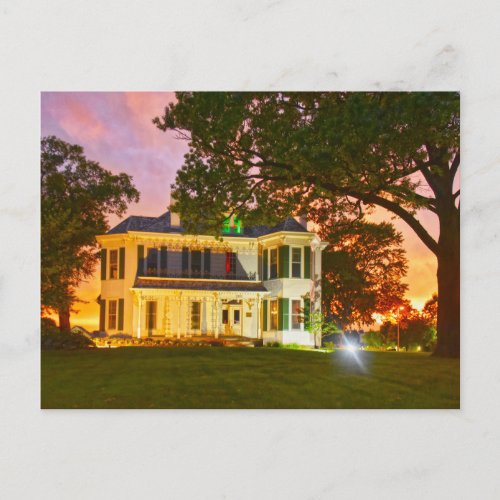
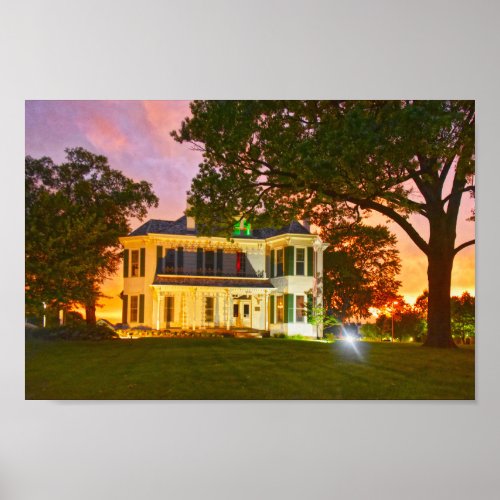
Lackman-Thompson Estate Farmhouse

A beautiful sunset sky is a backdrop for the historic Lackman-Thompson farm house in Lenexa, Kansas. The farmhouse is part of the Lackman-Thompson estate, which includes a brick barn, used for events, and several historic out buildings.

The Lackman-Thompson estate was once home to Margaretha and William Lackman, German immigrants who came to America in 1885. The Lackmans sold their estate to Kansas City horse and mule dealer Frank Thompson in 1908.

In 1932, the farm’s original barn burned down, which gave Thompson the opportunity to build a new brick barn — the barn that still stands today. The Thompsons’ son, Hugh, sold much of their estate to be developed into Southlake Business Park and bequeathed the remaining land to the Johnson County Community College Foundation.

The Lackman-Thompson Estate was placed on the Register for Historic Kansas Places — the only structure in Lenexa to receive the honor. In 1996, The JCCC Foundation offered the property to the City of Lenexa to preserve it and put it to good public use. Lenexa worked with many partners, including the Kansas State Historical Society, to honor the agreement.

The original Lackman house is now the home of the Lenexa Chamber of Commerce, Convention & Visitors Bureau and Economic Development Office. The city restored the barn, preserving its historical character as well as modernizing it.

Lackman-Thompson Estate Farmhouse Products on Fine Art America.

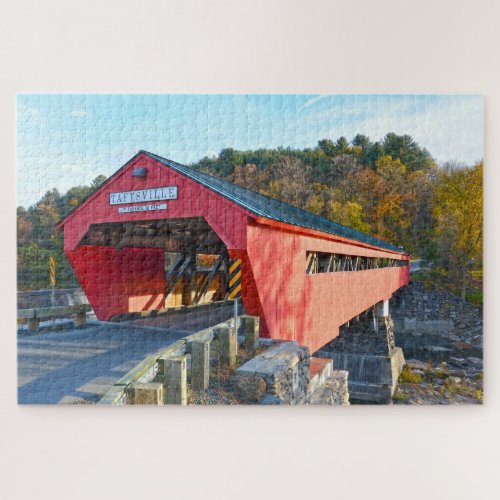
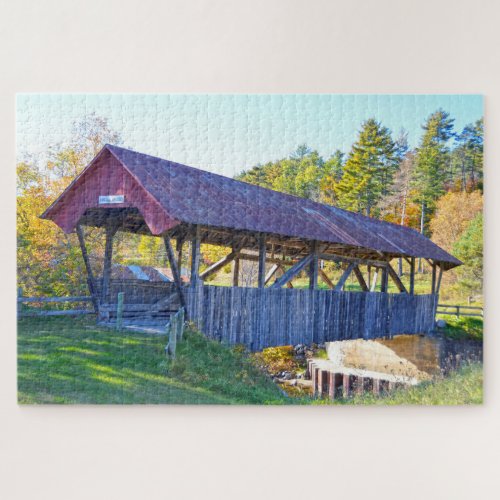
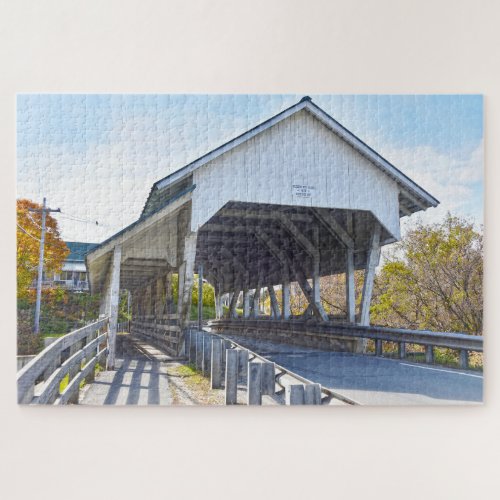
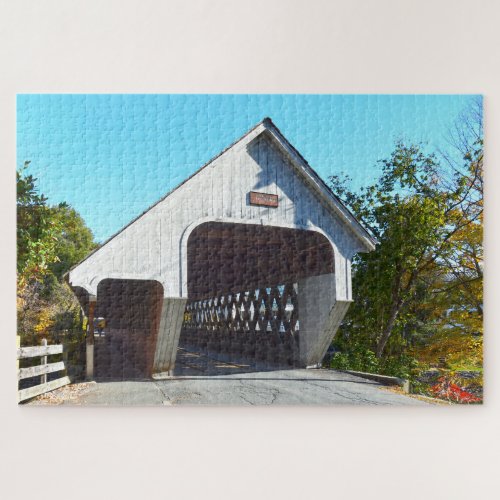
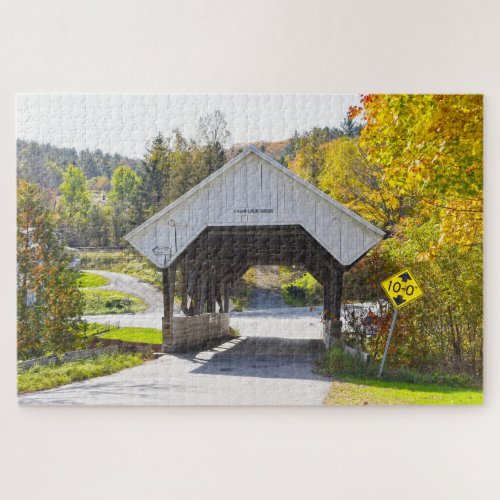
Vermont Covered Bridges Jigsaw Puzzles

There are a little over 100 authentic covered bridges in the state of Vermont, giving the state the highest number of covered bridges per square mile in the United States. A covered bridge is considered authentic not due to its age, but by its construction. An authentic bridge is constructed using trusses rather than other methods such as stringers (a popular choice for non-authentic covered bridges).

Many of the covered bridges are on the National Register of Historic Places. Some are still in use on roads, while others have been retired but can still be visited.

Vermont Covered Bridges Jigsaw Puzzle Collection

Click here for Zazzle Coupons, Discounts and Promotions.

List of Covered Bridges in Vermont

Vermont Covered Bridge Society

Big Boy No. 4014 Steam Locomotive in 2021

carview.php?tsp=

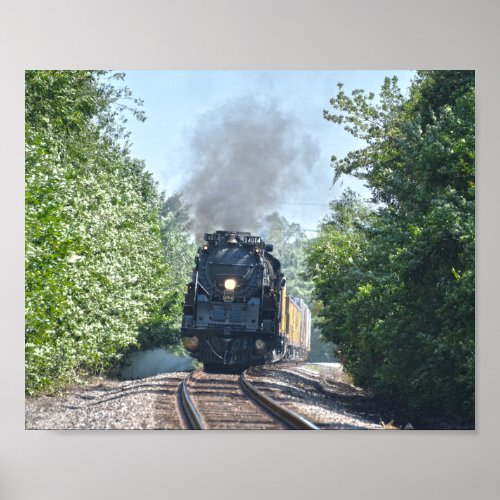
Martin City, Missouri, features its train traffic as part of its charm. In the upper right is a photograph of a modern Union Pacific freight train engine which roared through Martin City on Aug. 11, 2021. Soon after, Big Boy No. 4014 (center photo) followed. In the lower right photograph, Big Boy is shown when it paused for a few minutes after it passed the Martin City intersection.

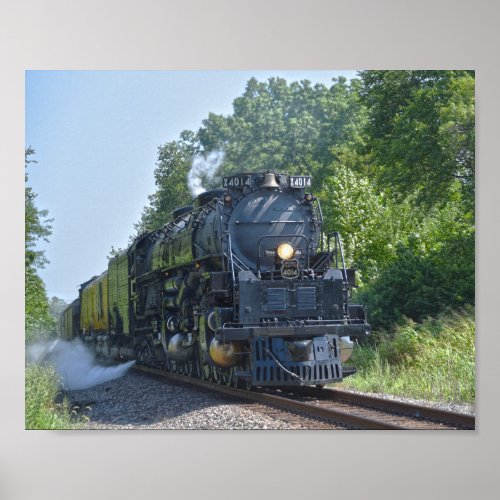
Big Boy No. 4014 Locomotive steamed into Martin City, Missouri, on its 2021 summer tour of the Union Pacific Railroad network. Martin City is part of Kansas City.

I felt an exciting big rush as this huge engine roared past me on Wednesday, Aug. 11, 2021. I saw this same engine in November 2019 in Lawrence, Kansas.

Twenty-five Big Boys were built exclusively for Union Pacific Railroad, the first of which was delivered in 1941. The locomotives were 132 feet long and weighed 1.2 million pounds. Because of their great length, the frames of the Big Boys were “hinged,” or articulated, to allow them to negotiate curves. They had a 4-8-8-4 wheel arrangement, which meant they had four wheels on the leading set of “pilot” wheels which guided the engine, eight drivers, another set of eight drivers, and four wheels following which supported the rear of the locomotive. The massive engines normally operated between Ogden, Utah, and Cheyenne, Wyoming.

Big Boy No. 4014 was delivered to Union Pacific in December 1941. The locomotive was retired in December 1961, having traveled 1,031,205 miles in its 20 years in service. Union Pacific reacquired No. 4014 from the Rail Giants Museum in Pomona, California, in 2013, and relocated it back to Cheyenne to begin a multi-year restoration process. It returned to service in May 2019 to celebrate the 150th Anniversary of the Transcontinental Railroad’s Completion.

Big Boy No. 4014 departed Cheyenne, Wyoming on Aug. 5, 2021, traveling through Arkansas, Colorado, Kansas, Illinois, Louisiana, Missouri, Nebraska, Oklahoma, Texas and Wyoming. Along the way, the Big Boy will be on display in the following cities during the tour:

Saturday, Aug. 14: Fort Worth, Texas
Tuesday, Aug. 17: Houston, Texas
Saturday, Aug. 21: New Orleans, Louisiana
Sunday, Aug. 29: St. Louis, Missouri
Monday, Sept. 6: Denver, Colorado
It is scheduled to return to its home base in Cheyenne on September 7, 2021.

My blog post about Big Boy No. 4014’s visit to Lawrence, Kansas, in November 2019:

Union Pacific Big Boy 4014 Steam Locomotive Engine

Big Boy No. 4014 Steam Locomotive

Big Boy No. 4014 Steam Locomotive as it nears Martin City, Missouri.

Big Boy No. 4014 Steam Locomotive

Big Boy No. 4014 Steam Locomotive rounding the bend, heading toward Martin City, Missouri.