The following article is part of Jay Jaffe’s ongoing look at the candidates on the BBWAA 2026 Hall of Fame ballot. For a detailed introduction to this year’s ballot, and other candidates in the series, use the tool above; an introduction to JAWS can be found here. For a tentative schedule, see here. All WAR figures refer to the Baseball Reference version unless otherwise indicated.
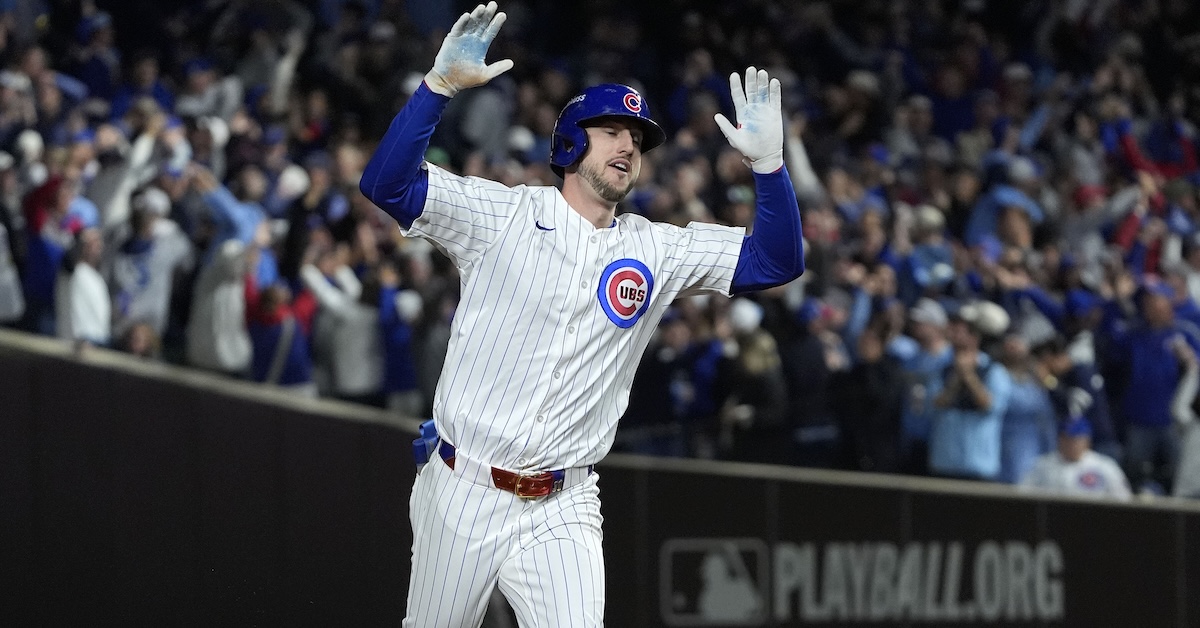
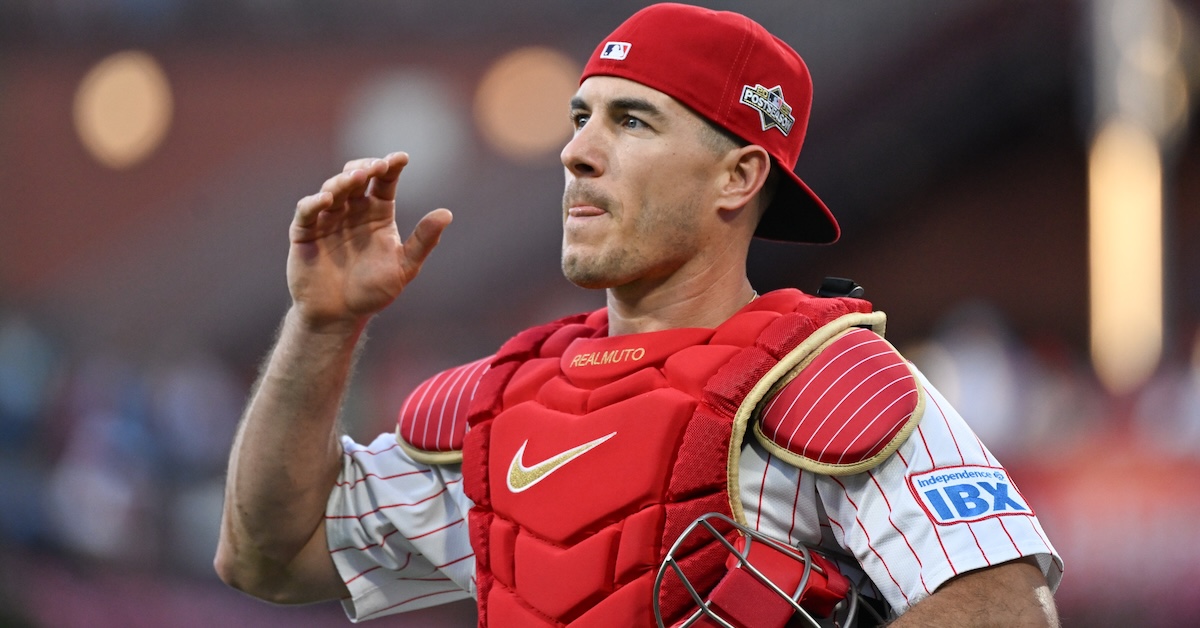
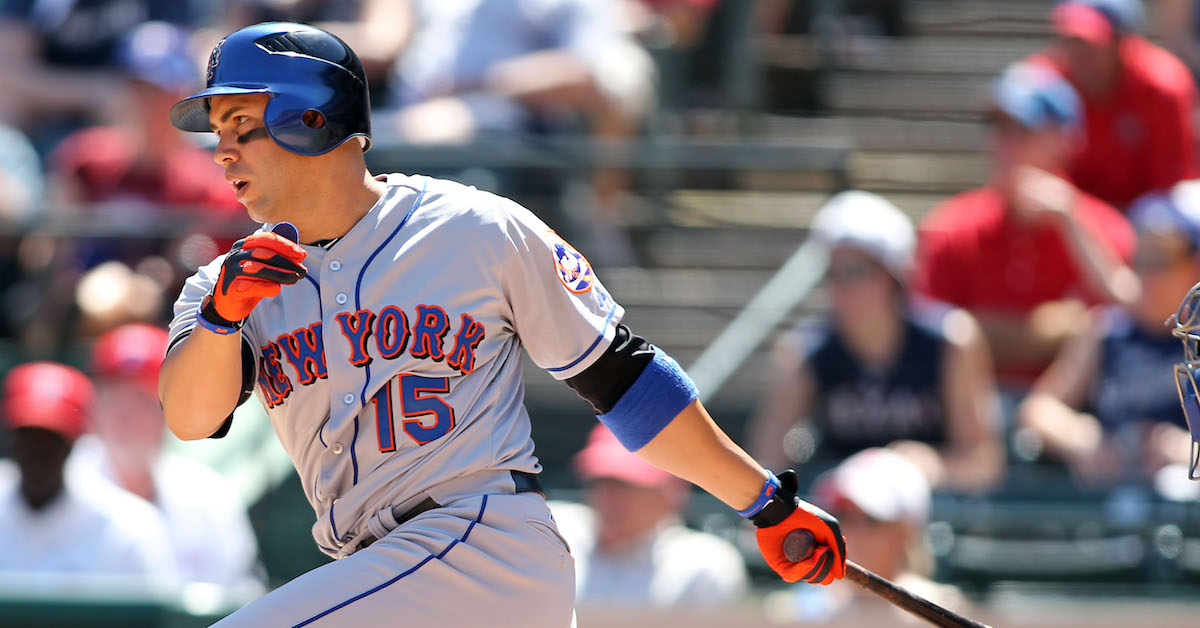
On Tuesday evening, the National Baseball Hall of Fame will announce the results of this year’s BBWAA balloting. In this age of ballot tracking, we have only a mild bit of suspense on our hands, something less than a true cliffhanger. Based on the published ballots in Ryan Thibodaux’s Tracker (which unfortunately has been experiencing outages due to traffic throttling), both Carlos Beltrán and Andruw Jones are likely to be elected, though there’s still a bit of uncertainty for the latter. If the FanGraphs readers who participated in this year’s crowdsource ballot had their way, Beltrán would be the only one who would make the cut. Read the rest of this entry »
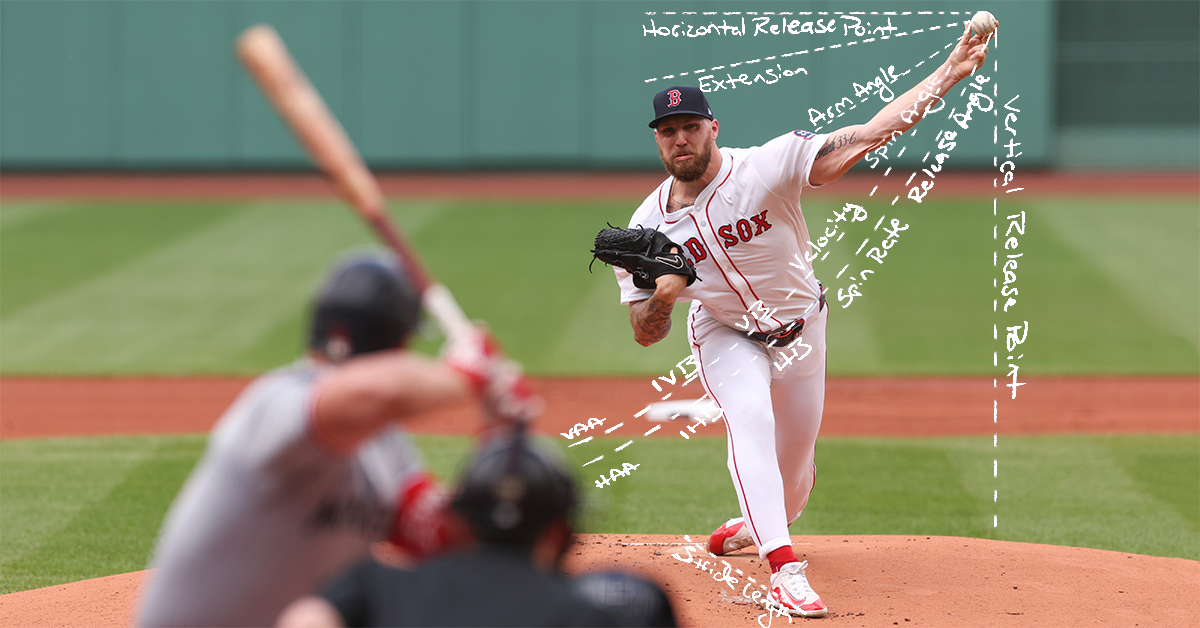
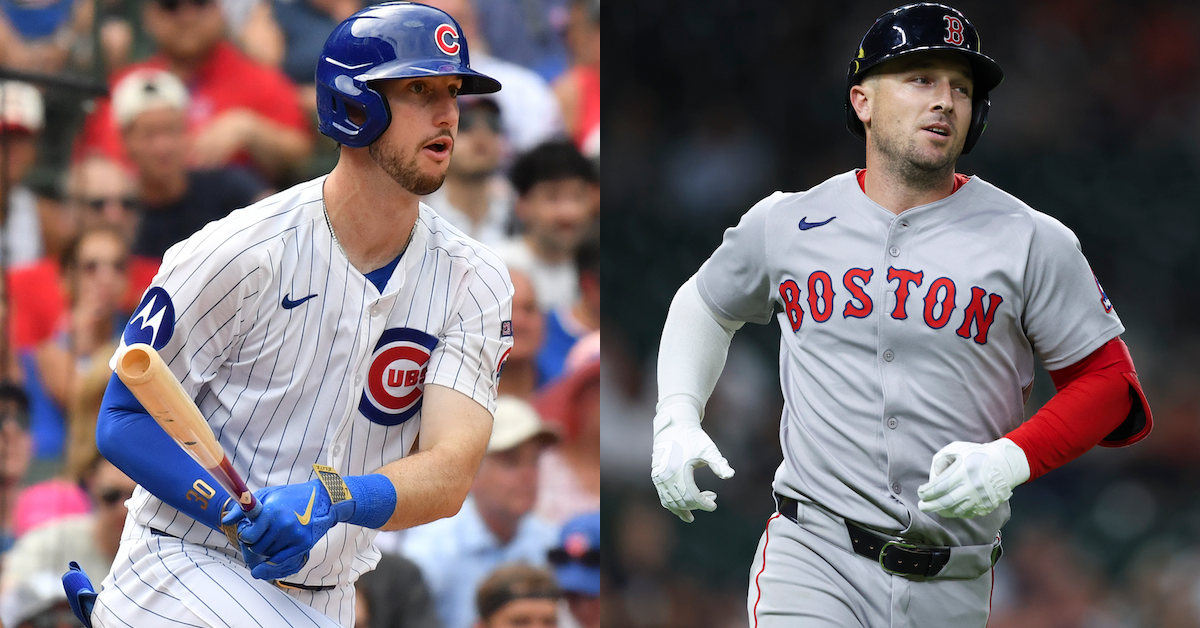
Eric Canha, Katie Stratman, Troy Taormina-Imagn Images
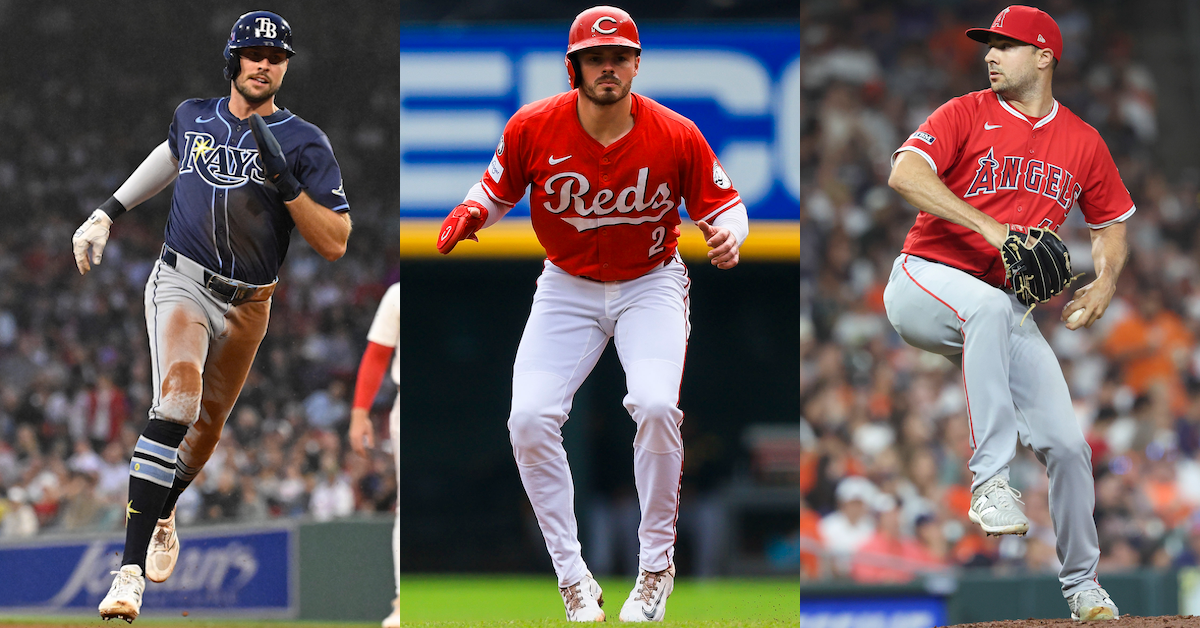
Last week was one of the busiest of the offseason so far, with Kyle Tucker taking his talents to Chavez Ravine and Bo Bichette heading to the Mets. Given those glitzy headlines, it was easy to miss an annual rite of winter: a weird, zero-sum-feeling trade that didn’t need to be a three-teamer but was anyway because the Rays got involved. The particulars: The Rays sent Josh Lowe to the Angels, the Angels sent Brock Burke to the Reds, and Tampa Bay got Gavin Lux from Cincinnati and prospect Chris Clark from the Halos.
The first thing that drew my eye in this trade is that the two hitters are at least superficially similar: lefties with enormous platoon splits and no real defensive home. Lux has a career 99 wRC+; Lowe 101. They get to those marks in extremely different ways, though, and I think that’s as good of an entry point into analyzing this swap as any.
Lowe is an archetypical lefty power bat, and the Angels simply don’t have anyone like that. Last year was easily Lowe’s worst as a pro on a rate basis, and he also spent a month and a half on the IL. But his 11 homers would have been the second-most by an Angels lefty, behind Nolan Schanuel’s 12 in 150-ish more plate appearances (Yoán Moncada also hit 12 lefty homers, but he left in free agency). Overall, the Angels were 29th in baseball in home runs hit by lefties, with 34 for the entire team put together. Read the rest of this entry »
Before we get started, I need you to promise to hold on until the end here. I have buried the lede. The crux of this article is in the last two graphs, all the way at the bottom. I put them there on purpose because I want the data to tell you a story, so I need you to see this story through to the end. I think it’s worth it.
Last Tuesday, Ben Clemens wrote an article titled, “They Don’t Make Barrels Like They Used To.” Sadly, it was not a scathing takedown aimed at the shoddy craftsmanship of modern-day coopers. It documented the steady decrease in the value of barrels over the course of the Statcast era. In 2025, barrels were worth roughly 250 fewer points of wOBA than they were in 2015. That’s a staggering loss – the entire career wOBA of Pepe Frias up in smoke – and Ben broke down several culprits for the theft, along with one other factor: intention. “Tell hitters that barrels get them paid,” Ben wrote, “and they might start to change their behavior in a way that produces less valuable barrels, squared up to center field or in other ways that are easier to produce but less likely to land safely.” He attributed this to Goodhart’s Law: “When a measure becomes a target, it ceases to become a good measure.”
This law has a sports-specific corollary that you’re probably familiar with. I’ve previously referred to it as the Competitive Advantage Life Cycle in the context of catcher framing:
Teams realize the immense value of a skill.
An arms race ensues as they scramble to cultivate it.
The skill becomes widespread across the league.
Since the skill is more evenly distributed, it loses much of its value.
The second we gained the ability to calculate the value of catcher framing, everybody started working on it. The terrible framers either got better or got run out of the sport. Players who were excellent at framing but worse at other parts of the game suddenly found more playing time because their skills were appreciated. Lastly, as the average framing level rose, the rest of the league started catching up to the very best framers. This graph is three years old now, but it shows that convergence very clearly.
The terrible framers are gone, and the great framers don’t stand out as much as they used to. Everybody’s a bit closer to the new, tougher standard, so framing is more important than it’s ever been, but also less valuable. All this got me thinking about one of the oddest measurement tools we have these days: pitch modeling. Read the rest of this entry »
Below is an analysis of the prospects in the farm system of the Toronto Blue Jays. Scouting reports were compiled with information provided by industry sources as well as my own observations. This is the sixth year we’re delineating between two anticipated relief roles, the abbreviations for which you’ll see in the “position” column below: MIRP for multi-inning relief pitchers, and SIRP for single-inning relief pitchers. The ETAs listed generally correspond to the year a player has to be added to the 40-man roster to avoid being made eligible for the Rule 5 draft. Manual adjustments are made where they seem appropriate, but we use that as a rule of thumb.
A quick overview of what FV (Future Value) means can be found here. A much deeper overview can be found here.
All of the ranked prospects below also appear on The Board, a resource the site offers featuring sortable scouting information for every organization. It has more details (and updated TrackMan data from various sources) than this article and integrates every team’s list so readers can compare prospects across farm systems. It can be found here. Read the rest of this entry »
The following article is part of Jay Jaffe’s ongoing look at the candidates on the BBWAA 2026 Hall of Fame ballot. For a detailed introduction to this year’s ballot, and other candidates in the series, use the tool above; an introduction to JAWS can be found here. For a tentative schedule, see here. All WAR figures refer to the Baseball Reference version unless otherwise indicated.
2026 BBWAA Candidate: Nick Markakis
Player
Pos
Career WAR
Peak WAR
JAWS
H
HR
SB
AVG/OBP/SLG
OPS+
Nick Markakis
RF
33.7
24.6
29.2
2,388
189
66
.288/.357/.423
109
Source: Baseball-Reference
Early in his career, Nick Markakis appeared to be a star in the making. In his second and third seasons in the majors (2007 and ’08), the former first-round pick topped 40 doubles, 20 homers, and a .300 batting average while slugging nearly .500. He led the AL in WAR in 2008, his age-24 campaign — not that anyone was aware of it at the time, which helps to explain his omission from that year’s AL All-Star team.
It would take another decade before Markakis finally became an All-Star, and during that stretch, his performances leveled off. He became better known for his durability, his defense (he won three Gold Gloves), and above all, the example he set for younger players while enduring lean years both in Baltimore and Atlanta. He stuck around long enough to help both teams’ rebuilding efforts come to fruition with playoff appearances, racking up so many hits that he generated discussion regarding his potential Hall-worthiness if he persisted long enough to reach the magic 3,000-hit milestone.
Markakis’ retirement after his age-36 season rendered that question moot. He didn’t generate a Hall-caliber résumé or gaudy statistics during his 15-year career, but he received considerable praise for his impact on his teammates. From Braves manager Brian Snitker, who managed him from 2016–20:
“One of the most consistent, professional pros that I’ve ever been around. I’m glad I had the honor to manage him in his last years, because he’s a special player… How consistent he was, how professional he was, the way he played the game, how he grinded every at-bat. He never took a pitch off. And to see what he did late in his career, winning that Gold Glove, and the stabilizing force that he was for our club while I was here. You don’t appreciate a guy like Nick until you manage him. What a great career he had.”
Franklin Arias has a bright future in Boston. Signed out of Venezuela in 2023, the 20-year-old shortstop is the top position-player prospect in the Red Sox system thanks to plus tools on both sides of the ball. A slick-fielder — Eric Longenhagen has described him as an incredibly polished defender for his age” — Arias possesses a line-drive stroke that produced a 109 wRC+ across three levels last season. And while that number may not jump off the page, it stands out when put into context: the Caracas native not only played the entire year as a teenager, he finished it in Double-A.
The degree to which he can boost his power profile will go a long way toward determining his ceiling. Currently more contact than pop, Arias went deep just eight times in 526 plate appearances. At a listed 5-foot-11, 170 pounds, he is by no means built like a bopper.
Red Sox farm director Brian Abraham brought up that aspect of Arias’s game when I asked him about the young infielder earlier this week.
“He’s a guy who makes really good swing decisions,” Abraham said of Arias, who posted a 10.1% strikeout rate and a 5.3% swinging-strike rate in 2025. “He puts the bat on the ball and can drive it to all fields. We’re looking to see him add size and strength so that he can really impact the ball pull-side in the air.
“It’s definitely in there,” added Abraham. “We’ve seen flashes of it, it’s just a matter of him being able to do that on a consistent basis. As a young player who is continuing to grow and get bigger, I think it will come out the more he is able to hit the ball out front and drive it to the pull side. Right now I would say that he is a contact hitter with occasional power, and that the power can be more consistent than it has been.”
Not surprisingly, Arias echoed Abraham’s thoughts when addressing his near-term development goals. Read the rest of this entry »
Never let anyone tell you that there are no rebounds in baseball. That’s utter nonsense, and it is our responsibility to say so. If you need evidence to support your rebuttal, just look at what happened this past week in free agency.
Since our last mailbag ran, Alex Bregman signed a five-year, $175 million contract to play for the Cubs after opting out of the deal he signed last February with the Red Sox. The Cubs knew they weren’t in the running to re-sign Bregman’s former Astros teammate, Kyle Tucker, so they instead beefed up their lineup with the third baseman. In response to missing out on Bregman, Boston bounced back with someone completely different, agreeing to a five-year, $130 million deal with left-handed starting pitcher Ranger Suárez, phormerly of the Phillies, who had spent much of the first half of January courting Bo Bichette, whose long-time team, the Blue Jays, had their sights set on Tucker, the top-ranked free agent of the offseason. It seemed that Tucker was choosing between Toronto and the Mets, and was nearing a decision, when at the last minute the Dodgers swooped in with a four-year, $240 million offer that Tucker simply couldn’t turn down. Spurned by Tucker, the Mets splurged on Friday, snatching up Bichette for at least one season (the deal can max out at three years and $126 million) before Philadelphia could do it. Not long after, the Phillies phinally phigured they should stop playing the phield and instead rekindle an old phlame; they re-signed catcher J.T. Realmuto to a three-year, $45 million contract.
For those of you keeping score at home, the Cubs rebounded from Tucker with Bregman; the Red Sox rebounded from Bregman with Suárez; the Phillies rebounded from Suárez and Bichette with Realmuto; and the Mets rebounded from their failed pursuit of Tucker with Bichette. That leaves the Blue Jays as the one team still looking for a rebound. Tune in next week to find out if they turned to Cody Bellinger to help them get over Tucker. We won’t be covering baseball’s newest hit Realmutality TV series for the remainder of today’s mailbag. If you want to go behind the scenes of all the drama, all the tea is linked in the quick recap above, or you can go deeper by reading Jon Becker’s latest Matrix Reloaded column. Instead, we’ll be answering your questions about the most exciting potential World Baseball Classic matchups, the WAR value of Edwin Encarnación’s parrot, and an alternative universe in which the PCL teams joined Major League Baseball back in the late 1950s. But first, I’d like to remind you that this mailbag is exclusive to FanGraphs Members. If you aren’t yet a Member and would like to keep reading, you can sign up for a Membership here. It’s the best way to both experience the site and support our staff, and it comes with a bunch of other great benefits. Also, if you’d like to ask a question for an upcoming mailbag, send me an email at mailbag@fangraphs.com. Read the rest of this entry »
Ben Lindbergh and Meg Rowley banter about a flurry of transactions and a three-team-trade dilemma, then break down the J.T. Realmuto, Bo Bichette, and Kyle Tucker deals, plus talk of baseball economics and Emmanuel Clase’s roosters.
Finally, the stars aligned to get us back on the Friday Matrix Reloaded schedule, and boy did they align! Nos. 1, 2, 8, and 9 on Ben Clemens’ Top 50 Free Agents list signed since we last checked in, leaving just two of the top 10 remaining. We also saw a three-team trade reported about a minute after our top free agent signed, and some two-teamers of significance, too.
As always, you can find the colorful Offseason Matrices spreadsheet here. Let’s get into the events of the last 11 days.
Well, that’s a relief. On Friday afternoon, the Phillies, spurned by Bo Bichette, got swept up in the tidal wave of hot stove transactions, agreeing to a three-year, $45 million deal (plus $15 million in incentives) to keep J.T. Realmuto in Philadelphia, according to Ken Rosenthal and Matt Gelb of The Athletic. You may have your qualms about rebounding from a rejection by signing a catcher three years into his decline phase for another three years, but consider what other options the Phillies had, and then consider how weird it would have felt to watch Realmuto playing in another uniform after all this time. It’s probably too many years, and that’s not great, but look at everything else that’s going on in the world right now and realize how much nicer it is to spend a moment thinking about something that’s merely not great.
Before we dive into the here and now, let’s take this chance to remind ourselves just how special a career Realmuto has had. He debuted with the Marlins in 2014 and blossomed into a star in 2017, combining excellent defense with a great bat and an exquisite baserunning prowess unbefitting a backstop. (He currently ranks 23rd all-time among catchers with 104 stolen bases. If we limit ourselves to 1901 and later, he moves up to 11th.) Such things were never meant for Miami. In February 2019, after he’d put up two four-win seasons and earned an All-Star nod and a Silver Slugger, the Marlins traded him to Philadelphia for a blockbuster package that netted them 2.0 total WAR and $250,000 in international bonus pool money. Realmuto got even better the next season.
From 2017 to 2022, Realmuto wasn’t just the best catcher in baseball; there was an ocean between him and the rest of the competition. He led all catchers with 28.2 WAR. Yasmani Grandal, in second place, had just 19.6. Of the 207 catchers who played during that stretch, Grandal and future Hall of Famer Buster Posey were the only ones whose WAR total Realmuto didn’t double. Over that stretch, he tops our leaderboards at the plate, on the basepaths, and on defense, and nobody else is even close. Realmuto has earned two Gold Gloves, two Silver Sluggers, three All-Star nods, and MVP votes in two seasons. He has a career 104 wRC+ in the playoffs. It’s great that the Phillies have held onto him. He’ll reach 200 career home runs in Philadelphia. He’s the team’s longest-tenured position player, ahead of Bryce Harper by roughly a month and trailing only Aaron Nola on the pitching side. He’s a grinder, the heart of a Phillies team that has been at the top of the league for years now. Still, you know the problem as well as I do.
It’s not 2022 anymore, and Realmuto has got so, so many miles on his knees. He has caught at least 125 games seven different times, and led the league in innings caught in three of the last four seasons. He ranks seventh in innings caught since 2002. Two of the guys ahead of him played through their age-39 seasons. One is a manager now.
Realmuto started looking human in 2023, and he missed a couple months due to a meniscectomy in 2024. Over the past three years, he’s run a perfectly average 100 wRC+. That’s still plenty good for a catcher, but it dropped to 94 in 2025, and advanced numbers like DRC+ have him even lower. Although he hit the ball just about as hard as ever, his bat speed took a very scary dive from the 70th percentile in 2024 to the 47th in 2025, and his barrel rate followed suit. Realmuto once feasted on four-seamers, but over the past three seasons, he’s put up negative run values against them. He started struggling with cutters in 2024 and sinkers in 2025, meaning he now struggles against any kind of fastball.
He has combined this weaker bat with poor framing numbers, and despite still possessing plenty of speed, he’s even started to take on water in the baserunning department. Put it together, and Realmuto has recorded almost exactly 2.0 WAR in each of the past three seasons. Despite all the doom and gloom I just laid on you, that’s not just a useful player, it’s an above-average catcher.
It makes Realmuto the best option behind the plate on the Phillies roster, ahead of Rafael Marchán and Garrett Stubbs. Likewise, it made Realmuto the top-ranked catcher on our Top 50 Free Agents list, where he came in at 30th overall. Wouldn’t you rather have him than Danny Jansen or Victor Caratini, who ranked 38th and 39th? In 2025, you definitely would, but projections pegged Realmuto for a two-year deal with an average annual value of $13 million. Instead, he’s making $15 million for an extra year, which will be, once again, the age-37 season of the guy who already ranks seventh in innings caught this century. Still, there was no better catcher on the trading block, and unless the Tyrell Corporation has started manufacturing them while I wasn’t paying attention, we’ve now exhausted all the ways by which a baseball team can get its hands on a baseball player.
Everything makes sense here. The Phillies are a win-now team that’s already above the highest luxury tax threshold. It’s hard to blame them for holding onto the best catcher available to them, especially when he’s a guy they love – a guy they and their fans are capable of appreciating far more deeply than anybody else is – for a year and a few million dollars more than would be ideal. Three years is not forever, and Realmuto now has an excellent chance at ending his career as a Phillie. It’ll be OK. Try to enjoy your weekend.





 Sponsor Us on Patreon
 Give a Gift Subscription
 Effectively Wild Subreddit
 Effectively Wild Wiki
 Apple Podcasts Feed
 Spotify Feed
 YouTube Playlist
 Facebook Group
 Bluesky Account
 Twitter Account
 Get Our Merch!