


Today we learned about an app called Google Science Journal. I really like this app and think it is an excellent way to use technology in the elementary classroom. One drawback is that it is probably only appropriate for older grades, ie. grade 5-8.
There are many exciting experiments you could do with your class using this app. I think this is an incredible tool. It makes doing hands-on activities so much easier than they used to be, provides great opportunities for cross-curricular lessons, and also facilitates the students getting creative. Here are some ideas:
Science and Math
As sound travels, its intensity or loudness gradually weakens as the energy of a sound wave gets spread over a larger and larger area. Test this principle by doubling, then tripling your distance from a single, constant sound source, such as a buzzer in an otherwise quiet room. How does your measurement change?
(Note: Mathematically, we expect the dwindling of a sound’s intensity with distance to follow the inverse square law: If distance is doubled, loudness should drop to ¼ of its initial value. Does the law seem to hold true?)
Science and Music
In this video, the band Ok Go! plays around with all the different sensors on Google Science Journal being set to play a different music pitch according to intensity. You could have some students use a light sensor to make certain sounds, some students use the acceleration sensory, etc. to jam and create a song together!
Science and Art
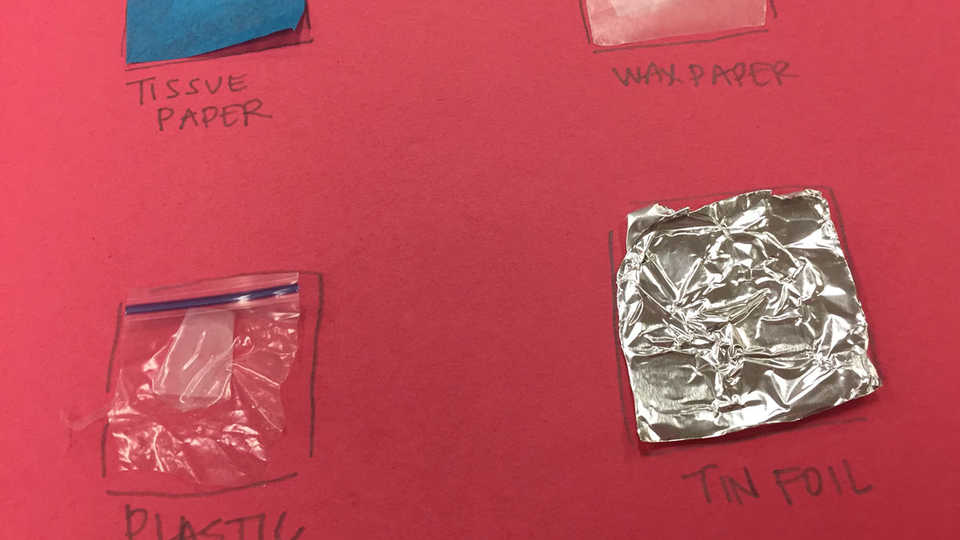
Which material best protects construction paper from fading? Set up an investigation to find out how effective different materials are at blocking sunlight! Then, use your results to inform an artistic composition.
Google Science Journal has a very handy section on their website for teachers, with many lesson plan ideas. That is where I took this one from. I will not post all the instructions here, but it certainly is a quality, multi-faceted lesson that combines science and art. I love it!
 Liz's Blog