


| CARVIEW |
Actus reus, sometimes called the objective element of a crime, is the Latin term for the “guilty act”. Mens rea, the “guilty mind”, is the mental element of a person’s intention to commit a crime, or knowledge that one’s action or lack of action would cause a crime to be committed. A person can be found liable for a crime if the Crown proves that the person committed the criminal act beyond a reasonable doubt and had the required intent to hold the person accountable. Fagan v. Commissioner of Metropolitan Police tells us that for an assault to be committed both the elements of actus reus and mens rea must be present at the same time.
A crime requires voluntariness or, in other words, a muscular contraction that requires some positive state of mind such as intent, knowledge, or recklessness. For example, if A hits B voluntarily, then B could bring aggravated assault charges against A. However, if the two people are playing hockey, A involuntarily outstretched the stick to strike B on the head, then no actus reus is present. Similarly, in R. v. King, King was charged with impaired driving under the effect of an anesthetic, the court finds no actus reus. There can be no actus reus unless there is a willpower to do an act or omission whether the person knows or not that it is prohibited by law. Beaver v. The Queen tells us that it is against the principles of the Canadian criminal law system to punish people for actions that they did not intend and could not have foreseen.
Actus reus still exists if the defendant is threatened or coerced into performing a criminal action. In Hibbert v The Queen, under threat of B, Hibbert calls his friend C down to the lobby of his apartment, at which point, B shot him. Hibbert could argue that criminal intent (mens rea) was absent and the act was performed under duress; the action was voluntary, however, and so actus reus is present. On the other hand, if Hibbert was not in a normal mind state when the event happened, it might be argued, with the automatism defense, that his actions were completely involuntary and that no actus reus occurred.
Strict and absolute liability offenses are the exceptions. In strict liability offences, the Crown need only prove the person engaged in certain conduct. R v. Pierce Fisheries Ltd demonstrated that the rationale for strict liability crimes is that certain acts justify imposing criminal liability regardless of mens rea. As set out in R. v. City of Sault Ste. Marie, the defences of due diligence and mistake of fact are valid defences. In absolute liability offences the Crown does not need to prove mens rea. The defence of due diligence is not available.
]]>Moose don’t hunt and kill caribou. They don’t even use the same kinds of habitat; moose prefer much denser forest at lower altitudes. So why would people consider moose a threat to caribou. Because more moose, means more wolves, that hunt caribou.
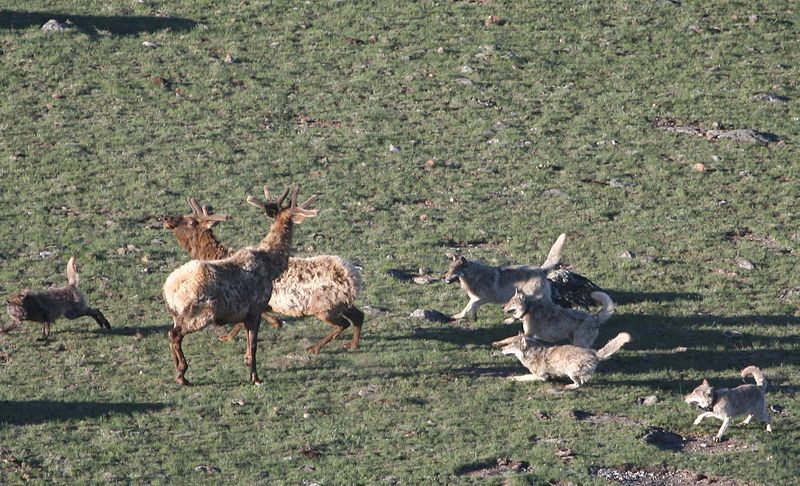
By National Park Service [Public domain], via Wikimedia Commons
When a population of wolves grows dense enough, like with any species, parts of the population are forced to move out of the most preferred habitat to the periphery. Driven by competitors and hunger for uncontested territory and prey the wolves will follow the moose that are driven by the same problems up the mountains and out of the habitat both species prefer. This results in the moose, who still prefer the densest forest they can find, pulling wolves into contact with the territories of caribou.
This is when the basic rules of foraging begin to hurt the caribou. Wolves may be hunting for moose but if an easy meal crosses their path it will always be an easy decision for a wolf. Pregnant cow caribou or new calves are an easy meal. The wolves are unlikely to target a prime bull but pick off every vulnerable caribou that wanders too low.
This easy meal preference is why managers have proposed targeting moose over the wolves themselves. Weakening a pack is unlikely to change their preference for the easiest meal around but they hope that by shrinking the moose population they can pull the wolves back down the mountain.
]]>By Nina Grigat
Wolves are carnivorous animals that primarily prey on ungulates. Wolves are at the top of the food chain. This means that any change to their population size or behaviour could affect species lower in the food chain through a trophic cascade. It is therefore important to look at the ecosystem as a whole when implementing management and conservation efforts.

How Wolves Change Rivers Video
Two common prey species of wolves in Canada are moose and caribou with moose being the most frequent prey item. Moose population numbers have significantly increase in recent years. As wolf population size exhibits a strong numerical response to increased prey availability the population size of wolves has also increased. A larger wolf population size, as well as climate change and human land use are thought to be potential causes of caribou population size is decline.
Caribou are found throughout much a Canada’s boreal forest. However; caribou population size and distribution has been declining. They are now listed as threatened in Canada. The main factor leading to caribou decline is an increased predation of caribou by wolves. This is brought on by apparent competition due to the increasing moose population. Wolves have started predating more frequently on caribou and caribou have in turn changed their behaviour to avoid wolf predation. Mother caribou avoiding suitable wolf habitat selecting instead suitable bear habitat which increased their predation risk from bears but decreased the risk of being predated by wolves.

Humans have largely induced the decrease in caribou population size. Climate change helped the moose population increase as severe winters become less common. Human caused habitat changes has also affected the landscape resulting in more early seral habitat, preferred by moose, within ranges occupied by caribou, exposing caribou to wolves. Linear features associated with the energy sector, seismic lines and oil and gas pipelines interfere with wolf foraging behaviour. Using these human made “highways” wolf hunting in enhanced by increased visual and olfactory encounters with caribou.
Caribou conservation effects have been diverse. Protection of habitat, primarily old-growth subalpine forest that provide arboreal lichen which caribou depend on during winter was one of the first conservation efforts. Wolf culling has also been implemented in Canada to reduce predation of caribou by wolfs. As the caribou population is still declining, it would appear these methods are not working. With such a complex system of organisms it is difficult to determine a method of management and conservation that balances the ecosystem.
]]>Cheetahs are an extremely fast animal that take advantage of their speed to catch prey. However, they cannot keep up this speed forever. As they chase their prey their speed will eventually slow down and may be unable to catch their prey at that time. This species will rarely scavenge, so it is important that the large cat is able to hunt and catch all of its own food. With all these requirements for a cheetah’s survival there are many problems that arise from tourists driving along at one of the many national parks within Africa.
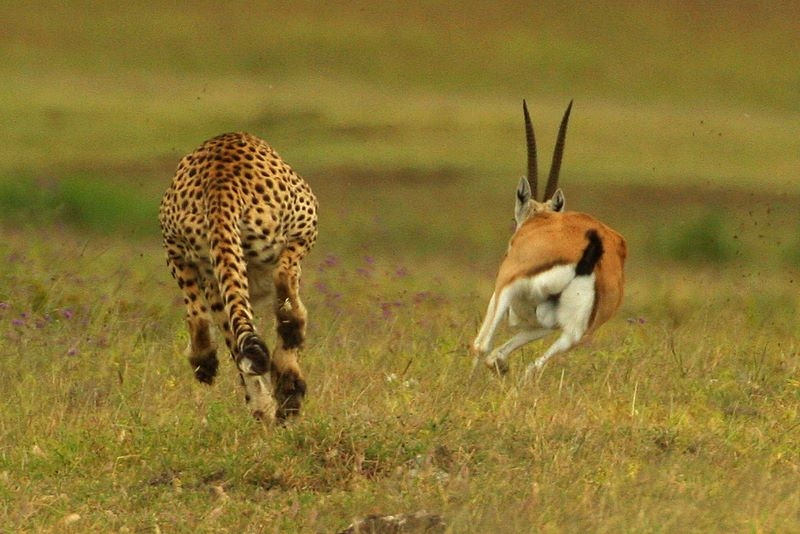
CC BY 2.0/Demetrius John Kessy
Tourists are commonly known to drive by or observe a cheetah and deter it from its hunt, giving tourism a negative impact on cheetah populations. The diurnal activities and timidity of this animal are very good reasons as to why. Cars are very noisy and very quick. The cheetah could possibly see it as a potential predator or threat and decide not to risk hunting its prey when there is something that appears to be much stronger, larger and louder between them. Seeing a cheetah and potential prey may cause for tourists to get excited hoping to see a real-life cheetah hunt. But, for the reasons described above they are less likely to observe cheetahs hunting while on a safari because they will be scared off or want to avoid vehicles.
There have been unconfirmed reports from national parks that the vehicles of tourists watching a cheetah were able to hide a lion from the cheetah’s view, therefore giving the lion an easy kill after all the tourists had left the destination. Predators may learn to use vehicles as an advantage to catch their prey if that goes on too often. There have also been reports that cheetahs will use that exact strategy occasionally to get their own prey as the vehicle will distract the prey making them easy targets for the cheetah, but more often than not the cheetah is just deterred from the hunt altogether.
Unfortunately, not all tourists look closely enough when attempting to get a wonderful photo of a cheetah. There have also been reports of cheetah cubs being run over by tourists attempting to get a better shot of the mother. This is not a major killer of most cubs, but it may have the potential to be a growing concern if tourists are more interested in a picture than the wildlife itself. But, something that does cause mortality in cubs is that some mothers do abandon their cubs in the presence of a vehicle. This abandonment of cubs can be concerning when looking at the conservation of a species as if the offspring cannot survive, there will be a decline in the population of cheetahs.
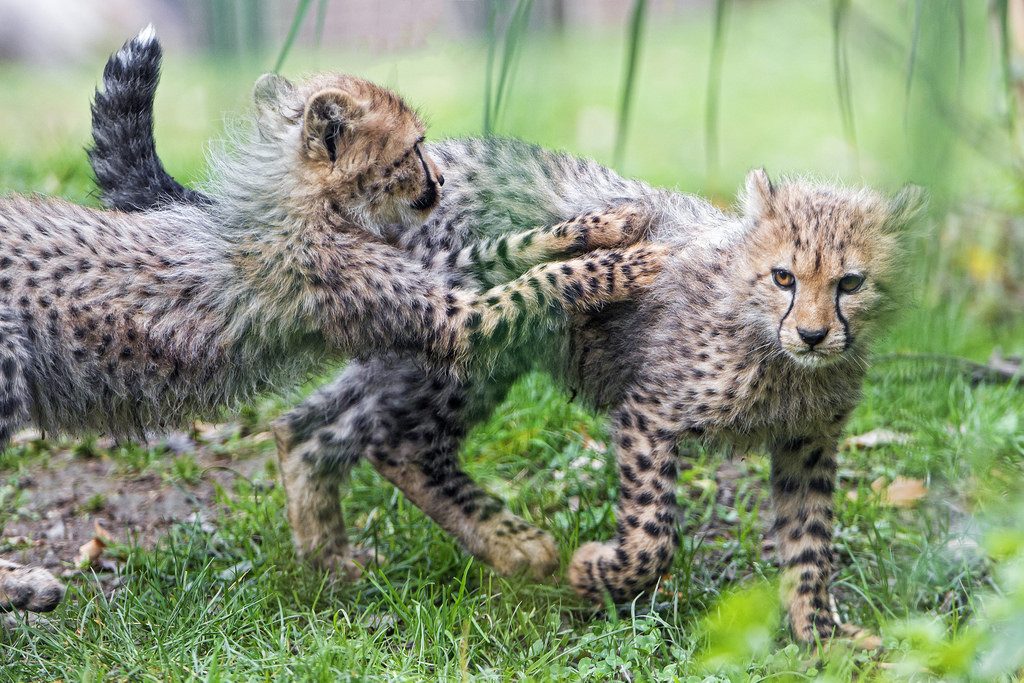
CC BY-ND 2.0/Tambako The Jaguar
The real kicker of this whole situation is that a good portion of the revenue for wildlife tourism can go towards the conservation of cheetahs. So, if you ever get the opportunity to see a cheetah, go for it, but do not drive too close and watch out for cubs!
]]>Anthropogenic disturbances have affected animals detrimentally in numerous ways and has been known to decrease biodiversity. Light pollution is an example of an anthropogenic disturbance that is known to have an adverse effect on ecosystems and natural cycles. Light pollution has been increasing through the years and their biological effects have been recognized only recently. Most negative effects are due to the disruption of natural circadian and circannual cycles, which in turn can affect a whole range of species interactions, physiological processes and behaviours (Rowse et al. 2016). Light pollution affects ecological interactions across a range of taxa and negatively affects critical animal behaviours including foraging, reproduction and communication (Stone 2013).
There are many species of endangered bats that are particularly of concern when it comes to light pollution as they are nocturnal mammals that are especially sensitive to light pollution.
Family of Rhinolophus hipposideros
Picture a new suburb being built. For the land, part of a forest had to be cleared; a forest in which a family of Rhinolophus hipposideros resides, living in their humble roost. After this wonderful habitat is destroyed, the family has been forced out to find a new place to roost. This family of starving bats has to go forage, but when they arrive at the edge of the forest, they face their worst nightmare. Already this family has been through so much, but to make matters worse, the construction companies have installed street lamps to light the night where the bats would normally forage. The bats delay their emergence, causing them to miss out on foraging opportunity. This was horrifying to the family. They can’t possibly fly through these LED lights, even when there is lots of food to be had in these lit areas.
What options does this family have, then? They could fly high above the lights to avoid them, choose an alternative route, or just return to their roost. Each option has an associated risk though. If they fly high in an exposed area would open the bats up to higher predation risk. If they choose an alternative route could take longer and the bats would expend more energy. If they choose to return to their roost, they don’t forage at all. Mother Rhinolophus must feed on lots of high energy foods as she is lactating to feed Baby Rhinolophus.
Going home empty handed is not an option, however, her other two options don’t look too great either. To spend more energy on foraging than she actually eats would not make sense. Baby Rhinolophus is still not a very good flier so taking a longer route isn’t an option for them. They also won’t be able to escape predation if the family takes higher to the sky. Perhaps it’s time for this family of Rhinolophus to relocate their roost, once again.
Concluding Statement
As the story shows, the increase in light pollution has an adverse effect on bat populations. The increase in light pollution has a decrease on the fitness of these already sensitive or endangered species. We need to take into consideration the conservation of bats, and wildlife in general, when discussing lighting options. Some types of lights with different spectral content have different effects on different species. Perhaps regulating the length of time the lights stay on will help reduce the negative effects of the light pollution, not to mention save energy. Don’t forget to think of the little creatures of the night next time you leave your LED porch light on.
]]>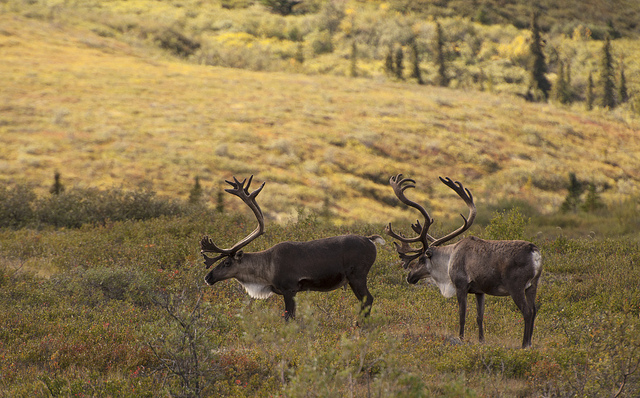
In the case of the caribou, we have seen many important populations on the decline in past decades. While the decline can be linked to issues such as habitat loss from industry such as forestry, or increases in species such as moose and accompanying predators such as wolves, there is still something that can be said about the impact of human presence and how it affects caribou. Without directly removing or fragmenting habitat, it has been shown that caribou habitat can be impacted indirectly from the avoidance of human presence. Whether it is human infrastructure, such as camps, roads, pipelines, etc, or the presence of humans themselves through other activities such as backcountry recreation. It has been shown that humans impact caribou populations even when we think we are doing everything we can to help protect their populations. While some disturbances may simply result in short term avoidance of an area, some human disturbances can result in the abandonment of portions of their seasonal ranges.
Globally caribou are considered a vulnerable species due to population declines over several decades. Similarly, all caribou in Canada fall under the Species at Risk Act (SARA) as a species with need for special management. These designations mean that caribou habitat is often protected from many forms of development which pose a threat to their populations. Many forms of recreation such as sledding and other motorized recreation are restricted in winter ranges. Industry development requires specific permits and monitoring. We may be doing a lot for the protection of caribou, but we are ignoring the impacts we may still be having by simply being present in and near their environments. Much of the human presence goes beyond direct interaction, noise, scent, and visuals can be enough of an impact on a sensitive species such as caribou.
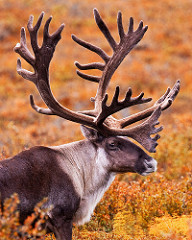
Studies have shown that despite seasonal differences, caribou will avoid human infrastructure by as much as 10 kilometers, and in some rare instances more. This is causing populations which already have restricted habitats and are sensitive to disturbance to avoid a portion of high quality habitat simply because of the presence of humans. Other research has shown that larger scale developments have the potential for long term and large scale distribution of caribou populations. Disturbances such as industrial sites have the potential to alter the range of a population in order to avoid sites permanently.
While there is the potential for caribou to habituate themselves to the presence of humans, as it stands, our presence is simply leading to them avoiding more quality habitat which their populations need. While there are many management strategies we use that can be beneficial to caribou, It may simply be a case of humans needing to realise the entire scale of impacts we can have on caribou rather than only the physical impacts we can see on the landscape.
]]>As described in a paper by on Gould’s petrel, translocation is a process when a nestling is removed from their burrow in one colony site and moved to a new site where they are handfed until they fledge. The nestlings are moved before they leave the burrow with the hopes that after emerging at the new site their philopatric urges will cause them to return to the new site to breed. These fledglings are not in Kansas anymore. After the birds have returned to breed nest fidelity will make sure they keep returning to the new site year after year. Translocation does not have a 100% success rate and some birds do return to the original colony site. Despite the occasional returning bird in 2006 twenty-one Gould’s petrel breeding pairs had become established on Boondelbah Island. As of 2017 sixteen Bermuda petrel breeding pairs have been established on Nonsuch Island and a new translocation project has been undertaken!
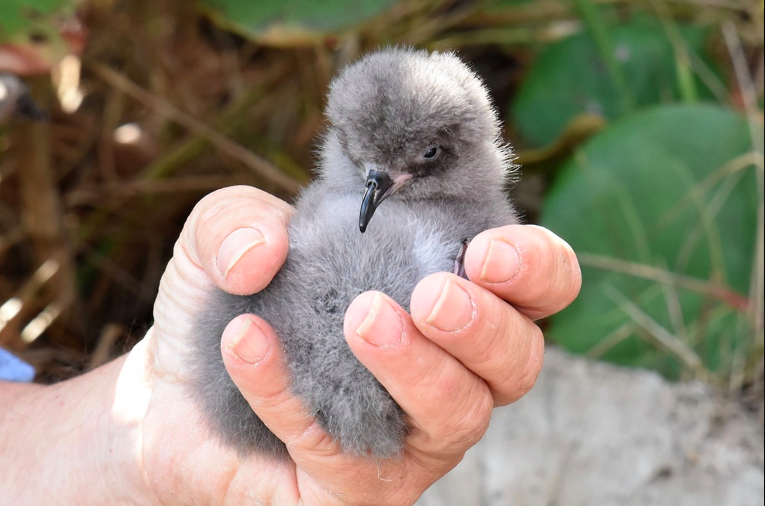
Bermuda Petrel Chick
Another interesting result of establishing a new colony of Gould’s petrel on Boondelbah Island is that birds who were not translocated arrived at the site independently. It is hypothesized that audio cues played a part in directing other pairs to Boondelbah Island. Audio cues were not successful in attracting Bermuda petrels to Nonsuch Island so the this effect should be investigated further to see if biological differences between Bermuda petrels and Gould’s petrels are responsible for these differences.
Conservation interventions to help increase species numbers are not as straightforward as they might appear. It is hard to fix a human caused problem with a human driven intervention without unintended side effects. Translocation, although a human intervention, may not face some of these challenges because it works within systems of behaviour that are natural to the target species of petrels that it is trying conserve.
]]>
Creative Commons Attribution-Share Alike 3.0 Unported
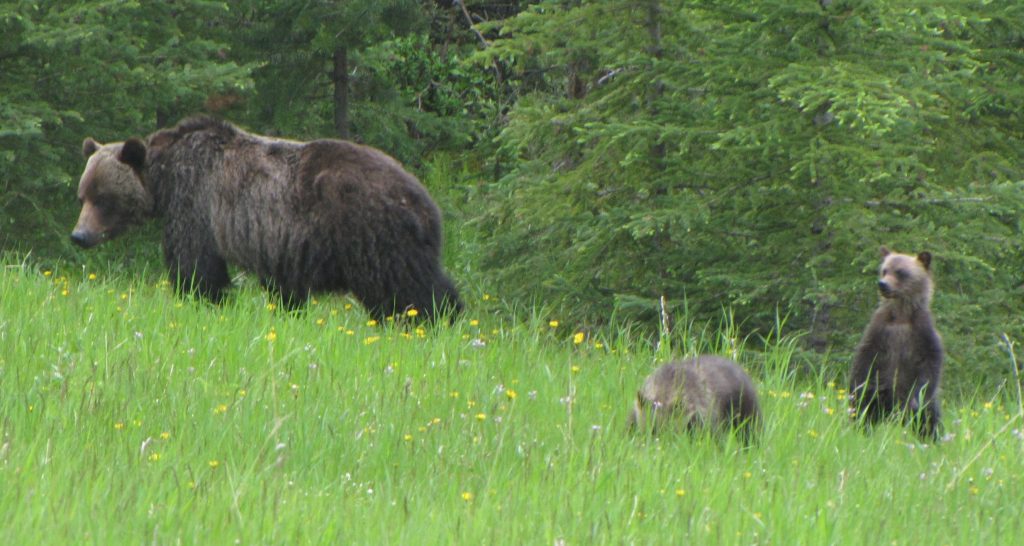
Grizzly bears are often considered a flagship species due to being large, charismatic megafauna who require large areas of land to maintain viable populations, which generally results in greater attention from humans. One aspect that grants them extra attention may also be their greatest adversary, which is the need for large areas to maintain viable populations. Through human development grizzly bears are losing much needed space, although now more than ever humans are expanding deep into the wilderness. Often seen as benign although often more destructive than anticipated are roads. Hundreds of Kilometres are created each year to assist in resources extraction, so that many can maintain civil comforts. A massive increase of resource extraction in Alberta has lead to Grizzly bears becoming Threatened to the province, with roads being a prime suspect. The presence of roads have been known to alter bear distribution and increase mortality. Key reasons why roads can affect grizzly populations so easily are due to increased access they offer legal and illegal hunters, which results in greater mortality. Importance of outdoor connection is being increased in todays society, which has resulted in a surge of outdoor recreationist. Not intentionally, this increased recreation is having a negative impact on grizzly bear distribution, since it has been shown that grizzly bears tended to avoid areas where outdoor recreational trails are present. This results in increased disturbance affect on Grizzly bears, and a decrease in their available area. Roads also assist an increase in outdoor recreation. During the fall bears must eat enough so a significant fat reserve can form and sustain them over winter, however increased roads allow for greater disturbance which can reduce forage time and efficiency. This results in many bears being unable to survive harsh winters. Government of Alberta has recognized many of these vital factors for maintaining viable populations, so they are implementing steps so that more area is conserved and reduce the overall amount of road being created.
To make matters worse Grizzly bears are notorious for having the lowest productivity in North America, with reaching reproductive maturity at 4 at the earliest, and than having only 1-2 cubs every 4 years. Grizzly bears have delayed implantation so during the fall females can assess their readiness for the upcoming winter and if she deems it necessary she can reabsorb the embryo rather than give birth. This is why disturbances having an impact on fall foraging can have such extreme detrimental effects on population sizes. Winter activities also affect Grizzly bears negatively since they are easily roused, and if significantly disturbed can have long lasting effects.

Creative Commons Attribution-Share Alike 3.0 Unported
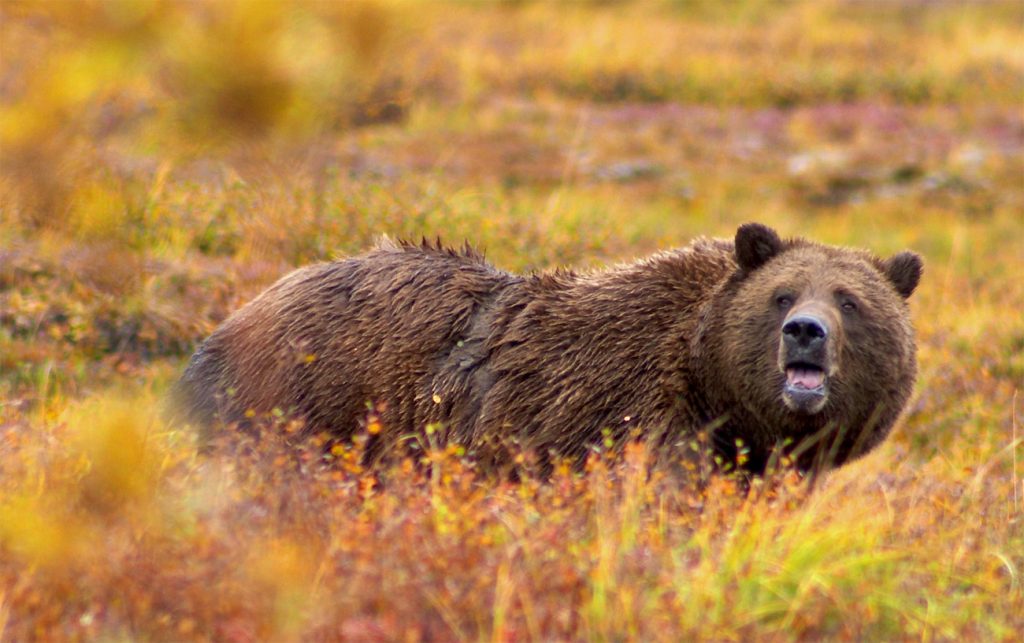
The importance of apex predators in an ecological system can not be overstated, therefore it is vital conservation efforts continue so that the extirpation of Grizzly bears does not occur. Grizzly bears are sensitive to human effects on the landscape, which often result in altered behaviour of distribution, foraging, and reproduction. The need for large, undisturbed areas results in difficult conservation issue, although through hard work and dedication it is possible to co-exist with these magnificent animals.
CC BY 2.5
Cats have been introduced all over the world, with Antarctica being the only continent to remain cat-free. A population that is this large has to have a massive impact on its environment. Cats are carnivores that prey on small mammals and birds. They are also classified as an invasive species due to their amazing adaptability and effect on local populations. Sensitive populations can be dramatically affected by the introduction of cats. Without much threat of predation and a house and a plate of food to go back to, cats have an unfair advantage over creatures living in the wild. This, along with their impressive innate predatory abilities, makes them an effective and damaging source of mortality to natural populations of birds and mammals.
A recent article published in Nature highlights the need for more attention to be brought to the effects of domestic cats on wild bird populations. The authors reviewed published literature to quantitatively estimate the amount of damage domestic cats are doing to populations of small birds and mammals. The numbers that were estimated are quite significant. It was estimated that free-ranging cats kill 1.3 to 4 billion birds and 6 – 22 million small mammals annually within the United States alone. These numbers are dramatic and only add to the many anthropogenic factors, such as window-kills and habitat destruction, that are also contributing to declining populations. A separate study was conducted in Canada and came to the same conclusions. They found that cat predation combined with collisions with windows, vehicles, and power lines caused 95% of mortalities.
We must take into consideration the effects of domestic cats on animal populations when implementing conservation strategies for sensitive populations. Policies regulating cat ownership in sensitive areas, or restricting cats to being strictly indoor pets could be some potential solutions. Cats are hunters at heart and unfortunately even if they are well-fed cats still tend to kill things. It is an instinctual behaviour that has allowed them to exploit any environment they come across all around the world.
In New Zealand, feral cats have impacted many of the native bird and lizard populations. Introduced to the islands when explorers first arrived, feral cats became quickly established and began hunting the local animals. New Zealand is home to many flightless bird species including the iconic kiwi bird. Since it is the nations national bird, New Zealand has been very proactive in cat management to save ground-dwelling species of bird. The main goal of cat management here is to protect vulnerable species breeding grounds, in hope that these species can increase their numbers. Cat management happens in two different ways: trapping and toxins. Usually, trapping and toxins are combined to be more effective. Traps are either soft jaw leg holds or live traps, and toxins are set up in bait stations that keep the toxins away from other animals.
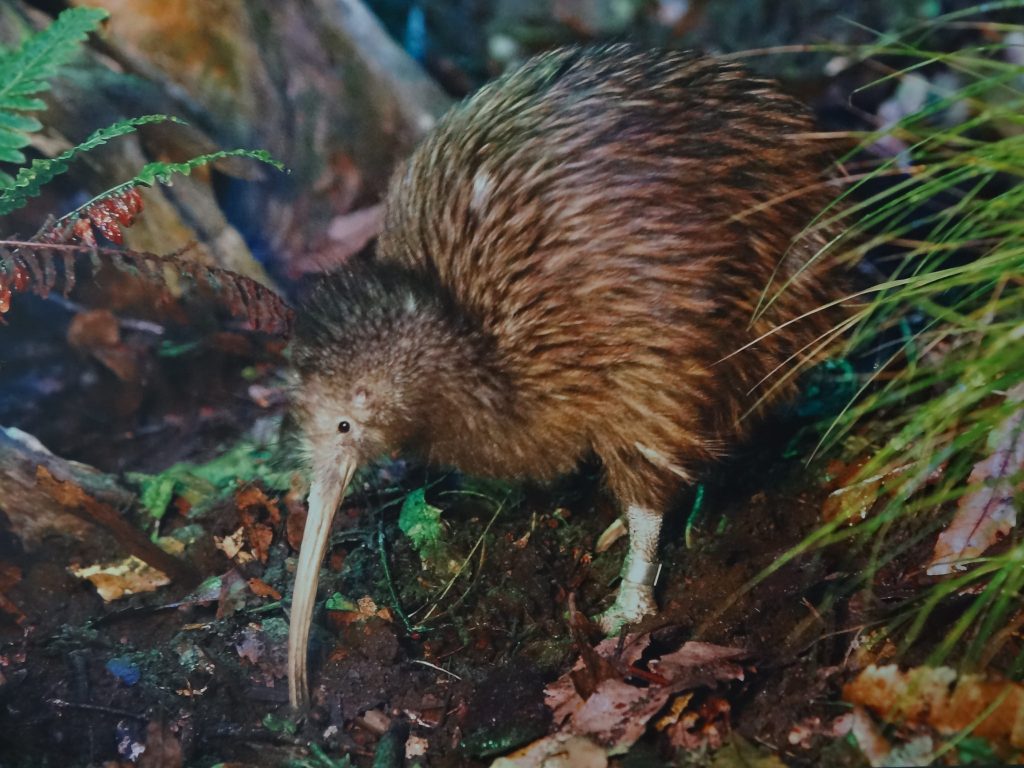
Kiwi Bird
People are generally not for policies like this, as they can be seen as controversial and limiting for cats. Though we hold our pets in the highest regard and its hard to think of them as pests, if preservation of the natural environment is the main goal then measures must be taken. We must assess our impact on the natural environment and implement policies that reduce our footprint and aline ourselves with the natural processes that comprise a complete ecosystem.
]]>
They have been listed as species of Special Concerns under the federal Species at Risk Act (SARA) in 2011 and has been listed as vulnerable species in 2008 by the International Union for Conservation of Nature (IUCN) in 2008. This species population is declining rapidly due to oil and gas development, increased shipping, hunting and poaching, research impacts, diseases and parasite, competition and climate change. I will focus more on how the climate change affects the polar bear’s behaviors.
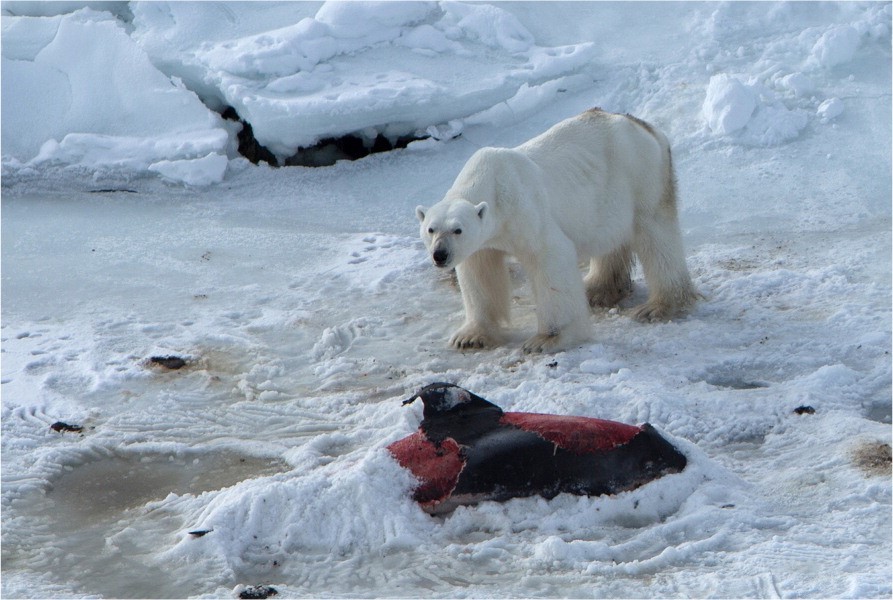
A polar bear on the carcass of a dolphin, April of 2014. Dolphin is being covered with snow. Taken by J. Aars et al. 2015 (CC BY-NC 4.0)
Polar bears are adapting to their new and changing environments. Researchers have seen some unusual behaviors of polar bears. They have found that polar bears are eating dolphins and freezing the leftovers for later at Svalbard, Norway. This behavior is unusual because polar bears tend to prey on seals, but with climate change and the need for sustenance, they are able to hunt for dolphins as well. Dolphin citing in the area was unusual, and the explanation for this was that the water was warm, and so the pods of the dolphins were trapped when a strong northerly wind had pushed them out of open water.
Another way polar bears are adapting to the loss of sea ice is that they are eating snow goose eggs for nutrition. Geese are migratory birds and they come to Canada to breed every year, with each clutch containing four eggs. Polar bears come ashore earlier than expected and prey on goose eggs. Rockwell says that it will take 88 goose eggs to equal the caloric equivalent of 1 seal. Rockwell and colleagues found that the geese are considered as species of least concern because they have a wide range and population that is increasing. Bear and goose encounter will also have mismatched years, so the goose population has the time to reset its population.
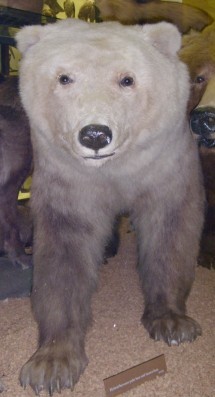
Polar Bear and Grizzly Bear hybrid, also known as pizzly or grolar bear. Taken by S. HArtwell (Messybeast) (CC BY-SA 3.0)
With climate change, polar bears are unable to hibernated. With climate warming, they cannot slow their metabolism down because they do not have sufficient nutrients from the winter season, as the ice sheets were melting sufficiently and they are coming ashore earlier. With them not being able to hunt for food during winter and have to scavenge during summer for survival, they are forced to wander in towns where food and waste are kept. In 2014, the town of Arviat, Nunavut, Canada, had to cancel regular Halloween regimes and hold it indoors, because they are concerned the children will encounter a polar bear and be at risk for being attacked.
With climate changes, polar bears and grizzly bears are able to encounter one another and mate, creating a polar-grizzly hybrid called pizzly, grolar or nanulaks. The two species of bears usually avoid each other in the wild, because of the two different climates they prefer, but with snow and ice melting rapidly, grizzly bears are able to travel up north and polar bears are being forced south due to habitat degradation. First generation hybrids have the ratio of 50% grizzly and 50% polar bear, but further breeding can result in the reduction of polar bear genes. We are now starting to see that the Canadian Arctic is ¾ grizzlies.
There has been a lot of management plan for conserving polar bears; U.S. Fish and Wildlife Service, Inuvialuit Settlement Region Polar Bear Joint Management Plan, Environment and Climate Change Canada, and many more. These management plans should help guarantee that the polar bear population is maintained or increased, as it is an important species for Aboriginals for traditional usage for sustenance and other necessities such as clothing, mattresses, and tools. It has been of their history and would want to pass it along younger generations.
]]>