The Mark of Buscalan

Whang-Od on the cover of Vogue

Originally published in Rappler, 11 April 2023, as “The Mark of Buscalan: Whang-Od, Vogue, and difficult conversations.”

On April 1st, the Philippine edition of Vogue launched its beauty issue. On the cover was Apo Whang-Od, an elder of the Butbut tribe of Buscalan, Kalinga. 

This legend of Whang-Od as “the last tattoo artist” has been repeated numerous times, across both lifestyle and academic publications, with a recent piece in Tatler by Corinne Redfern calling her “the oldest tattoo artist in the world,” “the first female tattoo artist,” and “the most famous nonagenarian in Southeast Asia.” Aside from lifestyle and fashion media, Whang-Od’s name broadly resonates across travel blogs, drawing hundreds of visitors each week to the Cordilleras. Receiving what she calls “The Mark of Buscalan” – three dots said to symbolize herself and the next two generations of mambabatok, or tattoo artists – punctuates this journey, which often begins in the metropolis. 

Most narratives describe the ardousness of the trip in great detail, with Vogue writer Audrey Carpio mentioning the difficult trek and remoteness of Buscalan not once, but twice in her article. While these are faithful and transparent accounts of what it takes to reach the Butbut enclave, they also highlight the disparate relations of Filipino lowlanders or urban-dwellers to indigenous groups and other communities outside the metro. The latest offerings in particular from Vogue and Tatler translate these relations into the buzzy and catchy vernacular of travel and lifestyle publishing. 

While Carpio, Redfern, and Celine Mallari (who wrote in Vogue about the next generation of Butbut artists) are careful to refrain from using the often appropriative and reductive copywriting language seen in fashion magazines, there remain the problems that come with an ancient tradition entering the cash economy and of ancestral lands being touted as tourist attractions. Online, these problems are often reduced to questions of Whang-Od herself being “exploited” and to questions of appropriation on the part of the tourist/consumer. 

For this, a number of threads and conversations about Whang-Od, her nieces, and the agency of the Butbut community have been threshed out, with Redfern and Carpio touching on the subject as well. Quoting Dr. Analyn Salvador-Amores, Carpio notes: “Instead of asking who owns culture, we should ask how we can promote respectful treatment of native culture and indigenous forms of self-expression within mass societies.” 

It is often pointed out that the community has chosen to resituate the practice of tattooing on their own terms, departing from the ceremonial traditions and meanings the tattoos once held within the group, towards a source of income and livelihood, imparted by the younger generations on to outsiders. These are also, incidentally, the same terms that have made Whang-Od and the Butbut tribe ineligible for the prestigious GAMABA, or Gawad Manlilikha ng Bayan Award, which is only given provided the traditional aims of the cultural practice remain intact. Given that the traditional context of the Buscalan tattoo is rooted in violence (at least for men) only shows how even our terms for cultural recognition demand revision. 

Resituating their practice in this way has culturally and economically changed collective life for the Butbut. Accounts online often point at the modernization of the housing in Buscalan, with more and more Butbut families swapping corrugated tin for concrete building materials. What demands confronting is how such levels of economic prosperity and cultural visibility can sit side-by-side with the unsexy systemic issues of uneven development and extraction that confront many indigenous Filipinos – including the Butbut

If anything, Vogue’s attempts at sparking more progressive conversations around beauty only highlights how the marketing and consumption of culture can overshadow or silence the more difficult conversations about development, “modernization,” and progress. Is it really progress if it parallels continued exploitation? Can we sincerely call a group culturally relevant while ignoring or avoiding the ways in which they remain politically marginalized?

That these systemic issues are often enabled by both their figurative and literal distance from those of us living in the center unsettles the type of writing applied to visiting Buscalan to be tattooed by the now legendary Whang-Od. Remoteness does not only make for a good travel blog entry, or in this case fashion magazine article. It also paves the way towards an otherness – one which lends itself to the fetishization of the Mark of Buscalan, as well as an otherness that allows the tourist to remove themselves from the inconvenient and remote location once their business is done.

In her closing paragraph, Carpio asserts: “Culture survives through representation, not appropriation.” Returning to the question of appropriation further highlights the shortfalls of fashion journalism and lifestyle publishing as a venue for progressive discourse. In these venues, appropriation will always be discussed through a neoliberal lens: as a matter of individual action or perspective. It also gets reduced to questions of the so-called “subjectivity” of beauty or iconicity of individuals, especially for a magazine issue of such magnitude and consequence as Vogue’s Beauty issue.

If anything, this is not a matter of the consumer (or reader) appropriating cultures, but of fashion publishing appropriating progressive discourse – cherry-picking the cultural and aesthetically pleasing bits, while avoiding the trickier muck: muck which, if we dig deeper, has more to do with fashion and fashion publishing than most fashion publications are willing to acknowledge. Muck like the marginalization of IP groups – an issue which cannot be divorced from an image like that of Whang-Od on the cover of Vogue.
The Audacity of Hope

Liza Soberano and the Autonomy, or lack thereof, of Filipino Artists in the Entertainment Industry

Originally published in Rappler, 9 March 2023, as “The audacity of Hope: Liza Soberano and artist autonomy

When asked about their career as a matinee idol, a young performer once spoke, without any regret or anxiety, of having “a feeling this is coming to an end.” This statement was made by an actor named John Lloyd Cruz, in an interview with Esquire magazine for their “State of Man” issue in 2012. You might remember him from classic Filipino rom-coms like One More Chance (2007) and A Very Special Love (2008)where he is seen acting alongside Bea Alonzo and Sarah Geronimo. Cruz now frequently goes by the artist name Idan, and his appearances alongside Alonzo and Geronimo have substantially lessened. If you Google “Idan Cruz,” however, it is still John Lloyd who comes up.

Fast forward to over a decade later, and one can find similar sentiments in a statement made by a popular actress named Liza Soberano. On February 26, 2023, Soberano uploaded a video blog, or vlog, called This is Me to her YouTube channel. This is Me runs for 14 minutes, hitting crucial points about life and career at each minute-mark. Soberano opens with reflections she took time for over the COVID-19 pandemic, describing recent pivots in her career trajectory, and explaining her decision to end her contract with Star Magic, the talent management agency under broadcast corporation ABS-CBN, which boasts of a 31-year legacy of creating “stars, not actors or actresses. Stars. Icons.” 

Like Soberano, Cruz had also left Star Magic fairly recently; and like Soberano, he is also managed by a start-up headed by a former Star Magic performer. Soberano is now under Careless, an independent agency created by actors James Reid and Bret Jackson. On its website, Careless describes its committment to “creating progressive content through a platform that allows artists to fully invest in their creativity and growth.” 

This is where the similarities to between Cruz and Soberano cannot simply be dismissed as mere coincidence. In an Inquirer piece about Crown Artist Management (or CAM, the agency representing Cruz), CEO Maja Salvador (who played as foil to the Bea-John Lloyd tandem in One More Chance) talks about how in her company, “We always listen to what the artists want with their careers…. We make sure to discuss everything with them…. We respect them because they’ve been part of the industry for a long time now.” 

This echoes a claim Soberano makes in This is Me – a claim which caused her former management and industry stalwarts to cry foul. At the 1:00 mark, Soberano shares that she “had always been told what to do, what to wear, what to say, and what not to say…I didn’t even choose the name Liza. It was chosen for me.” Comparing this to what Salvador said makes a compelling case for the need to read between the lines – to understand what performers cannot say, but only because they were told for so long not to say it.

Soberano also acknowledges her given name: Hope. While the vlog entry affirms her creativity (Soberano is credited as the vlog’s writer, and one out of only three credits in the video’s caption), the name reclamation is a pointed reminder of Soberano’s humanity – a name as a sobering fact to counter Star Magic’s place as a self-described “star-making factory.”

Affirming a craft and a name is a telling sign of the need for artists to reclaim an identity in the face of the market’s demands. While Star Magic’s orientation towards the industrial production of entertainment comes as no surprise, artists like Cruz and Soberano, and by extension, Salvador, Reid, and the cohorts they formed through their establishment of independent agencies, remind the market that this should not come at the expense of an artist’s craft, growth, and self-actualization. In other words, it should not compromise any artist’s autonomy.

What is artist autonomy?

It is precisely this pressing need for a more thoughtful conversation around autonomy that Soberano drew attention to by deleting and then relaunching her social media accounts, along with uploading This is Me to her vlog. 

By quickly going viral, Soberano became instrumental in raising questions about how performers and entertainers could be better managed if they had more of a say in their careers. It raises questions of what showbiz careers would even look like if our entertainers – who not only bring us joy, but are also instrumental in the formation of values and creation of public discourse – could work on their own terms. Not as stars or icons, but as artists.

There is also an important distinction to be made between the independence being demanded by Soberano, et al. and the autonomy to which they are entitled. This is Me, while undoubtedly borne of Soberano’s personal reflections, is ultimately a teaser for the new campaign of finance app, maya – which recently rebranded from PayMaya. 

As seen in Soberano’s endorsement, maya made the brilliant move of using the confessional format of the vlog to rebrand itself as the finance app of choice for unapologetic and authentic creatives, thus matching Soberano’s own rebrand as Hope. Despite valorizing traits like independence, introspection, and intentionality, Soberano’s (and by extension, maya’s) celebration of the self was still made possible through corporate sponsorships. By bringing her in as its new face, maya is also building a corporate identity as a product used by those who think for themselves – or at least those who can afford to, like everyone at Careless (Reid is also an endorser). 

Hence, autonomy. In a 2014 essay for The New InquiryRob Horning elaborates on this term and its place in neoliberalism, where human needs like social engagement, public discourse, and self-actualization have become increasingly subsumed by the demands of capital. To use a Filipino adage, “pera, pera lang,” with “pera” (money) in this case extending to the realm of likes, shares, and retweets. Horning writes: “It’s a measure of capitalism’s continued success and expansion that more and more people feel confident in describing themselves as creative, as artists. The neoliberalist turn hinges precisely on this, that more and more people can imagine themselves artists — in part because ordinary consumption has become a mode of personal expression, in part because capital has placed various forms of audience-building media at nearly every non-impoverished individual’s disposal, in part because every scrap of one’s life gets turned to account as reputation, as human capital.”

With this, despite Soberano’s operating within the framework of the market, where even an announcement of independence must take place through corporate-backing, it still remains to be seen how her words will ripple through the industry. This is where the similarities with John Lloyd/Idan end: where Cruz’s rebrand gradually unfolded, wading first through the safer streams of (relatively obscure) lifestyle publishing, before comfortably esconcing himself in more “serious roles” and finally signing on with Salvador and CAM.  

Soberano on the other hand dropped a bombshell in the form of This is Me through a well-orchestrated albeit corporate-sponsored move that would drastically alter her iconicity, without diminishing her star power. Asserting her autonomy, Soberano used her privilege (or “the respect [she] earned,” to reference Salvador) to expose the cracks of a exploitative system. If anything, this should give us hope. 

Beauty Talk and Empire

Luzon Lingerie, 1920, Burton Holmes Travel Pictures. Clutario discusses this film extensively in Chapter 3, on the colonial development of embroidery as a cottage industry in the Philippines, and its neocolonial persistence within local industries.

A local fashion glossy recently published a short piece on Filipina actress and entrepreneur Nadine Lustre. The author describes Lustre as an “outspoken champion of Filipina morena beauty,” mentioning instances where the actress shut down critics who were giving her “a lot of hate for being dark.” In the same space, however, the author writes off Lustre’s complexion as both a flaw that should be “embraced” and a “new thing.”

That a celebrity with the status of Lustre would still be criticized for her skin color shows a well-documented dominant preference for whiter skin, confining the definition of “beauty” – at least as far as the entertainment and fashion industries were concerned – to those with mestiza featuresThe term mestiza had previously just referred to those “of mixed race,” but was later embraced as a signifier of social capital, signifying a prevalence of internalized colonialism among Filipinos. 

Despite the article’s petty and superficial nature and its easy dismissal as “fluff,” it still imparts an uncomfortable truth: that beauty is an enduring concern. As an industry, beauty is worth billions – far more if we were to include adjacent industries like fashion, fitness, and wellness. Even as beauty continues to be diminished as mere frivolity (and this is undoubtedly due to its historically gendered nature as “women’s work”), Filipinos, more often than not, deeply care about appearances. Or rather, we are conditioned to.

Genevieve Alva Clutario’s Beauty Regimes: A History of Power and Modern Empire in the Philippines, 1898-1941 (Duke University Press, 2023) picks at the threads of this seemingly petty yet ubiquitous concern to unravel a history of beauty production. By confining her study to the periods wherein the budding Philippine nation was being handed from one regime to the next, she delivers a sharp analysis of how gender, more specifically the performance of Filipina femininity, was racialized and disciplined to serve the social and economic demands of modernity under a period of “transimperialism,” or overlapping colonial regimes.

In many ways, Graphic’s multipage feature on Balmori substantiates what historian Ambeth Ocampo calls the “Filipino obsession with beauty contests,” referring to the pervasiveness of beauty pageants across barrios, towns, and regions in the Philippines and throughout the diaspora that have developed into a mainstay of Filipino life.

Genevieve Alva Clutario, Beauty Regimes: A History of Power and Modern Empire in the Philippines, 1898-1941. Duke University Press, 2023.

In a nutshell, this makes Beauty Regimes “the untold story of beauty work and empire,” linking two seemingly disparate concepts across five chapters (and one long epilogue) where Clutario tracks emotional, physical, and financial investments in Filipina beauty production. More generally, Clutario asks, “What can we gain by taking beauty seriously?” against a backdrop of shifting power structures, moving from the deeply racist change of hands from the Spanish to the American colonial administration, to the brutality experienced under the Japanese military.

Beginning each chapter with a seemingly innocuous anecdote, she connects seemingly irrelevant beauty talk to broader phenomena, thereby charting the formation of her titular regimes and the larger system they uphold. While this might sound like a narrative of the beauty and fashion industries within Philippine economic history (in itself, a worthwhile endeavor), Clutario takes it a step further, describing not only the formation of beauty businesses, but the role of both paid and unpaid beauty work within mounting class and racial tensions between Filipinos and the different empires that subjugated them. 

Peering through a gendered lens, Clutario exposes the complex roles Filipinas played within empire and the fraught establishment of the Philippine Commonwealth, building upon previous works on Philippine-American relations, such as Elizabeth Holt’s Colonizing Filipinas (2002), Nerissa Balce’s Body Parts of Empire (2016), and more recently, Stephanie Coo’s Clothing the Colony (2019), all of which were published by the Ateneo de Manila University Press.

Despite confining the text to a specific period, Clutario’s work is made more relevant by an enduring anxiety over the embodiment of a Filipino identity, i.e. Who gets to be called a Filipino/a/x? This is exemplified by the nostalgia peddled by accounts like @fashionable_filipinas on Instagram, which celebrates (deliberately or otherwise) some notion of Filipina quintessence, particularly around the wearing of the butterfly-sleeved terno – an outfit which, lest we forget, was weaponized by a deposed dictator’s wife in her own attempts at monopolizing the discourse on the good, the true, and the beautiful.

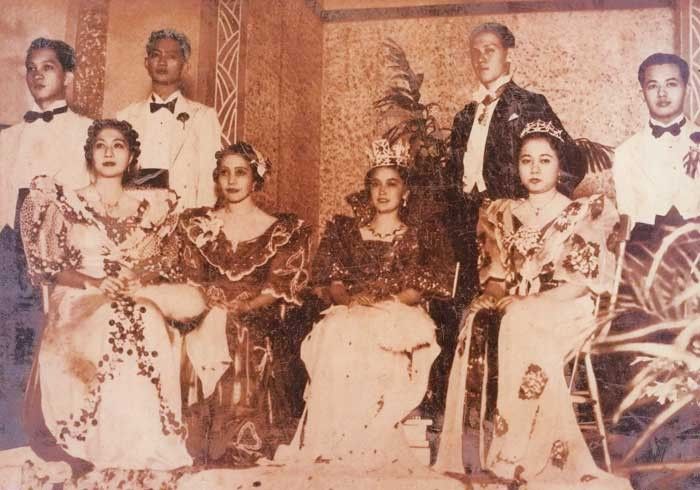
What Clutario makes glaringly obvious (especially in chapters one and five) is that an outfit, as in the case of the butterfly-sleeved terno and numerous other finery donned by Filipina elites, is never just an outfit, just as beauty belies far more than surface and artifice. Writing about the wives of politicians, embroiderers, beauty queens, and socialites, Clutario renders beauty as a complex weapon. In the hands of her Filipina subjects, it is deployed with both tenderness and aggression. 

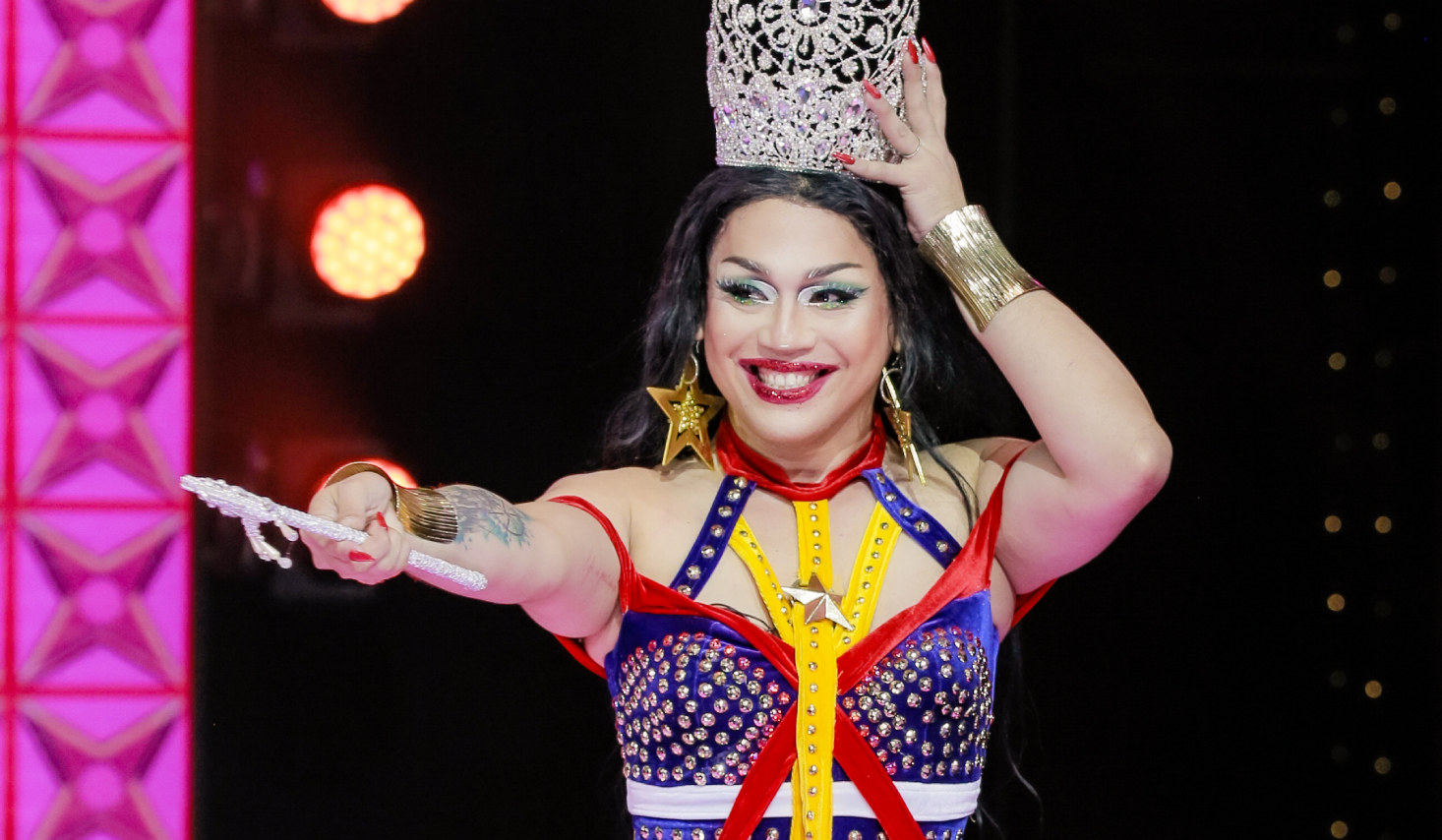
In chapter two, Clutario lays out the origins of the country’s well-known beauty pageant industrial complex, where she points out how beauty still allows Filipinas and Filipina-identifying subjects to crown themselves “queen for a day.” Beyond the already familiar criticisms of Filipina participation in the pageant world, Clutario’s work also points to a more contemporary phenomenon: where the beauty pageant is also a venue for self-organization and empowerment – a means for Filipinas to carve out space for themselves in a world they otherwise had no hand in making. This brings to mind the recent breakthroughs of the Pinoy drag scene, and other spaces celebrating queer joy.

carview.php?tsp=
Precious Paula Nicole, Queen of the first ever season of RuPaul’s Drag Race Philippines. source: gaytimes.uk;

The optimism of this chapter however is brought back down to earth in the next sections, where Clutario veers away from embodied performances of beauty, and towards the establishment of export-oriented cottage industries in the Philippines. Across chapters three and four, she describes the growth of a work force of Filipina embroiderers, utilizing child labor through the colonial public school system, as well as prison labor, through the women’s wards in Bilibid penitentiary. Clutario makes the disturbing observation of Filipinas’ “appeal as a cheap, feminized labor source…grounded in their colonial status and nonwhite racialization, which together forged a disposable and vulnerable worker identity that persisted long after the formal end of US colonial rule (116).”

This may prompt readers to consider Beauty Regimes not only in light of the fashion and beauty industries, but for the role of the Philippines in the global export of care labor and, by extension, the country’s continued dependence on outsourced labor, both internally and internationally. These descriptions still apply to how much of internal migration is still driven by Filipinas moving from the provinces to the cities, to work in the homes and families of wealthier Filipinos. On a larger scale, this is seen in the number of Filipinas (1.10 million, as of 2021) who continue to perform similar roles abroad. 

By deftly articulating these connections between economic vulnerability and beauty work as a performance of so-called feminine roles, Clutario exposes the interwoven histories of empire and aesthetics. She thereby exposes the insidious ways that beauty – and by extension, femininity and discipline – was used to shroud broader systems of oppression and exploitation. – Rappler.com

Beauty Regimes: A History of Power and Modern Empire in the Philippines, 1898-1941 is forthcoming from Duke University Press. 
Originally published in Rappler on MAR 1, 2023 1:54 PM PHT as “‘Beauty Regimes’ review: Beauty talk and empire”.

In Residence/Work in Progress

carview.php?tsp=

I recently temporarily relocated to Innsbruck for a residency at Kunstlerhaus Buchsenhausen. By recently, I mean a little over a month and a half ago, and this only highlights the temporary conditions of the endeavor, in that I am already a third of the way through my time here.

Since I landed, I have done two public events, attended one exhibition opening, caught up with my movie viewing, made friends with a neighbor’s dog (and the neighbors), gone ice skating twice, pitched four articles, published one, accepted another project for later this year, and purchased roller skates, which I am currently learning to use for purposes other than competitive contact sports. I have learned that landing in a completely new city (and getting to work immediately, no less) is made softer by the privilege of having something close to a network, but also resembling a family. One of the things that has made/is making this residency go by incredibly fast is the constant stealing of free weekends (and weeks) to see friends and chosen family. None of the above would have been possible without the comfort of that soft landing.

carview.php?tsp=

I’ve been talking to other friends with similar experiences of being uprooted in this way of whether a residency is part of one’s life or separate from it. This crystallized somewhat with my realization that every time I’m in the city center, I feel compelled to swing by a one-euro store or any cheap home goods store just in case I might need something. This is borne of my habit of passing by a Daiso or Japan Home whenever I happened to be out running errands in Manila, and recreating this habit brings me some comfort even if I don’t have the same responsibilities towards the place where I live here, as I do at home. Which, of course, is still Manila.

But there is that anxiety still, or that need to perform some part of the dance of building a home – even if the choreography is incomplete. (That on the left is TEDi, although yesterday I discovered that Kik has far superior winter tights and craft supplies.)

Beyond the more abstract and emotional aspects of not having a permanent address for an extended period, what residencies make clear is how much work it takes to rebuild a life elsewhere. While the past month and a half easily filled up with equal parts work and leisure, just as much time has gone in to filling in certain gaps: basic needs I could not make room for in my luggage, since I knew I could find counterparts here. What is impossible to account for however, especially when moving to a completely unfamiliar city, is how long it takes to find those counterparts; how long before certain places become “haunts” or a route becomes well-tread. And how do you fill in those gaps (which basically means how long before you feel like yourself again) in the middle of working on things that demand so much of your self (which is how it feels to work on art).

carview.php?tsp=

When I first arrived, I thought I had a system figured out when it came to drafting the text I came here to work on. Because it would be approaching a composite of several texts I had already written about the content economy, I figured I could simply make a cognitive map of those texts and the concepts that linked them, and move forward from there.

carview.php?tsp=

Going in that direction would have resulted in a draft in about a month, give or take. I could have had a draft which I would just discuss and edit with my curator over the rest of the residency period.

This is not how it works though when your text has a lot of moving parts, both literally and figuratively. At some point, I scrapped everything on the first board, decided I did not particularly like some of the things I had written in my earlier essays. Not wanting to add to the industrial complex of studies (and mentions) of the strongmen whose regimes I was initially studying, I also decided to depart pretty fully from the case studies I had proposed to explore when I first applied for this residency.

The flip chart on the left? It is now on the back of a giant doodle I am working on in my downstairs studio, aka my apartment. Buchsenhausen has two studios for each of the resident fellows: a massive lab, which we all share (and which I bought the skates for), and on top of the shared lab, we each have living quarters where we are free to spend all our time if we’re not feeling very sociable.

So what started as a project that meant to explore the contemporary (as in current, as in TO-DAY) content economy in the Philippines and its repercussions on the state, the public sphere, and meaningful forms of public engagement (something I keep meaning to do and have actually proposed twice, but keep getting unbearably depressed by) has been dialled back by a few decades for one case study, and roughly a century for the other.

I am now working with these two maps. The one on the left is all photos of Andres Luna de San Pedro’s Crystal Arcade, a building I became fascinated by at the tail end of my coursework in Art Studies, and have remained obsessed with since for its resonance with two canonical narratives of modernity and empire: the Crystal Palace expositions which were often staged at the turn of the 20th century throughout Western Europe, and Benjamin’s Arcades Project. But also for how it recalls all these salacious details of Philippine elite history that often tend to overshadow the violence of architecture, and how this violence became such a potent force in the rendering of Philippine society. That is how I want to talk about the formation and perpetuation of narratives which in turn erode public spaces and engagement.

Anyway.

We have a second public program coming up at the end of the month. For that, I will be in conversation with Lisa Ito of the Concerned Artists of the Philippines and Cian Dayrit of Saka, still in relation to A Meme is not a Monument…Then towards the end, we have an exhibition at the Kunstpavilion at the Hofgarten, for which I will be showing the text in some exhibition-ready capacity (still have not decided since the text does not exist yet…haha, but there’s still time) alongside work by two or three more artists (on my end at least. Not yet sure what the other fellows have planned).

I should really try to update this more often, if only to get a grip on what I’m working on.

Growing Their Own Garden

On Nathalie Dagmang’s Fertile Land

carview.php?tsp=

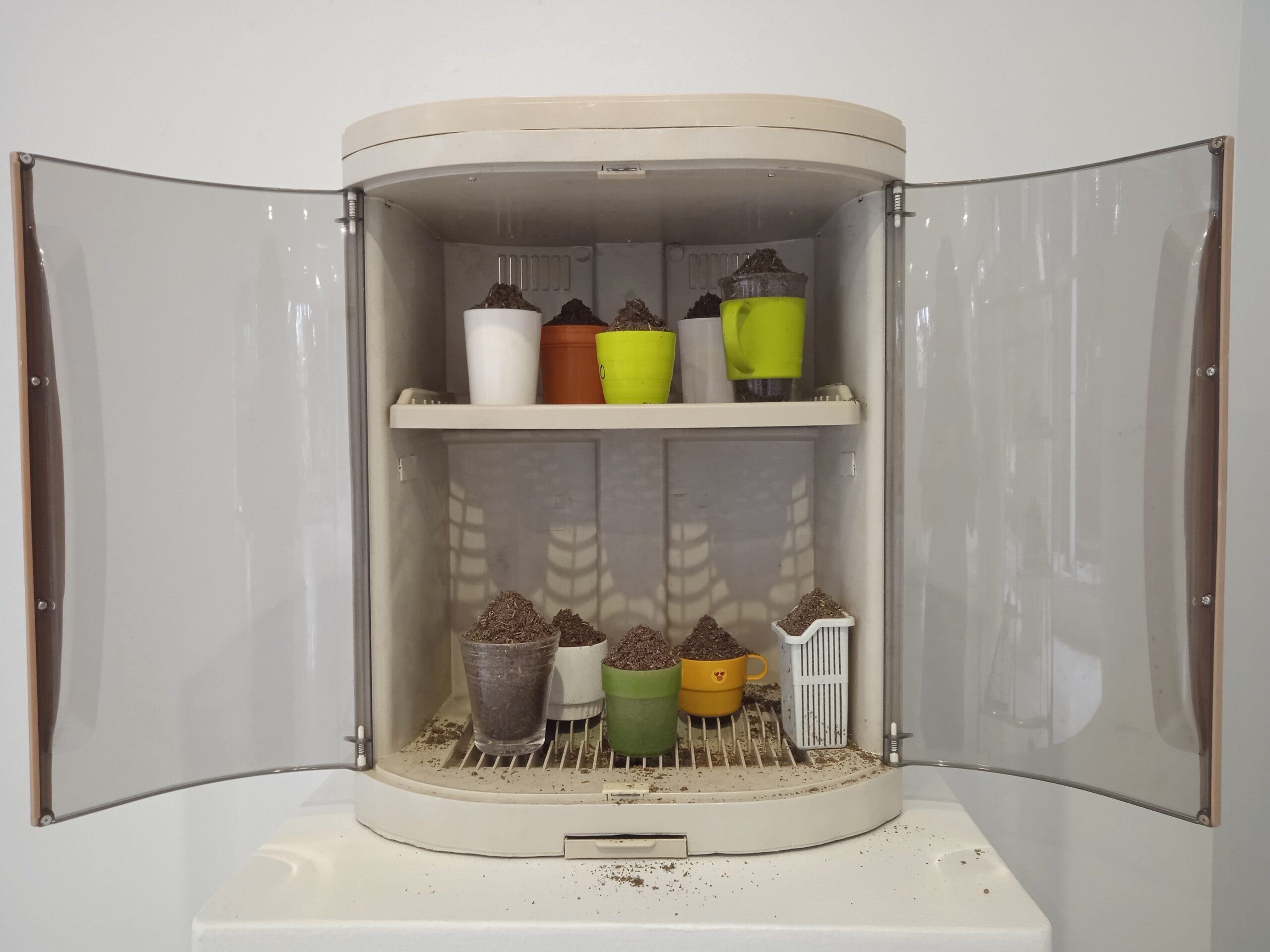
Upon entering the main gallery of the Vargas Museum, one is immediately confronted by “Sifting Sand and Soil,” an intermedia installation that uses found objects, repurposed as containers for potting soil, mixed from the silt gathered from the Marikina river banks. A video on the far end of the gallery shows four men sifting this soil mix, separating trash, gravel, and debris, and the rhythm of dirt being sieved accompanies the viewer as they move through the work. In another corner of the room, an empty dollhouse lays open on a bed of dirt, poignantly evoking the work’s inherent contradiction: that while dirt may be worthless, few things are more precious than land.

Nathalie Dagmang, whose art practice exists between collage, multimedia, education, and community organizing, was anxious about opening her solo exhibition, Fertile Land, with this outwardly conceptual display – one that could easily invite confusion at best, ridicule at worst. 

Indeed, viewers may be struck by how many of Fertile Land’s spaces are occupied by found objects: a frequent target and punchline of the art world. One popular sitcom clip-turned meme-turned .gif that both critiques and pokes fun at the genre shows Danny DeVito in a white wig playing his It’s Always Sunny in Philadelphia alter-ego, art collector Frank Ongo Gablogian (a play on both gallerist Frank Gagosian and pop artist Andy Warhol). In the clip, Gablogian waddles through the gallery dismissing each of the pieces installed on its walls, before coming upon the air conditioner in the middle of the floor and proclaiming, “That. I love. I absolutely love.”

carview.php?tsp=
Detail from ‘Sifting Sand and Soil.’ Photo by Alice Sarmiento

As with conceptualism, social practice (the genre Dagmang works in) negotiates the difficulty of documenting the artistic process, while arguably taking a step further by rooting one’s practice in community engagement. A cursory glance at “Sifting Sand and Soil,” with its makeshift containers of dirt, might produce the same kind of cynicism or the reductive take that “anything can be art,” or “anyone can be an artist.” Dagmang however trusts that the viewer will use the museum space to reconsider what is on the pedestal (or in this case, the scaffolding): thinking instead of these everyday objects as objects of tension. 

Whatever anxieties Dagmang had were later assuaged by the ease with which the work was received by the residents of Bgy. Tumana, who Dagmang was touring around the exhibition on the day that I visited. Her involvement with them is personal as well as professional, going back to 2016, when she produced her BFA Thesis, Dito sa May Ilog sa Tumana: A Sensory Investigation on the Contradictory Relationship of Barangay Tumana with the Marikina River, for the UP College of Fine Arts. The installation, which combined video and found objects, namely rubber slippers fished out of the Marikina River, shares the same genetic makeup as Fertile Land

It would however be incorrect to call Fertile Land a revisiting of the subject, in that Dagmang never really left the community. Aside from the community garden initiatives on view at the Vargas, Dagmang has also led relief drives for those compromised first by the constant flooding, and then by the COVID-19 pandemic. After the exhibition closes, the steel scaffolding she used to mount her repurposed containers will be donated to the community for future gardening projects.

2016 did not only mark the beginning of her immersion among the residents of Tumana, it was also the year she began volunteering for Gulay sa Barangay – a pocket garden that eventually became a full-scale demo farm. However, as Gulay sa Barangay grew, its participants were forced to halt the project due to growing tensions between the community and the owner of the property, over what was supposed to be a temporary project. Ending the project while it was at its peak forced Tumana’s leaders to improvise an alternative, bringing forth the container gardening workshops at the center of Fertile Land.

carview.php?tsp=
Detail from ‘Tetra Pots.’ Photo by Alice Sarmiento

Such a backstory imbues the exhibition with a quiet melancholy – the sense that something is not quite right despite the broadly accepted notion of urban gardening as a net positive and a symbol of a community’s resiliency (a term which has been subverted in the years since Dagmang began her work with the Tumana residents). This is elaborated further by “Interruptions,” a collection of printed texts and images laid out on a long wooden table in the center of the Vargas’s West Wing gallery. “Interruptions,” which narrates and illustrates life along the river, tells its story from the ground through photographs and ephemera circulated among everyday people; and from above, through maps, statistics, and diagrams. 

As a resident of Marikina herself, Dagmang bears intimate witness to life along the river banks. Having immersed in Tumana by documenting the barangay’s activities and projects since 2016 has shifted her perspective on community work, prompting further reflection on the process of “slow ethnography.” Slow ethnography negates the objectivity and detachment typically expected of researchers, making space instead for connection and relationality. It is a practice that reflects on what it might mean to make art not about or even for somebody, but with and alongside them. This shift has since undone what Dagmang calls her “naive” preconceptions about community work. It has also collapsed how she differentiates between the audience, the public, and the community.

Pag-iniisip ko kasi ang audience at community, most of the time pareho lang yon (When I think about the audience and the community, most of the time they are one and the same),” she explains. “Siguro conscious din kasi ako na masyadong ma ‘other’ ang community. For example, sa Tumana, although siyempre iba ang experience nila from the viewer, yung pagbabaha ay lahat dinadamay (I might also be overly-conscious of ‘othering’ the community. For example, for [the residents of] Tumana, even if their experiences differ from [the experiences of] the viewer, flooding still affects us all).” 

Fertile Land is the result of art made not from imagination, expression, or even necessarily from beauty, but from involvement and connection. One could eventually argue that this practice produces the utopian imperative that has come to be expected of artists. Bypassing notions of conventional beauty through her work, Dagmang sheds light on how art and artists help us imagine the world we want – taking a detour first, by showing us what is amiss in this one.

Fertile Land” was exhibited on the ground floor galleries of the University of the Philippines Jorge B. Vargas Museum and Filipiniana Research Center until October 22, 2022.

This article was originally published in Rappler on OCT 4, 2022 2:47 PM PHT.