


| CARVIEW |


SFBC Valet bicycle parking

Hazel Dickens

Dirty Hippy

Earl Scruggs & Family
Earl Scruggs very-amateur video

Banjo Stage set list

Lady Rider

Dread natty dread
Doc Watson, kickin’ it live.

It wouldn’t be an event in SF without Frank Chu’s unintelligible signs

Man, woman, dog

A few people

Not-shy

Crowd @ Doc Watson

Nick Lowe, one of my very favorites
]]>Elica, Sarah & I drove the ~1 hour from our cabin to the top of Ebbetts Pass, then down a hundred yards to the trailhead for this section of the Pacific Crest Trail (PCT) and hit the trail at 11:00.

Ebbett’s Pass Trailhead
It was windy and quite chilly for this time of the year at ~8700 feet – Sarah borrowed my heavier coat and I hiked in a long shirt and polartec vest, which wasn’t warm enough.
]
Deeply eroded cliffs
The hike to Nobel Lake is vertically V-shaped, and we descended gently, enjoying views of the craggy cliffs to the west and opening views out toward Markleeville to the east, as we descended out of the forest into more open terrain.

Wildflower-strewn hillside
I’d thought we would be late for much in the way of wildflowers, but this was not the case, as many open areas were blanketed in lupine and asters. The Mule’s Ears, which along with Lupine and Paintbrush, form the “Sierra Tinity” of spring bloom were long gone, with only their fuzzy dusty leaves remaining.

Red Elderberry
And of course not all foliage of interest needs to be a flower – Red Elderberry, striking in its flaming color, was abundant in several seepages on the hillside.

Incense Cedar(?) and Silver Peak
A couple of icy blasts of wind brought little white specks from the sky. Ashes from a nearby wildfire? No – snow flurries! Very strange in August, and under mostly clear skies no less.

Ranger’s Buttons
The terrain on the initial downward hike alternates between dry and rocky and, where the PCT crosses a half-dozen or so permanent and semi-permanent seepages and creeks, lush and verdant. Most of the wildflowers we saw were in these drainages, for obvious reasons.

Streamside Bluebells
One of these flowers was new to me – Elica correctly pegged it as a Bluebell, and a little digging in a wildflower book back home confirmed that it is indeed Streamside Bluebells.

Elica & I
We continued downward, feeling fine, since when hiking gently downhill, the altitude doesn’t really have much effect (we were at home at 0 feet the day before, not exactly acclimated yet!).
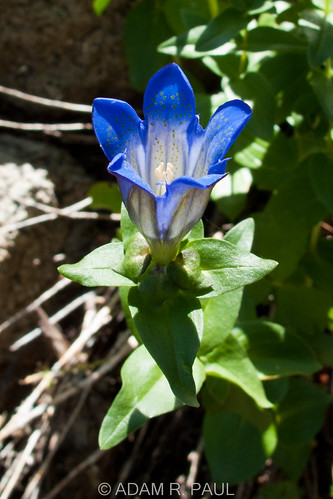
Explorer’s Gentian
A patch of bright blue by the trail caught my eye – Explorer’s Gentian, one of the prettier High Sierra wildflowers, and one that I do not see very often.

Pinedrops
The wildflower orgy continued, with some young stalks of Pinedrops …

Crimson Columbine
… and a patch of Crimson Columbine, another of my favorite wildflowers.

Sarah & Elica by a huge Incense Cedar(?)
More freezing blasts and light snow flurries kept us on our toes, and I felt bad for the several through hikers we’d encountered, all of whom were heading south.

Young Buck on the PCT
A pair of young bucks with new-looking antlers crossed the trail ahead of us, and just in front of a backpacker, then bounded off into the woods. I’d have had a fine photo if I had a telephoto with me, but the 150mm max extension on my G10 did alright, albeit with quite a bit of cropping.

Trail Junction
We eventually came to the junction with the Noble Canyon Trail, which is a little bit longer, but a much steadier grade. I hiked in on this trail years ago when I climbed Highland Peak and was grateful for its gentle descent on the way out, as opposed to the PCT’s climb out, but on this day hike it’s no matter, and the PCT is much more scenic.

Switchback
After crossing a couple more streamlets the trail switchbacked up toward Nobel Lake on rather moonscape’y terrain.

PCT, Raymond Peak on the horizon
Views opened up, which was a good thing, as now that we were climbing, we most definitely noticed the altitude!

Rubber Rabbit Brush
Nearby Raymond Peak (reachable by hiking north on the PCT from the same trailhead as we started at) dominated the skyline, with its craggy, broken jumble of a summit. Other than Rubber Rabbit Brush, Mountain Monardella, and a few others, few flowers favored this part of the trail.

Nobel Lake
After what seemed like entirely too long for a relatively short hike, we eventually reached Nobel Lake at 1:43, our turnaround point for this walk. Although a convenient turning-around point, Nobel Lake itself is not particularly attractive, being high and windswept, so we didn’t linger, and set back down the trail to find a nicer lunch spot.

“River” of Lupine
Nobel Lake’s outlet stream had a river of lupine, both purple and white, flowing downstream, making for a pretty view.

Alpine Garden
It’s always interesting on out-and-back hikes the different things one sees on the return trip. I had completely missed this lovely patch of Alpine Aster, Paintbrush, Miniature Lupine, and a yellow aster on the hike in.

Moonscape
The arid otherworldly part of the trail was much more pleasant going down than coming up, although icy blasts of wind made us a little nervous on the narrower and more exposed portions of the trail.

Gnarled Tree
We didn’t dally much going down, as we were peckish and eager to stop and eat our sandwiches. Near the bottom of the hill we stopped at one of the more substantial bubbling streams and ate and rested for a few.

Eroded Cliffs
From here it was unfortunately all uphill back to the trailhead, and we found the going slow, as I have on the other 3 occasions I’ve hiked this trail.

Tall Mountain Larkspur
Several of the creek crossings had very tall Larkspur blooming abundantly. I normally have a hard time identifying larkspur to a species, but this one proved easy enough – it’s Tall Mountain Larkspur, fittingly.

Dead Tree
The views continued to be very nice, and once we re-entered the forest the winds subsided and we weren’t so chilly.

Highland Peak (left) & Peak 10824′ (right)
Somewhat threatening-looking clouds were building, but the skies immediately above us remained mostly clear.

Lupine and Asters
As it had been nearly 5 hours since we’d hiked out, the lighting was different and at a more pleasing angle than at midday.

Sierra Primrose
Not far from the trailhead, I saw another flower that I’d somehow missed on our way to the lake – the not-at-all-subtle Sierra Primrose.
At 4:14 we arrived back at the car, whose thermometer said it was 46F out – no wonder we’d felt cold! This is one of those hikes that always seems nicer in retrospect. The scenery is wonderful, but the uphill hike back to the trailhead is a bit of a drag, and always seems to take much longer than it should. Still this is one of my favorite day hikes in the Carson-Iceberg Wilderness, and I’m sure I’ll do it many more times.
Hike stats: Distance: 7.6 miles
Elevation gain: ~1000 feet
Total time: 5h 9m
Moving time: 3h 40m
Wildflowers seen:
– Alpine Aster
– Anderson’s Thistle
– Aster sp. (several different species)
– California Corn Lily
– Crimson Columbine
– Explorer’s Gentian
– Lupine sp. (at least 5 species)
– Meadow Penstemon
– Mountain Monardella
– Mule’s Ear Sunflowers
– Paintbrush sp. (2 species)
– Pinedrops
– Ranger’s Buttons
– Red-heather
– Red Elderberry (in fruit)
– Rubber Rabbit Brush
– Scarlet Gilia
– Seep-spring Monkeyflower
– Self-heal
– Sierra Primrose
* Streamside Bluebells
– Striped(?) Coralroot (in seed)
– Sulphur Flower
– Tall Mountain Larkspur
– White-veined Wintergreen (in seed)
– Yampah
* = new-to-me flower
]]>
North Grove Trailhead

Elica meeting her first Giant Sequoia

Sequoia roots

Red bark

Mountain Dogwood

Fallen Sequoia

Walking through a Sequoia

Dogwoods starting to turn

Me-in-a-tree
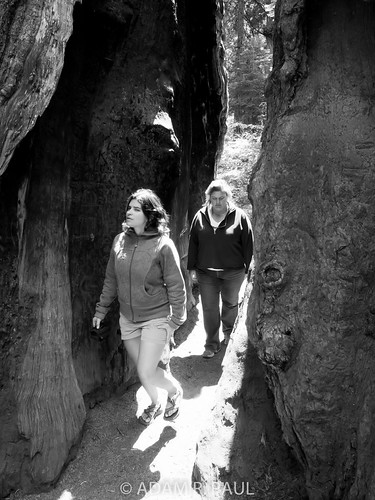
Elica and Sarah in a tree

Giant Sequoia
]]>
Abbott’s Lagoon

Dwarf Checkerbloom

Abbott’s Lagoon Trail

Windmill Pink

Abbott’s Lagoon

Beach Primrose

Yellow Sand-Verbena

California Manroot seedhead

Fuzzy caterpillar

Dairy Farm

Dragonflies mating

Abbott’s Lagoon

Pierce Point Trail

Anderson Thistle

Pierce Point
| Birds seen: | Wildflowers seen: |
|---|---|
| Location: Pt. Reyes – Outer Observation date: 5/2/10 Number of species: 17 Cinnamon Teal – Anas cyanoptera 1 This report was generated automatically by eBird v2(https://ebird.org) |
|

There has been quite a bit of trail work in San Francisco’s Presidio over the past couple of years, and we’d been wanting to see what the park folks have been up to, so when Sarah’s parents invited us to join them for a hike there, we happily joined them and Sarah’s sister.

We parked at the Presidio Habitat visitor’s center, which has a must-get map (the Presidio is very easy to get lost in), and some exhibits about the art installations and such, then hit the very obvious start of the walk.

The path veered through an overgrown field; a sign explained:
It’s for the birds…
(and the butterflies too)This area may look neglected. Quite the contrary. An area like this is valuable habitat for birds and butterflies to feed and breed. We will resume our maintenance regimen at the end of the bird nesting season in August. In the meantime, keep your eyes open for winged creatures.
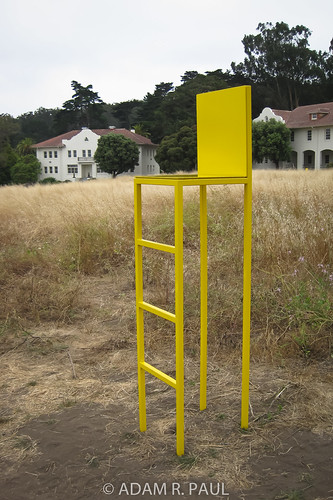
Several chairs, one quite tall, provided a place to sit and look for critters in the field, but it was quiet out, being midday, and nothing much was stirring.

We walked along the buildings next to the field, several of which still had signs attesting to the military history of the Presidio.

Like many of the old Army buildings, these were unoccupied, perhaps waiting for seismic retrofit or cleanup before being repurposed.
This area was part of Fort Winfield Scott, and a nearby sign explained:
The new quarters are among the most elaborate and modern in the United States, and when the landscape features are completed, Fort Winfield Scott will be the finest… [and] most beautifully located army post in the country.”
– The San Francisco Call, June 18, 1912

The architecture of the Presidio’s buildings is interesting, and not nearly as drab as most military buildings!

Another art/nature installation consisted of large pots strapped to tree trunks to provide bird homes. I don’t know if any birds had taken up residence, but it’s a cool idea, and it looks kind of neat having big blue pots dozens of feet off of the ground.
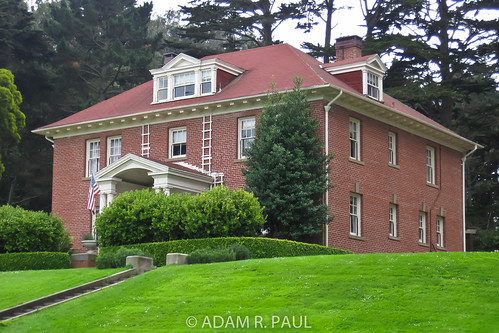
Fortunately Jim & Diane have done this walk before, as there is little chance I could re-create it on my own. We continued through another neighborhood on the street.

Unlike Fort Winfield Scott, this area’s houses are back to their original function, and several dozen lucky families live in these pretty quarters.

A narrow footpath through a completely ivy-choked bit of forest brought us to another road. I was fairly well lost as to where we were, and where we were going by now, but no matter.

An Army Jeep was parked alongside the road, now repurposed as a groundskeeping vehicle.

The next installation piece was a big geometric ball perched atop three sticks, intended to be a habitat for Western Screech Owls.

In parts, at least, the path was well-marked.

Plenty of people were enjoying the trails, both locals walking their dogs, as well as tourists.

A less-successful installation piece was a spiral of metal. According to a nearby sign, it is intended to reflect the flight path of a hawk as it swoops down on its prey. It just looked like leftover junk to us, though.
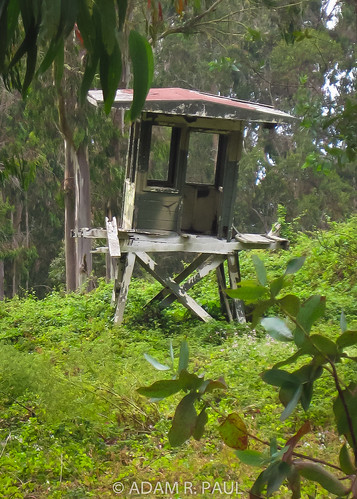
Although quite a bit of the Presidio has been restored, there are large portions that are crumbling, fenced off by barbed wire, probably due to toxicity concerns.
We walked on to San Francisco National Cemetery, which I had driven past many times, but never visited. The footpath leading to its back entrance had stone inscriptions with an excerpt of “the Young Dead Soldiers” by Archibald MccLeish:


The full poem, a touching tribute to the war dead, and an exhortation to the living, can be found here.

The San Francisco National Cemetery is the only remaining cemetery in San Francisco, the rest having been relocated south to Colma many years ago. It’s a beautiful place that I would very much like to return to alone to photograph.

The cemetery has outstanding views of not just the Golden Gate Bridge, but also Angel Island, Alcatraz, and much of the San Francisco Bay.
After cooling our heels here for a few minutes, we continued onwards.

Also in the “less successful” installation category was an imagined fox house constructed out of piled 4×4’s. It looked like a pile of lumber to me.
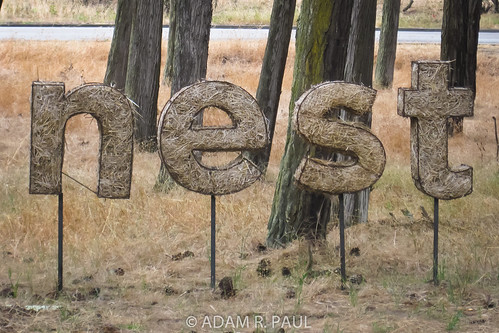
The last installation we visited was also one of the best. Straw-filled wire frames were staked into the ground, spelling out pithy sayings. The intent is for birds to enjoy these, and they certainly were, with dozens of Dark-eyed Junco and Chestnut-backed Chickadees flitting about.

The phrases were mostly pretty facile (“resolve conflict with song”, etcetera), and I preferred the words standalone, which is how I photographed them.

This was the last installation we visited, and we made our way under an overpass, through a nice community garden, and back to the car.

This was a great walk, and will hopefully motivate me to do more semi-urban hiking in the Presidio. There are plans for many more miles of trails, and the terrain and views are outstanding.
]]>


Give me these hills and the friends I love
I ask no other Heaven.
— Dad O’Rourke

Grand Collomia
The day after the 4th of July at the cabin, we decided to go for our annual wildflower walk at the Bradley Grove in nearby Calaveras Big Trees State Park. Unlike the two other grove hikes in the park, this one does not have any Giant Sequoias, but rather is a grove dedicated to a patron of the park, and is second-growth mixed pine and such.
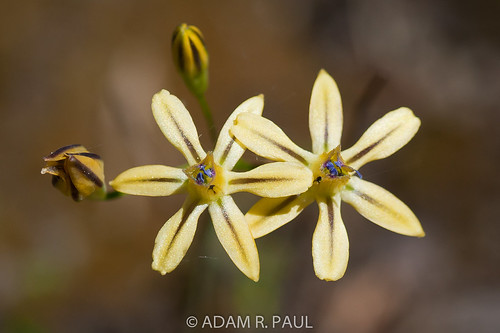
Mountain Pretty Face
Although it lacks pretty much any kind of grandeur or scenery, this short loop hike is easily in my top 5 wildflower hikes anywhere. Many species that are hard to see elsewhere are quite reliable here (Snow Plant, Phantom Orchid, & Coralroots to name just three).

Fringed Pinesap
On this walk, to my surprise, I saw a new-to-me flower, the mycotrophic Fringed Pinesap, a ghostly fungus-feeder.

Phantom Orchid
As we climbed, we were pleased to see a good number of Phantom Orchids, another mycotrope. This ghostly flower, once seen, is often easily seen again, but the first sighting can be difficult, as it blends in well in the sun-dappled forest duff.

Woods’ Rose
The wild roses were also blooming. Despite being quite considerably less fancy than their cultivated counterparts, their scent is no less sweet.

White-veined Wintergreen
The tell-tale leaves of Wild-Ginger (not actually a ginger) were plentiful, but we saw none of their odd little flowers. The similarly-leaved White-veined Wintergreen was blooming in a few patches, however.

Western Thimbleberry
As always in spring, Thimbleberry abounded in patches.

Queen’s Cup
Another common white flower nearly everywhere in Calaveras Big Trees in spring is Queen’s Cup AKA Bride’s Bonnet. This lily exhibits perfect three-symmetry, with three basal leaves, 6 petals, and 6 stamens.

Butterfly on Pussy Paws
We came to the meadow that marks the end of the slight uphill portion and saw fewer flowers there than usual. Flitting about the Pussy Paws, however, was a new-to-me butterfly, whose name is unknown to me. A nice fellow on Flickr’s ID Please group suggested it is one of the Parnassius swallowtails. Do you know what it is?

No idea what this one is!
A bit father on, another mystery. At first blush I thought it was another Fringed Pinesap, but looking now, I do not think it is. Perhaps Sugar Sticks? I really don’t know.

Mountain Pretty Face
There are usually good flowers along Beaver Creek, but not this time – little was in bloom of note, other than some not-yet-opened probable-Alpine Lilies.

Western Azalea
We crossed Beaver Creek, took a deep snort of the sweet Azaleas that grow here, and returned toward the car.

Torrey’s Monkeyflower
I’d missed them on the way in, but a little patch of the tiny magenta Torrey’s Monkeyflower bloomed in a sunny patch near the parking lot.
The Bradley Grove is always a wonderful walk in spring, and this time was no exception.
“In the flowering glade of the big trees, my peace I give unto you”
– John Muir
Distance: 2.5 miles
Time: 1hr 50min
Wildflowers seen:
– Bleeding Hearts
– Blue Nightshade
– Common Catchfly
– Crimson Columbine
– Deerbrush
* Fringed Pinesap
– Grand Collomia
– Hartweg’s Iris
– Mountain Misery
– Mountain Pretty Face
– Pacific Starflower
– Phantom Orchid
– Pine Violet
– Pinedrops
– Pussy Paws
– Queen’s Cup
– Royal Penstemon
– Snow Plant
– Striped Coralroot
– Torrey’s Monkeyflower
– Western Azalea
– Western Thimbleberry
– White-veined Wintergreen
– Wild-Ginger
– Woods’ Rose