


| CARVIEW |
Chess terms/vernacular
Castling is the maneuver wherein a king may swap places with either of it’s rooks provided neither has moved yet during the game. While it is certainly a versatile move, because it activates your rook and can often bring your rooks together so that they are then protecting each other, it’s most important purpose is to provide king safety. So much so that most professional players would recommend you castle within your first 7 moves, if not less… A king in the center is more vulnerable to attacks.
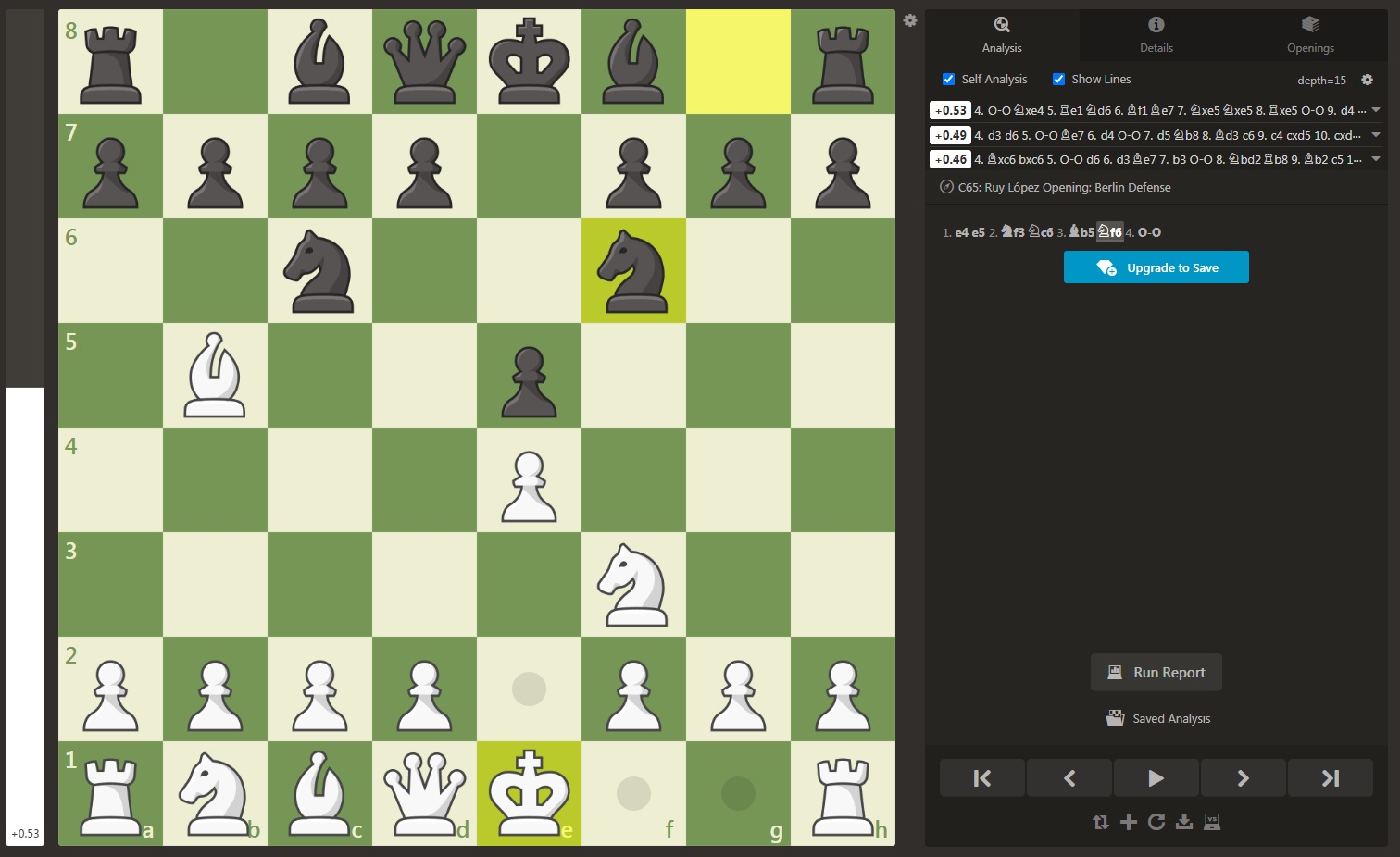
White to move. You can see by the movement dots that white is able to move their king to g1 (castle).
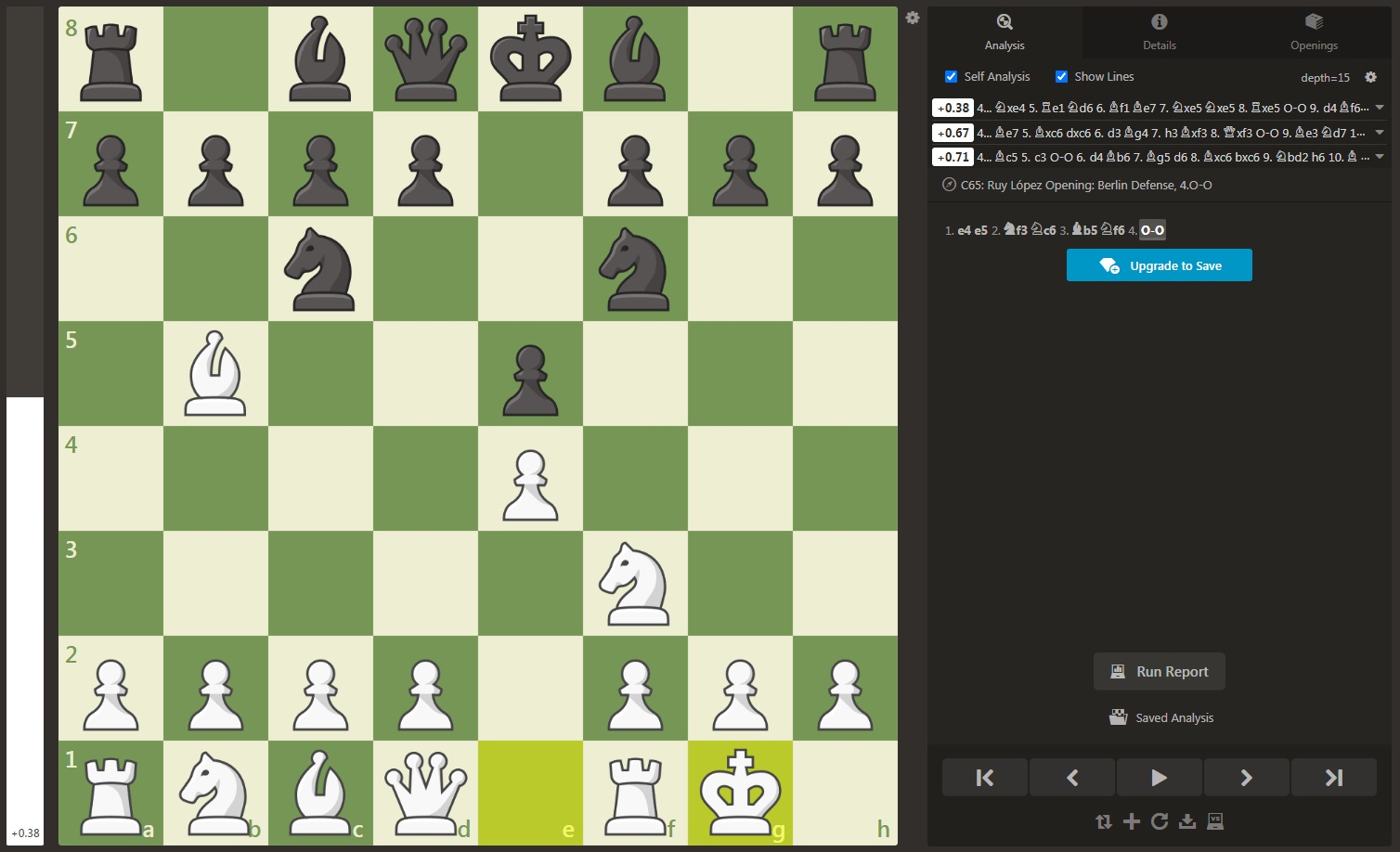
White castles.
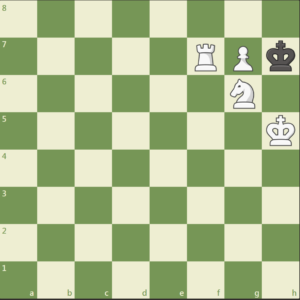
A fork is when one piece is attacking two pieces at once. This can be a devastating way to trade one of your minor pieces like a knight, for one of your opponents major pieces like a rook or their queen. This is often accomplished through targeting both the king and another piece so that your opponent, who is in check, is forced to move their king and leave the other piece to crumble. However, a fork can simply target two pieces and accomplish the same goal. If you are forking a rook and a queen, the opponent will likely be forced to save the queen and sacrifice the rook.
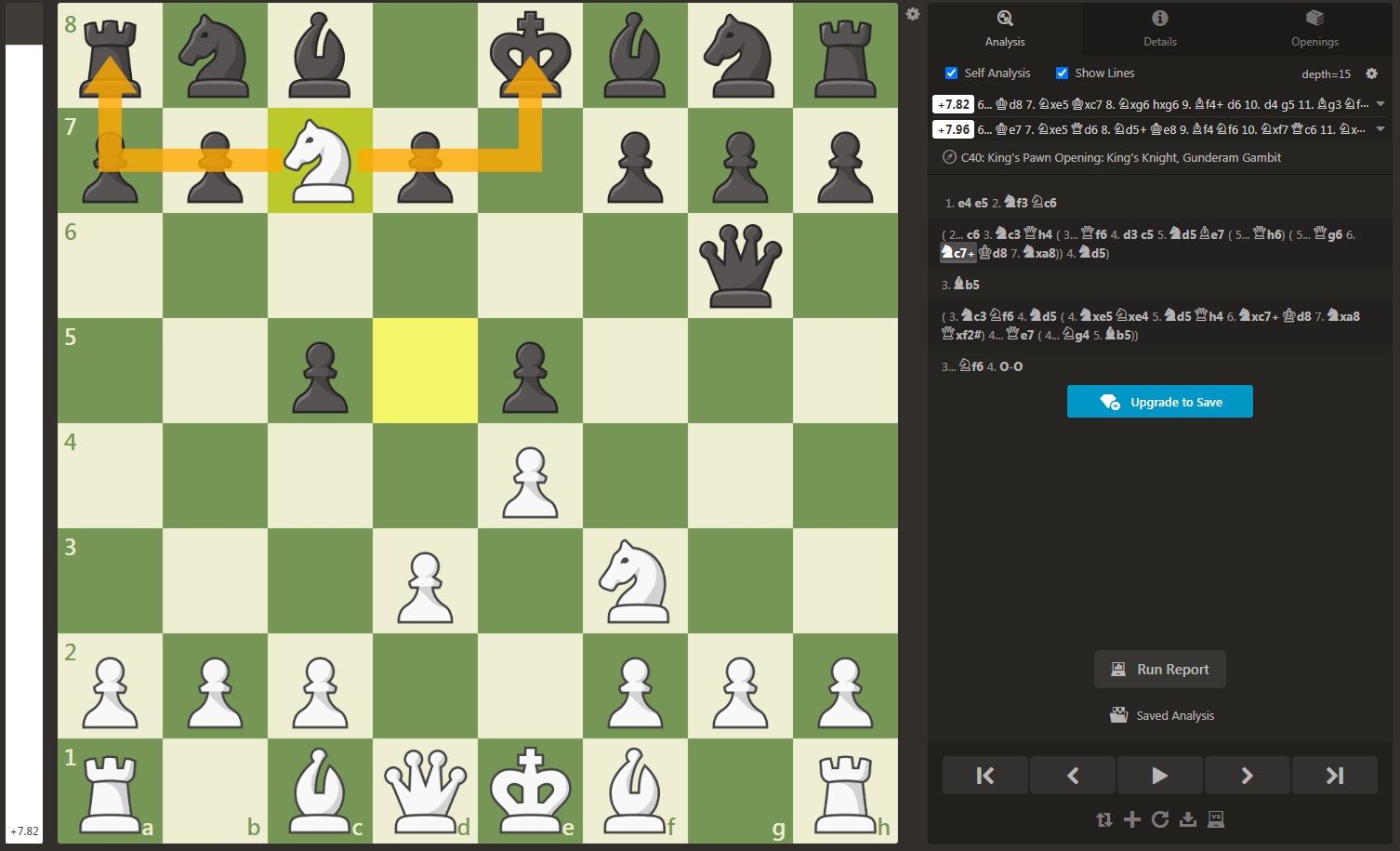
White’s knight forking the king and the rook.
A pin occurs when you are attacking a piece with a major piece behind it. Again, while this can be accomplished on any piece, it is most effective when pinning a piece to your opponents king because then that piece will be literally pinned and unable to move because they would be putting their own king in check. This means that piece cannot move until the piece behind it does, which can leave you in disastrous positions such as the one below where black’s best option is to trade their queen for a lowly bishop.
White pinning black’s queen to their king.
Skewers are similar to a pin, but the key difference is that the more valuable piece is the one being directly attacked. As we see below, black’s queen is being forced to flee, sacrificing the rook and leaving white in a winning position. An easy way I like to think of it is like a shish-kabob skewer.
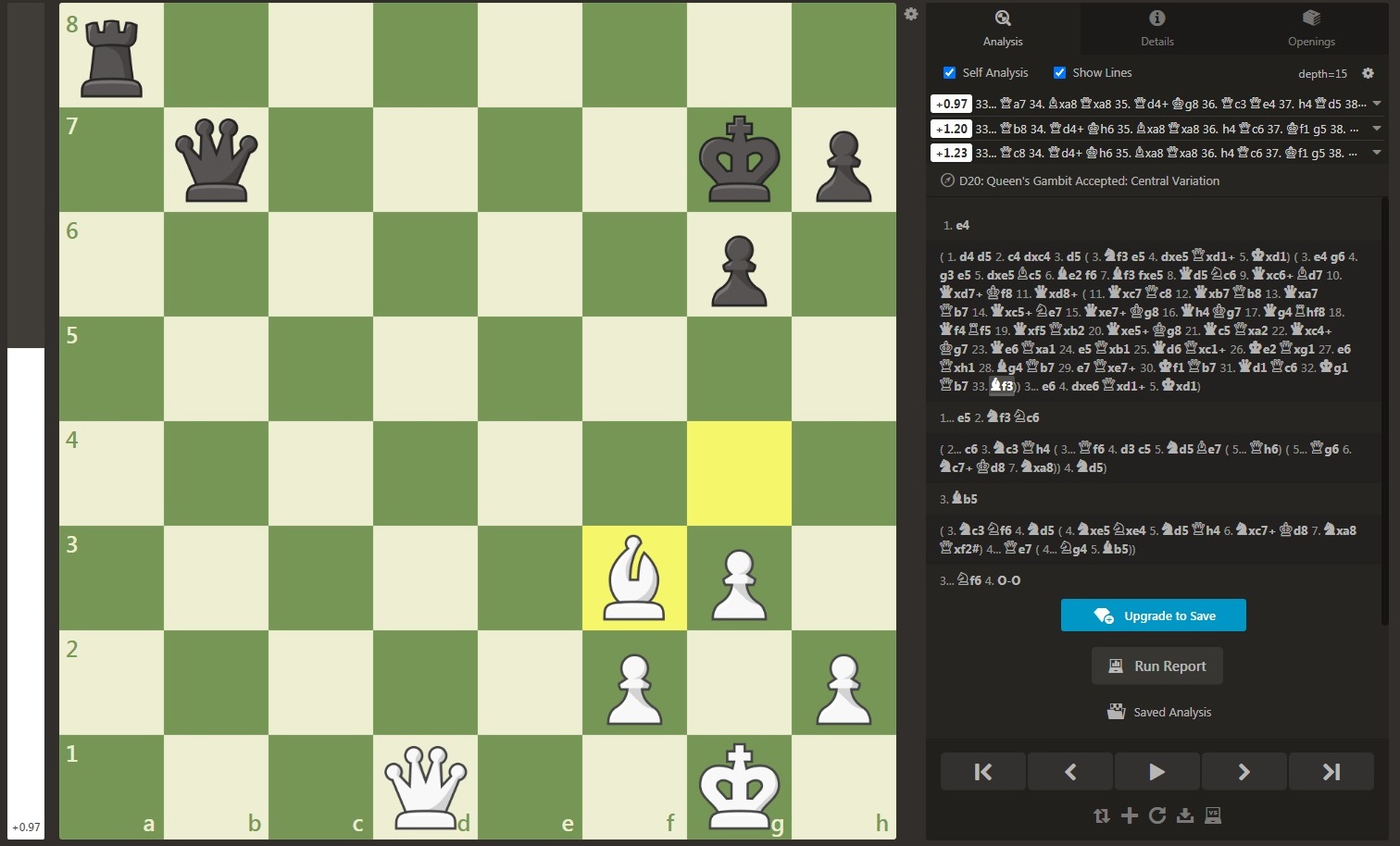
White’s bishop skewers black’s queen and rook.
Gambits are any move that risks a loss for another advantage, often synonymous with sacrifice. The gambit we will be looking at below is oddly titled The Queen’s Gambit; however, it is named after the queen’s pawn, not necessarily the queen itself. In this example white sacrifices their queen’s pawn in order to gain center control and hopeful improve their position as so much so that it is worth being a pawn down (also blacks pawn is in quite a susceptible position so you are typically able to take it back quite easily).
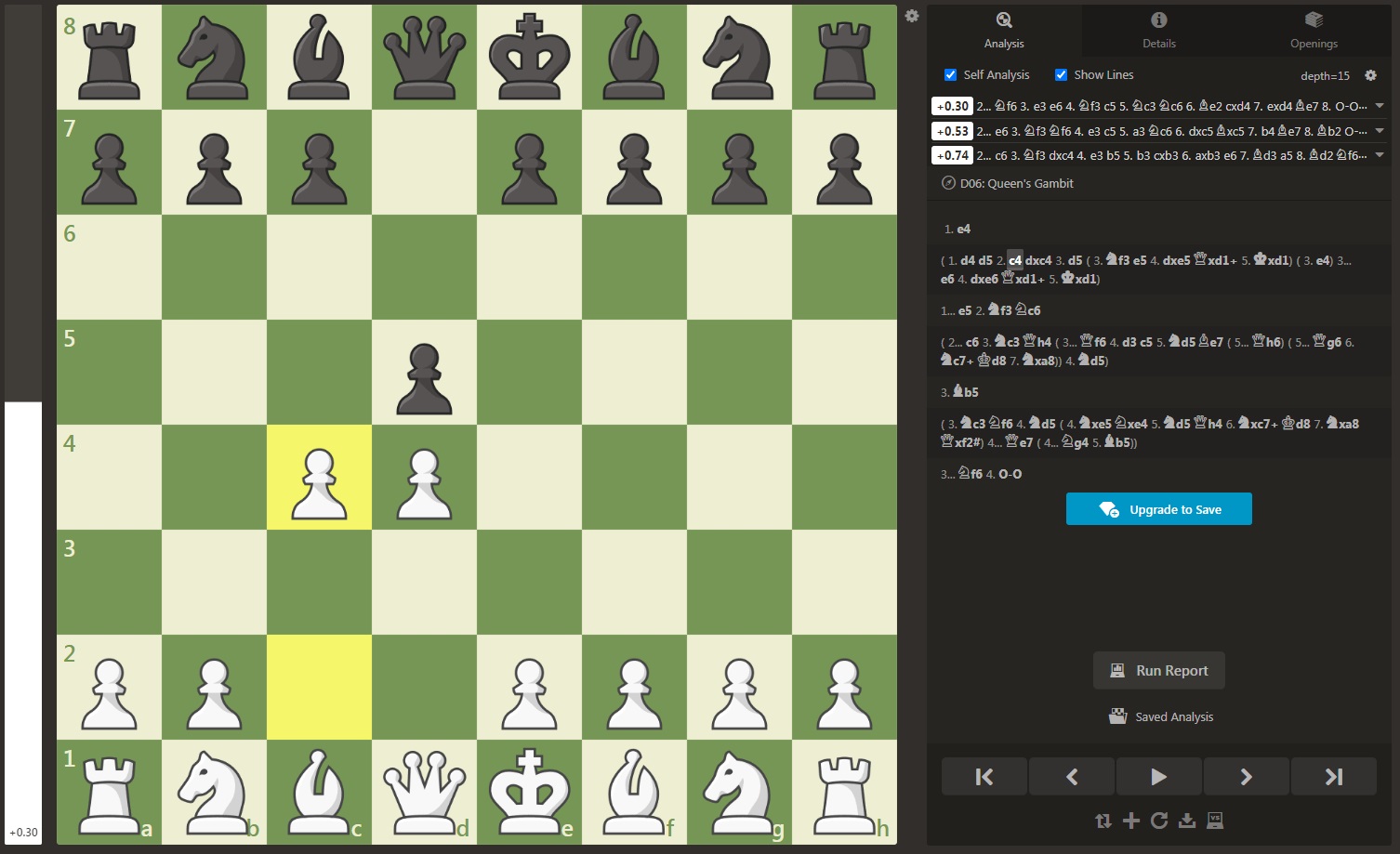
White offers the gambit.
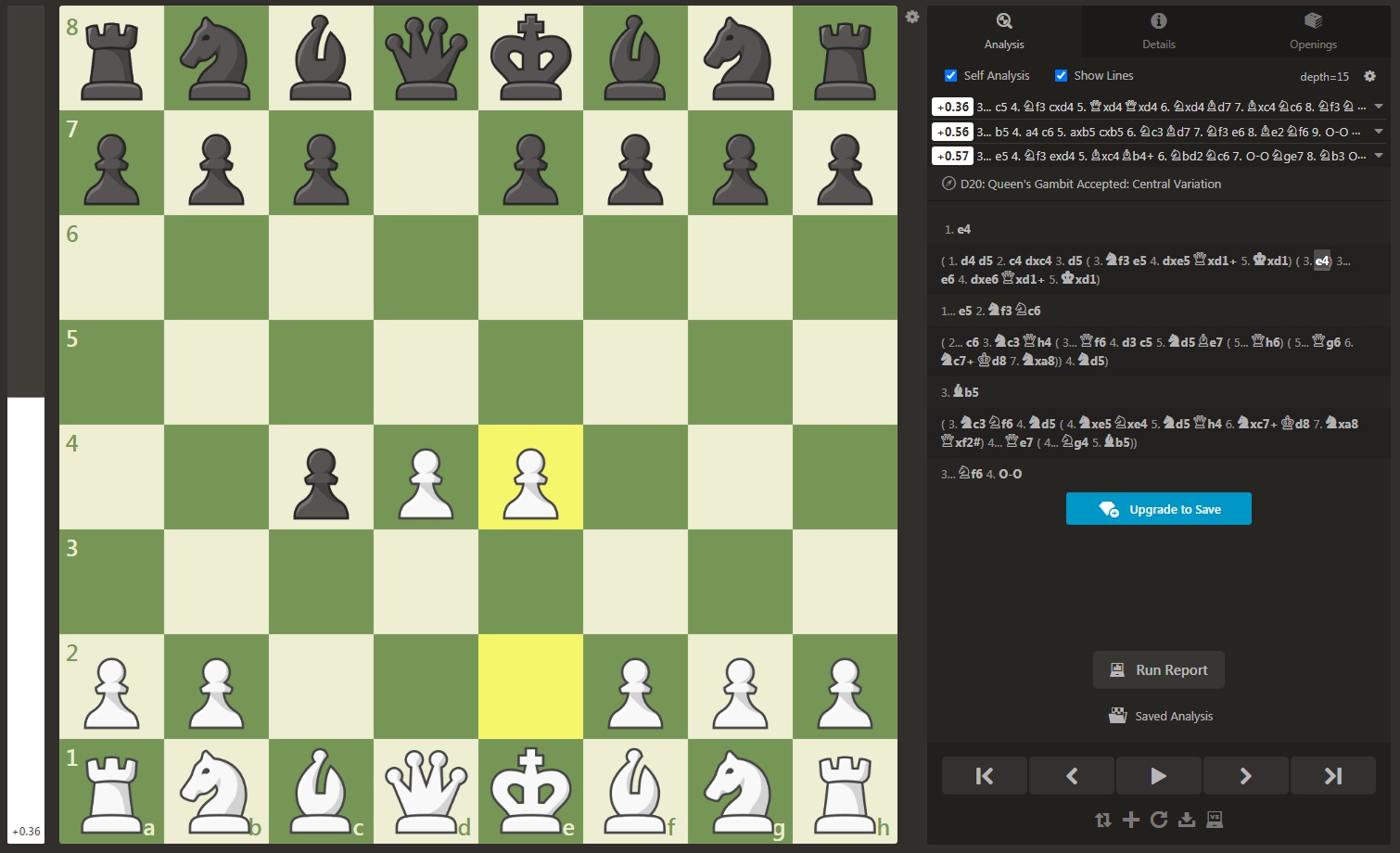
Black accepts and white pushes for center control.
En passant is the maneuver wherein a pawn can take another pawn that has already passed it given it used its two space move and lands adjacent to the attacking pawn. This rule was introduced to limit the quick attacks enabled by the two space pawn rule. This can easily catch a newer player off guard, and can be tricky to remember at any level.
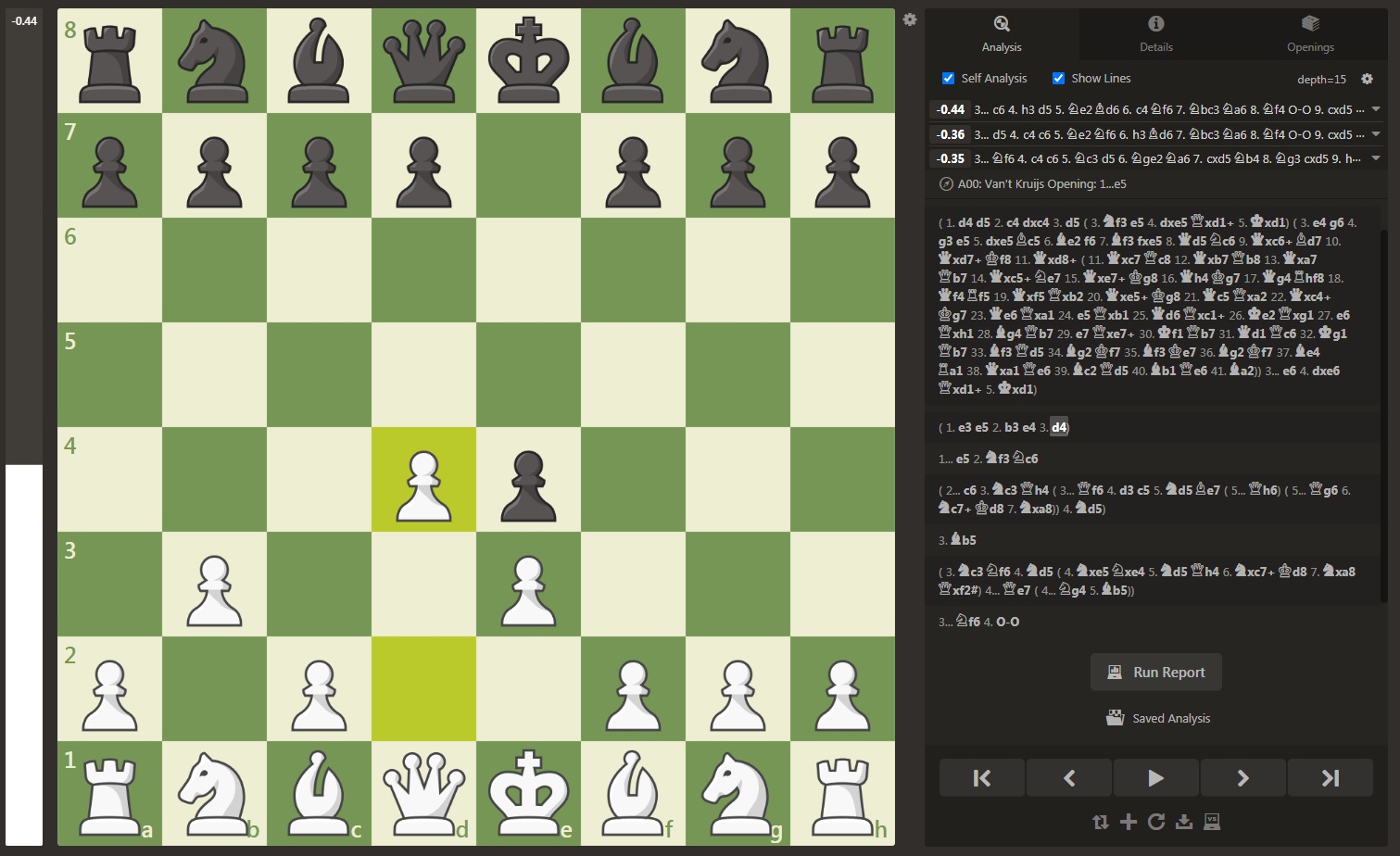
White pushes their pawn two spaces and lands adjacent to black’s pawn.
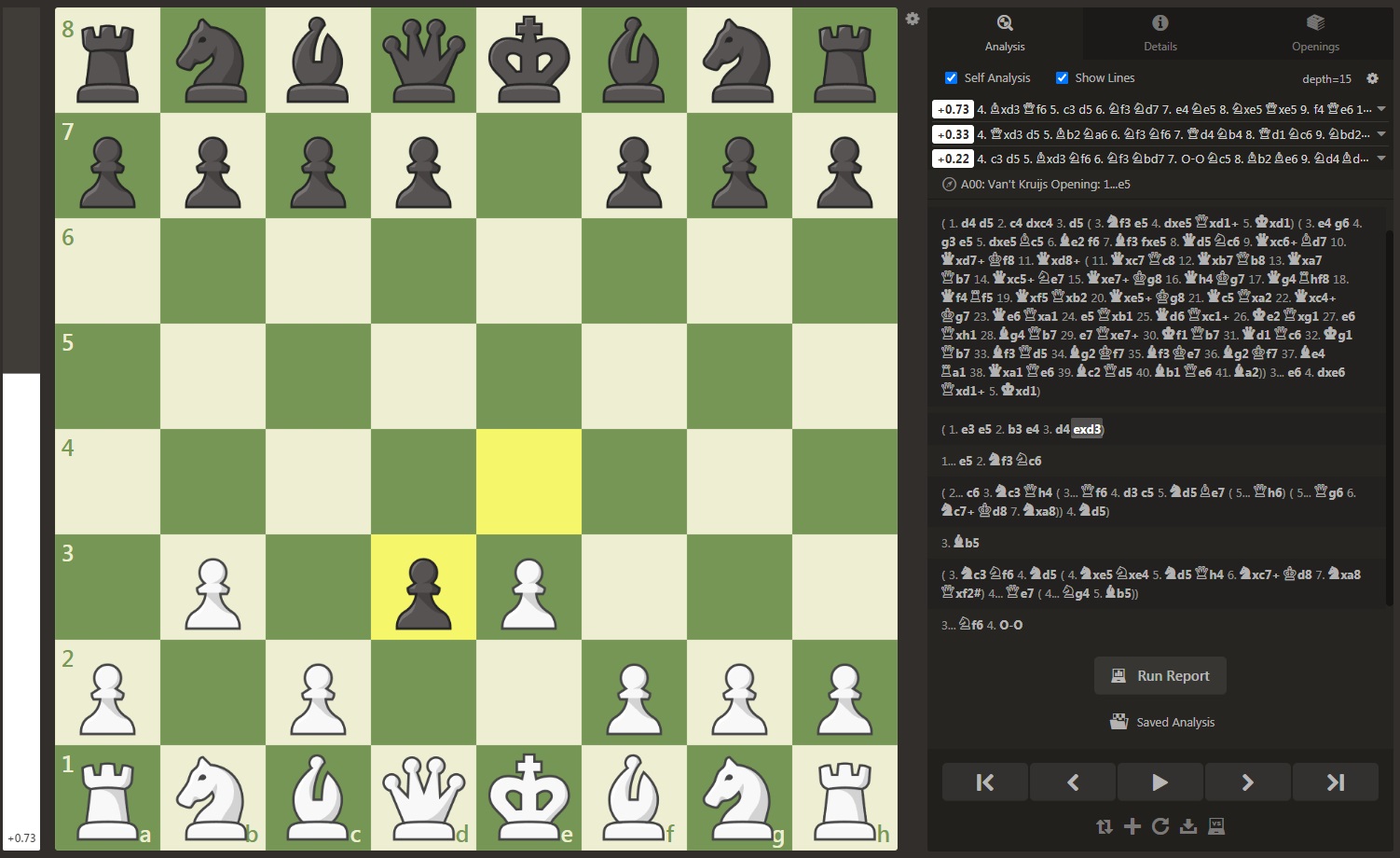
Black utilizes en passant.
In conclusion I will not stop playing chess anytime soon, I am currently looking at buying some new resources such as books, some memberships to online sources, as well as a physical board for myself that I may setup in my classroom someday! I would love to put out a daily puzzle for my students! I hope you were all able to learn something and maybe explore the world of chess on your own. Please enjoy my final check check check in (out) where I attempt to break a milestone in my chess career!
Check Check Check Out.
Bonus
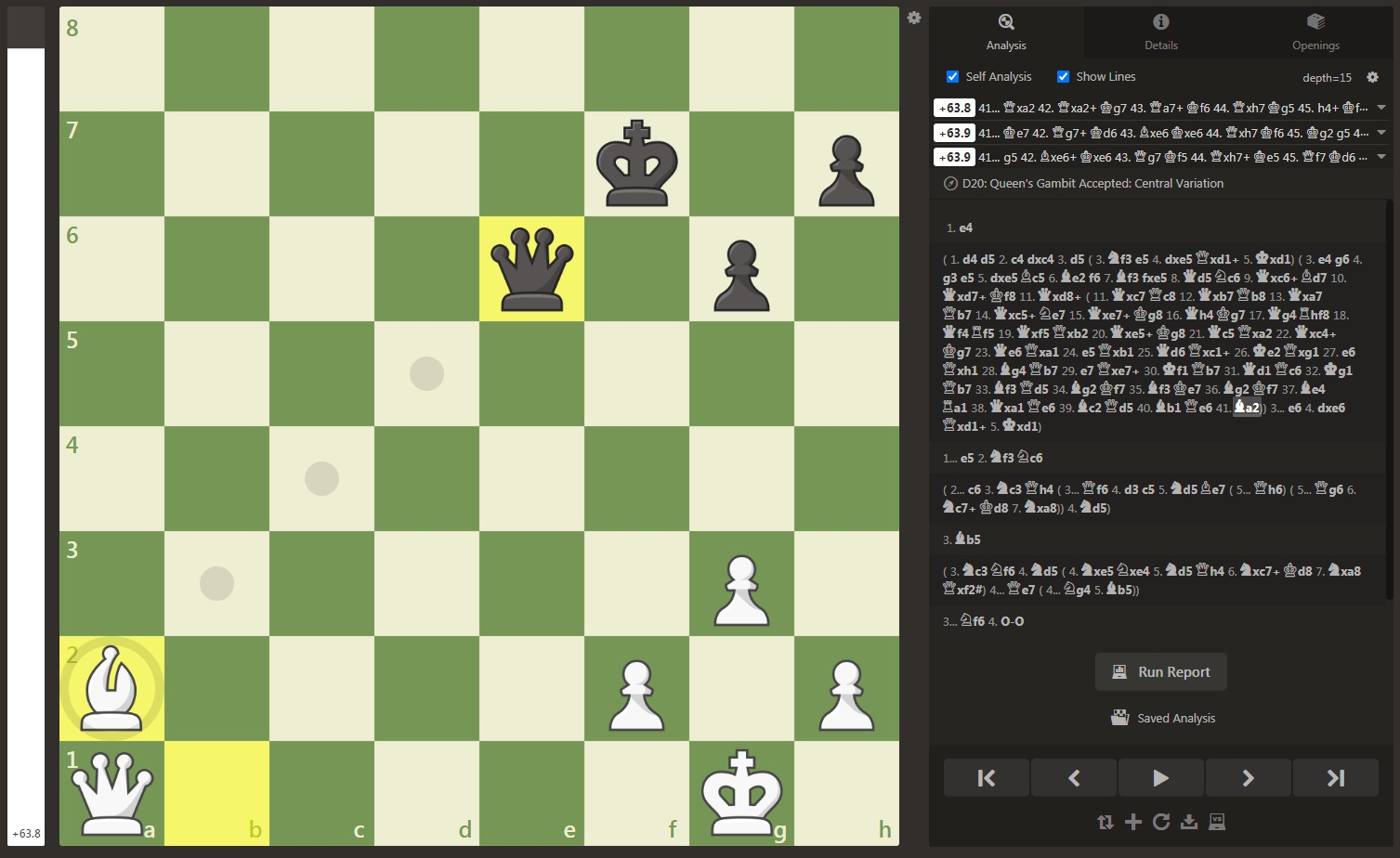
While getting to 1000 rating was my greatest accomplish during this project, my favorite moment would have to be finally pulled off this (terrible) gambit in a live game! The line involves sacrificing a pawn, another pawn, a knight, and trading a bishop for a pawn in order to isolate the opponents queen and put yourself in a winning position. I put terrible in brackets because an experienced player could defend it easily and be ahead in material, but at my level its a nice gimmick to have in my back pocket! You can play through the moves using the tools at the bottom right of the screen.
Keep your peace of mind and your mind for pieces!
Best, jordan
]]>Why is virtual learning important for our teaching and learning?
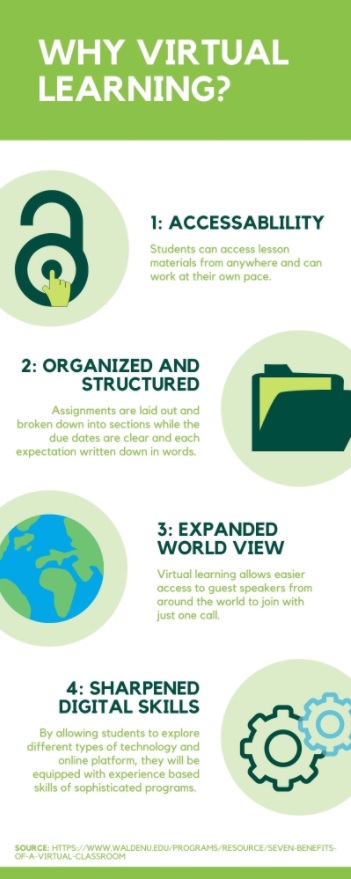 While covid-19 has been the driving force proliferating virtual learning, it has also brought to light for many that virtual learning can be an accessible alternative to in-person instruction. Virtual learning environments (VLE) provide organization and structure to students who may not have been able to maintain that structure themselves (try not to think about our binders in middle school full of hundreds of loose papers).
In observations at Esquimalt high a teacher showed how her google classroom showed every assignment for the entire course from the first day of class so students could work freely; however, while this provides freedom and agency to most students, some were deeply overwhelmed by the sheer volume of tasks in front of them. With the personalization tools, she is able to specifically change what each student sees when they enter the virtual classroom so they can focus on one unit at a time.
Virtual learning provides increased opportunity for exploration by opening up classrooms past geographical location as well as providing easier access to resources. Teachers, students, guest speakers, and anyone else who would improve learning in the classroom can join in at a moment’s notice!
Digital literacy and citizenship are increasingly important areas of education. Students will most likely be asked to use technology throughout their lives and careers so familiarizing them with some basic software (that we will get into below) and understanding of computers, files, uploading, downloading, etc… can only help them on their journeys.
In the past, the internet was often seen as a space purely for fun or wasting time but real learning happened in the classroom and inside books. Obviously, that is currently not the case. The issue arises when students only engage with digital spaces for fun in video games or social media because they may not learn proper digital citizenship in protecting themselves and respecting others online. VLE’s introduce students to the fact that technology and the internet can be used productively and that safe and respectful spaces can exist online.
What does social studies education rely on?

@kylejglenn
Jennifer Hitchcock, social studies teacher of fifteen years, states that the essence of social studies education “is human interaction and [the] innate need to know the story of us then, now, and what we can be.” ( Ferlazzo 2020) This is often accomplished through direct instruction, slideshows, and is ultimately focused around research and story-telling, all easily accomplished in an online setting. However, these are just the manifest needs of social studies education, the latent needs revolve around space, authenticity, and connection.
What does art education rely on?
@justynwarner
There are many types of classes in art education, such as Art Studio, Media Arts, Studio Arts 2D, Studio Arts 3D, and Graphic Arts. Communication, thinking, personal and social are the three core competencies art education focuses on, while its main idea is the artist’s intention and how well it is communicated through art. Although the main ideas are similar, the content and types of material changes according to the different types of classes. In general, art class’s basic needs are PowerPoint presentation for lecture, teacher’s demonstration on projects, and materials.
What is google classroom?
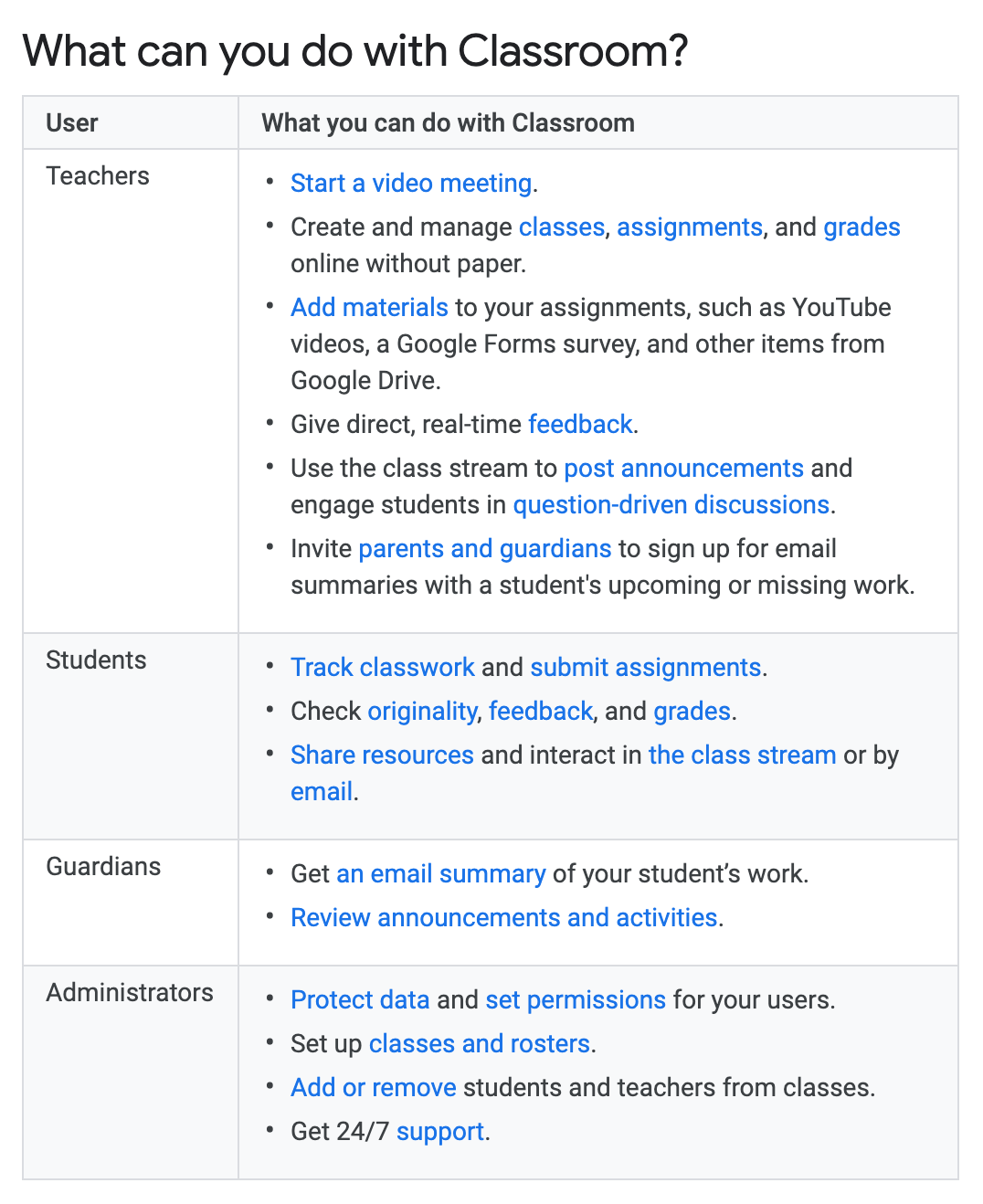
Google classroom is a virtual learning environment provided by (shockingly) Google. To put it in fancy shmancy “I want to sell you my product” lingo, google states it helps management, measurement, and collaboration. In more general terms, it allows a virtual space for teachers to hand out assignments, resources, announcements, and allows for feedback and student interaction all while incorporating each of google’s popular softwares such as Docs or Slides.
MANAGE
Simplify teaching and learning
- Add students directly, or share a code or link so the whole class can join
- Set up a class in minutes and create class work that appear on students’ calendars
- Easily communicate with guardians and automatically send them updates
MEASURE
Move students forward
- Store frequently used feedback in your comment bank for fast, personalized responses
- Grade consistently and transparently with rubrics integrated into student work
- Enable originality reports to let students scan their own work for potential plagiarism
COLLABORATE
Strengthen student connections
- Connect with your students from anywhere with a hybrid approach for in-class and virtual classes
- Communicate important announcements to the Stream page
- Enable face-to-face connections with students using Meet built into Classroom
General use of Google Classroom.
What types of extensions are there for google classroom?
Apps from Google
Presentation tool which is the Google version of PowerPoint presentation.
Google drawings can be used as a quick annotating tool for feedback with artworks or simple mouse-drawn drawings.
Introduction to Google Drawings for teachers
Instructional video for beginners
Forms can be used for quick and easy to make and assign assessment opportunities
Word processing is obviously ubiquitous in most educational environments. Docs provides an excellent setting for group work as multiple users can work on the same project at the same time. Not to get too meta but our group is currently employing this right now!
and more…
Google approved apps from other platforms:
These apps can be used within Google classroom and are assistive tools for student engagement and staying organized online.
and more…
How does google classroom accomplish the above reliances?
Social Studies
Google classroom provides all the necessary functions of a classroom through streamlined sharing, submissions, announcements, etc… but three tool stand out as being the most effective for social studies:
- Slides – Within slides teachers can create more literal virtual classrooms. For example, here is a virtual classroom jordan created for a hypothetical philosophy course in EDCI 773.
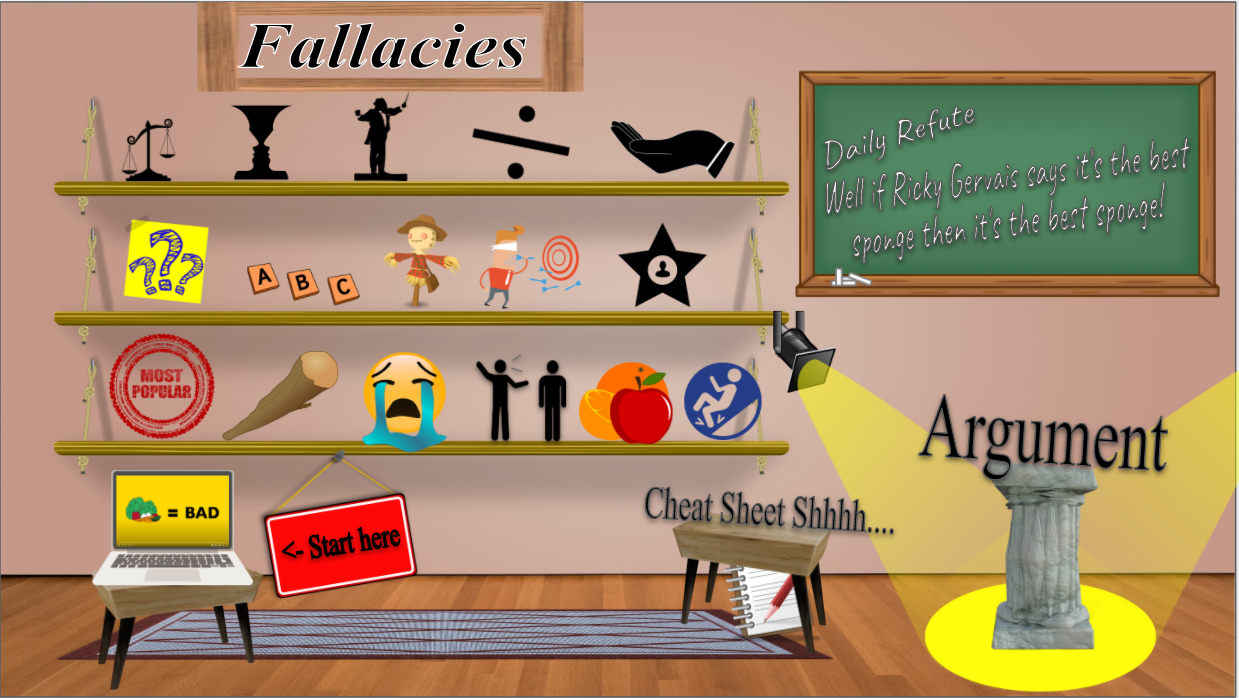
This can be particularly effective in engaging students by incorporating interactive and visual spaces alongside text-based assignments. However, virtual learning environments attempting to mimic traditional classroom settings seems to either imply that it is simply an attempt at facilitating a transition from one to the other, or more likely that virtual learning spaces lack the authenticity and connection provided by a classroom setting. As we noted in our introduction, authenticity and connection are vital to effective social studies education.
- Docs
Of course here we need to be conscious we are not trying to solve problems we don’t need to have in the first place. While Google docs does provide more collaborative features than other software, in-person group work obviously accomplishes the same thing. However, if it is necessary to work virtually, for example if you’re in the middle of a pandemic… then it is certainly a very welcome feature. Not to get too meta but we are currently working on this assignment together over google docs right! Group-work is paramount to effective social studies learning.
- Forms
Google forms provide a quick form of assessment a teacher could even make on the fly towards the end of class. This is especially important for social studies as the class conversation will often veer in unknown directions based on the social and interconnected nature of its content.
Art
Graphic Arts and Studio Arts are considered very different in terms of material, content, and objectives. Graphic art can be taught through online courses since it’s main platform for art is online and digital; however, studio arts involves physical materials which can only be taught in a real classroom for best outcome. Anyone could and can change their lesson plans if necessary, but the main objective and the purpose of art education may disappear in the process if the planner does not consider every possible approach to satisfy class content.
In general, art class’s basic needs are powerpoint presentation for lecture, teacher’s demonstration on projects, and materials.
- Powerpoint Presentation – PPT can be made outside of the classroom and added as a file or there are Google Slides for powerpoint alternatives.
- Demonstrations – Youtube can be used and embedded onto the lesson plan and direct feedback that can be provided through Google Meet.
- Materials – Graphic Arts class can work using other platforms for access into materials, but for the Studio Art class, materials need to be prepared by the student. The projects could either be uploaded as a photo or be presented through Google Meet.
Resource for teachers in art education using google classroom:
What’s missing?
Social Studies
While videos are excellent resources to pass on to our students, it is hard to translate a meaningful story on-line and know your students were affected by it; in other words, it’s hard to read the (google class) room. Social studies, at its core, is about the social. Translating emotional and contextual knowledge is difficult to do in an online space authentically. The subtlety and nuance afforded to a live discussion or lecture that can grow, shrink, and respond to the class’s needs simply cannot be replicated in an online space like google classroom.
Some critics have levied broader complaints at googles educational platforms, claiming that the amount of information and loyalty gleamed from students using their projects from a young age is not worth the functionality google classroom provides. In her nytimes article, Natasha Singer points out that while students’ educational accounts are not subject to ads, that they are strongly encouraged (by even their teachers and administration) to transition their educational account to a personal account when they graduate, which would then be subject to google’s ad programs. It would also be difficult for students to ever seek out alternatives to google and all its tools such as Gmail, docs, slides, etc… because those programs are all they know and all they were ever provided, or even forced, to use.
The reason this is important to social studies pedagogy is that we are responsible for speaking truth to power and modelling critical thinking. The least we can do is have this exact conversation with our class, but by not providing alternatives we are implicit in these issues and cannot except our students to seek out those alternatives.
In a reddit thread debating the quality of google classroom one educator (user boyerling3) noted how googles functionality is (unsurprisingly) purposefully limited to google products. The alternative they presented was schoology. Schoology functions similarly to google classroom without being tied to one specific brand of products, while also adding improved functionality of folders, curriculum creation, and assessment (both summative and formative quizzes). However, Schoology is still a paid and rather expensive product for a school to utilize. While it offers more for a social science classroom while avoiding some of the pitfalls of google classroom, it also encounters the same issues as any paid VLE and should be viewed critically.
Art
Google Drawings is definitely not my first choice of online tools I would use for drawing; however, Drawings can be a good engagement tool for student participation. Any extensions from google allows connections between the different apps, therefore it is easier to create work that is multimodal.
The essential part of an art class is all about the hands-on experiences. Graphic design may benefit from the virtual classroom, but with art studios being the biggest part of fine arts, it can only do so much when things are completely online. Students need to be able to experience the classroom environment while working on their projects, allowing inspirations to spark between classmates.
In Conclusion…
Google classroom meets almost every logistical expectation you could hope for in an academic classroom, but in most instances we found there were actually superior alternatives to googles individual tools such as google drawing or forms, but it is googles fluid functionality and cohesive structure putting all these tools in one place that really propels it forward versus trying to use and maintain several different accounts on several different platforms and expecting your students to do the same.
Google classroom is clearly catered towards the more standard academic courses such as social studies and fails to meet all the needs of electives such as art. While this seems innocuous, it actually proves quite limiting as it prevents would-be cross-curricular exploration into those elective spaces as a matter of fact (simply unable), not as a matter of choice.
Finally, while this review has focused on critiquing google classrooms efficacy, it is certainly a very helpful software and is extremely useful as an alternative, or better yet additional (hybrid learning) tool to incorporate in our pedagogy as long as we maintain a critical lens and acknowledge we are modelling digital citizenship.
Resources
Boyerling3. Teachers of reddit, how good is Google Classroom? Reddit. https://www.reddit.com/r/Teachers/comments/5vk5en/teachers_of_reddit_how_good_is_google_classroom/.
Cains, J. T. What Is Google Classroom? https://www.dummies.com/education/internet-basics/what-is-google-classroom/.
Ferlazzo, L. (2020, May 18). Adapting Social Studies for Remote Teaching. https://blogs.edweek.org/teachers/classroom_qa_with_larry_ferlazzo/2020/05/adapting_social_studies_for_remote_teaching.html
Google. Google. https://edu.google.com/.
Morris, A. B. K. A Guide To Google Drawings For Teachers, Students, And Bloggers. The Edublogger. https://www.theedublogger.com/google-drawings/.
Schoology. Learning Management System: LMS. Schoology. https://www.schoology.com/.
Walden University. (2020, October 29). Seven-benefits-of-a-virtual-classroom. Retrieved December 05, 2020, from https://www.waldenu.edu/programs/resource/seven-benefits-of-a-virtual-classroom
]]>The patriarchy of chess is not entirely unique. Chess is something only a few people can make a living off of, the best of the best, so the rest of the rest have to have some sort of privileged background in order to commit enough time to improve. The socioeconomic factors separating men and women translate directly to chess.
How many famous female chess players can you name? Before I wrote this blog I couldn’t name one.
This article by Sports Illustrated describes the downfall of Lisa Lane, the First U.S. Women’s Chess Champion. One of the only widely known women in chess, she was largely praised because “she played “like a man” and trash-talked opponents” – EMMA BACCELLIERI DEC 17, 2018.
The general argument that you will find constantly online is one about affirmative action. This thread asks this question, with a great response from user itty53. However, in less open forums, the discussion is not as productive. Here we see a similar question being asked, but instead of hearing the various obstacles women face in chess that prevent them from playing, the discussion is one of discontent and anger, often hung up on supposed biological differences. It does not help that iconic world renown chess players like Bobby Fischer or Garry Kasparov have both in their lives discounted women’s chess as lesser, or state that women are incapable of performing at the same level as men.
Here Is a wonderfully segmented interview with two-time U.S Women’s Chess Champion Jennifer Shahade, who also authored a foundational feminist chess book “Chess Bitch.” Shahade goes over the specifics of questions like “why do we need separate tournaments for women” and also talks about the frequent harassment and abuse women can face in the current culture.
Not only is the queen’s gambit my go-to opening, It is also a new featured Netflix series following a female chess player. The release of this series actually inspired me to write this blog, so it’s effects on influencing chess culture and breaking down patriarchal norms are literally tangible right here.
The intersectionality of discrimination is not lost on me, and I am aware this blog only briefly covered patriarchal impact on women, not race, non-conforming genders, or most other marginalized communities. These areas obviously deserve research as well, and given that all the men I have mentioned in this blog and the ones before were of European descent, it is also certainly an area of exclusion.
While this blog is supposed to emphasis our learning journey through a specific task or skill, these social issues surrounding our learning are integral to the tasks themselves. If you’ve watched my Check Check Check ins you’ve seen that I am constantly correcting myself from defaulting my opponents as “he.” Obviously this is due to some of my own ingrained bias, but also the bias I have been unconsciously learning through engaging with the chess community (one of my favorite creators actually always refers to the other player as “my opponent” so maybe I will try that out). On a larger scale, knowing what I know now I can work to undue the social disparity in any way I can, and call out inappropriate behavior that might be accepted otherwise.
Check Check Check in!
]]>Eric Rosen is an American International Master (ranked roughly 3379th in the world) who uploads a ton of content to YouTube and streams on Twitch. The reason I enjoy Eric’s content is that he is constantly learning. This player has tens of thousands of games under his belt, but in each video he exudes curiosity for his opponents moves, and takes each loss excitedly as a learning opportunity. Alongside this Eric has many in-depth videos explaining fun traps which make the game more exciting! My recommended video to exemplify the above is Eric using the Stafford Gambit (which I have not been able to pull off yet) against a Grand Master. The opponent (ficorrales) also displayed the same curiosity that brings me to Eric’s videos in the first place!
Agadmator (Antonio Radić) is a Croatian content creator. While not a Grand Master himself (ranked roughly 38493rd in the world so still amazing), Agadamator content is focused on analysis and the storys of typically higher ranked players. His channel reviews historic games of chess, explaining complex moves very plainly for the common folk like myself. Alongside the amazing analysis, Agadamator makes sure to describe the history of the match, the environent the players found themselves in, the town the tournament took place in, and any other details that really capture the entire story. Obviously video does not exist of these games, so he recreates them in an online setting, so having that backstory really helps imagine the psychological factors of the game. For my recommendation, his analyse of a match between Woody Harrelson (the actor) and Garry Kasparov (a world renowned chess master). This video highlights his storytelling alongside astute analysis.
I have only just started watching Daniel, an American Grand Master (ranked roughly 168th in the world!!!) and chess author, but his content has helped me improve immensely. Particularily because he has a series where he has been teaching moistcr1tikal (an albeit crass person, so if you’re not a fan of flippant vulgarity then steer clear), who is a beginner ranked similarly to myself, how to play chess! Obviously I could learn plenty just from watching Naroditsky play, but 90% of the things he’s had to teach or correct for Cr1tikal have been things I’ve needed to know or mistakes I’ve been making because were at the same point in our chess journeys. Basically I am treating these videos as personalized lessons from one of the best chess players in the world that I can sneak into and use for myself! My recommendation of course would be the first video of these lessons.
I have decided not to add a Check Check Check in this week as I have already overloaded the blog with video content, but I have improved slightly and am sitting at 950 rating! If I can break 1000 before the end of this project I will be simply ecstatic, and if I do not that’s ok too, as long as I’m learning!
Keep your peace of mind and mind for pieces, and I’ll see you next week!
]]>How can this be taken further?
Penn Libraries used 3D printing to contribute to set design. Combining computer science, theatre, and art all in one. As a future theatre teacher I find this super exciting, and am eager to do similar work with my classes. As a future social studies teacher, after seeing the archive of printable objects from museum artifacts, to dinosaur bones, I instantly began thinking of how printing those visuals for class could enhance a lesson. Further, what about an inquiry project based on students researching a specific artifact or object from a set time-period where it culminates with them printing and decorating that object? We could create a museum within the room displaying all of their pieces alongside the research they did surrounding their context/use.
Funnily enough, here is another wordpress blog delving deep into the potential of 3D printing for social studies classrooms!

@Tomspentys
Something I appreciate about 3D printing, or any graphic design for that matter, is that while some technological proficiency is needed, the process is largely one of creativity and art. I had never considered ever using, let alone designing anything for, a 3D printer before this workshop. They have had this air of mysticism and complexity that I thought would be too complicated for me to understand. I wonder how many other things I think of as too complex could be harnessed as easily? Maybe I need to fight harder against that complacency when I hear of new technology. Hopefully this new perspective will carry forward throughout my teaching career!
]]>
Historically speaking there have always been variants in chess, most agree that chess itself is a variant or evolution of Chaturanga. While now we have the internet and the rules of chess are easily learned and proliferated across the globe, it is endlessly fascinating to imagine the evolution of such a ubiquitous game occurring only though physical translation. The chess played in India would be different than the chess played in England, not only in style as we see with the London System or the Indian Defense, but in rule variations that hadn’t traveled that distance.
When changes were made, such as allowing pawns to move to squares on their first move, I can only imagine the amount of confusion and brawls that occurred when people will still spreading this rule change. As I see chess, I simply cannot imagine a rule ever changing, chess in my mind is this unequivocal standard of the board game genre. The last rule change in chess was in the 1800’s, and that was simply to make it illegal to promote a pawn to a piece of the opponents color! It is extremely niche, but in scenarios like the one pictured below, white can actually find checkmate by promoting the pawn to an opponents knight, preventing any escape for the black king. I think my perception of chess being unchangeable can also be attributed to the elite reputation it has developed for itself over time, yet that is certainly changing now with its proliferation, especially in public schools and its accessibility online.
Chess involving more than two players is also a huge area of interest. Here is an article pouring over all of the variants for only three player chess, and even that list is not exhaustive. For today’s check check check in we will be playing a game of “bughouse,” an absolutely off the rails variant of chess. The game will involve four players playing separate games of chess, the catch? When a player takes an opponents piece, they then give that piece to their teammate who can play it on any open square (except for placing a pawn on the back line) in lieu of moving a piece on any one of their turns. The game ends when either game is won. So if your teammate gets scholar’s mated well that’s just too bad for you. Chess.com has a variety of these variants which you can find here.
Game 1
Game 2
Keep your peace of mind and mind for pieces, see you next week!
]]>Some people see storytellers and “think it’s a theatrical, exaggerated show more akin to acting,” (Friday) and would be hard-pressed to see teachers in that role. Matthew James Friday‘s article Why storytelling in the classroom matters counters this stance saying that teachers are story-tellers, and story-tellers are teachers. Friday’s stance is quite literal, saying teachers should brush up on their folk tales and story analysis, whereas my attention during our edcamp was on the classroom and lesson as the story being told.
It’s cliche and cheesy all at the same time, but my background in improv has shown me how our lives and interactions can follow patterns; some patterns are more pleasing and exciting than others. In our classes we are already discussing lesson construction, when to have a “hook,” how to transition subjects, etc… I think fully embracing a “lesson as story” mindset can allow for more natural “hooks,” and engage the student by making them a part of the story, not just it’s recipient.
Role-play is a particularity good example of this in practice. Carleton College in Northfield shows examples of how role-play can be extremely helpful in teaching students entry-level geoscience. I myself took part in a very similar role-play last year at UVic. The professor had us split into groups and take on the roles of various tribes or organization in Africa who were attempting to resolve a land dispute. Each had different invested interests in various plans or outcomes, and we were to work amongst each other, making deals or alliances where possible to further our cause. I do think this specific role-play was problematic for a class of predominantly white settlers, as it had us take on the role of displaced indigenous peoples and try to compromise with colonial powers, but the structure of the lesson was wonderful. Further, role-play exercise could be done while still letting the students engage with their own priorities and ideas. This could be accomplished through the teacher taking on a role, but the students remaining themselves and acting in whatever way they see fit. I am mostly approaching this from a social-studies perspective, as this is one of my teachables and history is rife with important persons that the class could “converse” with.
Pushing this concept further , I think we as teachers can plan our lessons in such a way that provides opportunities for our students make decisions and engage without overtly presenting it as a story-telling exercise like role-playing. Our lessons have a beginning, middle, and an end. What can we learn from our favorite stories in terms of their structure that we can bring into our classroom? If we lecture too long is that basically a never ending paragraph? If we see unit’s as chapters, why not include some sort of cliffhanger from one to the next, segueing content?
All in all, this edcamp brought up a ton of useful dialogue, and I am excited to participate in the format again!

@californong
Student led learning, briefly summarized in the video above, retains the teacher as facilitator but puts the student in charge of directing their own learning. This is an extremely large undertaking, and faces many barriers in traditional educational institutions because it demands cross-curricular capacities and adaptability from the school. Jeff Hopkins stated that he is hoping his school is eventually put out of business as public schools are able to accomplish similar goals, but not all proponents of student led learning have the same intention.
Google is perhaps the leading force pushing for autonomous and digital learning resources, particularly their software google classroom. While I agree with Hopkins hopes that these practices can transition into the public realm, his school is still a private institution, and costs an immense sum to attend. Private organizations, especially tech giants like google, will always be beholden to profits, not people. While they may have the flexibility to adopt these practices quicker, they can serve to undermine the public school system and those within it who are working to make similar changes. This is not to say they are flawed pedagogically, but that their inaccessibility and intentions may be flawed. How can the private sector be held accountable in the same way public schools can? Many a charter school has closed midway through the semester sacrificing the education of the students because they are no longer viable.
That being said, the pedagogical ideas brought up were extremely interesting. I hope to integrate many of the concepts put forward into my own pedagogy, a helpful article for anyone else interested can be found here.
]]>

As a small side-note, in my last EdTech blog I talked about the benefits of open-source software’s focus on innovation over profit, and Stockfish’s mandate pushes that envelope to the extreme. The program is not only free to download, but also free to distribute and even SELL on its own or packaged in any software you create or bundle. The only caveat is that you must include, or cite, the source code.
To properly show exactly what this means, for this week’s check check check in I won’t be commentating my game in real time, but instead recording a reflection on the engines analysis of my game. Showing off both the statistical analysis of the engine, and the depth of it’s suggestions and utility for players to improve their gameplay.
]]>Chess puzzles are an excellent way to keep your mind for pieces active while not burning out playing game after game in a row. Chess puzzles are typically taken from actual games that have occurred at the professional level. They are typically awkward situations with interesting solutions.
First of all, you are given an objective. “White to Win” means you are playing as white, and that there is a sequence of moves that may or may not checkmate your opponent, but will at the very least put you in a winning position. “White to regain material” means you will not end up in a winning position, but you that you are currently behind and will lessen your deficit through a good trade or trap. “White to draw” is just as it says, finding a pattern of moves that will result in a tie.
Below is a H5P interactive video showing an example of a puzzle!
While I am a big fan of puzzles, I find that they are not very helpful for my actual matches of chess, which typically follow similar patterns since I am rehearsing the same openings over and over again. I could see puzzles becoming more useful in the future when I am expanding my arsenal of tricks and finding myself in more abstract positions, but for now please enjoy another Check Check Check in!
]]>While these two programs are sleek and user-friendly, OBS (Open Broadcast Studio) offers even more tools and in depth editing options while being a free and open source software. Obviously the flaw with this is that user-friendly options will provide higher consistency and accessibility for teachers everywhere, but as someone who is eager to explore the intricacies of the software I use, OBS is the clear choice.
This is not to say that Screencastify is a bad program, it is quick, convenient, and does what it says on the box; however, I see any opportunity for public entities to avoid reliance on private companies as a win, especially when those funds can go to either other programs or supporting the open source software. Using open source software such as OBS or Mattermost can also be used as a talking point in the classroom around community and the possibilities of collaboration.
Below is a screencastify recording of me showing of ANOTHER one of my favorite open source programs, WinDirStat.
]]>Where I can see this tool being extremely useful is in smaller groups. If 4-5 colleagues need to analyze a few articles or resources, Hypothesis could be invaluable in sharing thoughts and ideas asynchronously. It could even be good for dividing the readings and having each person annotate and summarize their respective sections and the others could read their summaries while skimming the article at large.
Hypothesis could also fill a niche, as I am sure it will in our course, of teachers providing assessment to online submissions such as blog posts or website creation. I can imagine a computers teacher loving this program as it would provide them with a quick and convenient method of delivering feedback, and provide the recipient with clear highlighting and direction as opposed to general feedback at the bottom of the page. This also entails that a class that explicitly does not use online resources will find no use for this program.
Something the article being annotated above puts forward is that technology does not implicitly help our pedagogy and learning outcomes. For Hypotheses I would agree. As mentioned above, factors such as class size and course content narrow the scope of Hypothesis tremendously; however, under the correct circumstances (and with enough enthusiasm from all group members) Hypotheses promises to be a very rewarding tool. I am excited to use it within our class, and maybe in some of our programs group assignments, to be able to fully evaluate the software and decide whether or not I will incorporate it into my own pedagogy and classroom in the future.
]]>The first half of this blog is a rant; a rant directed at this thing…

More specifically, when this thing ends up like this…

The timer is a necessary evil, one that I have appreciated when my opponent is stalling out a lost game on purpose, but one I detest when backed into a corner. I would estimate 15-20% of my lost games are not due to my opponent, but due to this ticking nuisance ticking me off. This may also be a symptom of being newer to the game, as it takes quite a lot of focus and attention for extended periods of time to figure out my next move, but even spectating masters you see the timer show its force.
In terms of game length, there are multiple options and categories available for play.
The game mode I have preferred is ten minute “rapid” which seems to be the standard in online chess communities. I enjoy rapid the most as it seems like almost enough time for me to fully think out my moves, which forces me to learn patterns and commit to lines I otherwise might not commit to if I had more time. Although blitz (5 minutes) and bullet (1 minute) have also challenged me in different ways, I often find I learn less from those games as I end up guessing a LOT. Maybe the next Check Check Check in will feature a different time category! Speaking of…
For this week’s blog I thought we would also do our first “Check Check Check in” which will be accompanying videos where I narrate my thought process while playing the game. The hope of this series of videos will be to see my knowledge and thought process expand over the course of this inquiry into chess. At least that is the hope!
Thanks for reading/watching, keep your piece of mind and your mind for pieces!
Best, jordan
]]>It would be impossible to calculate how much of my life has withered away hitting “print screen,” pasting my image into paint, cropping it, and finally copying it. If only there was a tool available to me, a lowly Windows 7 user with no built-in capture device, well it turns out there is!
TechSmith Capture answers prayers I never knew I could make, and the god of I.T. now shines down on me.
To celebrate this newfound boon, I will be providing a screen recording (ironically from OBS as I want to show you TechSmith Capture and it cannot capture itself) of me putting the program to good use!
]]>
The board of chess could likely be described by anyone, even those who have never played. It’s ubiquitous in it’s simplicity: Alternating (typically white and black) tiles creating a checkered pattern. It’s on this playing field that our pieces begin their journeys, but not all of their journeys are equal. Some are strong and decisive, charging head on into the enemy. Some are more calculated, attacking at unexpected angles. Some avoid straight paths altogether, favoring a more surprising advance. Some are some combination of the rest, but some, some are simple, and none are more simple than the humble pawn.
The Pawn

Pawn Movement

Eight strong at the start of the game, the pawn’s confidence is unrivaled. While typically the pawn is limited to moving one space at a time, it’s first move can be up to two spaces forward. The interesting thing that sets pawn’s apart from the other pieces, is that the pawn’s movements and attacks are separate. For every other piece, their movement and attack’s are synonymous, but for the pawn, they may only move forward UNLESS they are attacking, in which case they take a piece at a diagonal.

Pawn Attack
The Rook


Rook Movement
Ditching some of the complexity of the pawn in favor of brute force, we find ourselves observing the rook. Considered the second-most powerful piece, the rook can move horizontally or vertically and attack at any distance. This makes the rook not only a constant threat as its presence is sure to be known, but also a consistent defender as it can protect an entire row on its own.
The Knight

Knight Movement

@zury14benitez
This agile horse has been the most confusing and surprising piece for me to both use and encounter, and I can only assume that many new players will have the same experience. Typically it is most commonly described as moving in an “L” shape pattern. In first imagining it’s capabilities, that seems rather simple, but as you can see by the picture above, depending on the knight’s positioning it can have up to eight potential moves! Notably, the knight can also “go over” other pieces and attack positions your opponent may have felt were defended.
The Bishop

Bishop Movement

The bishop is the rook if you rotated its movements 45 degrees. Moving only at a diagonal, but again infinite in it’s potential distance for an attack. While slightly less revered than the rook as it can be dealt with far easier, it opens up potential sneaky attacks the the rook’s bumbling nature could never attempt.
The Queen & the King

@randyfath

King Movement
Finally we find our way to the Queen and the King. While the King is technically the most important piece in the game, as it is the sole factor deciding whether the game is won or lost, I put the queen first as it is far more powerful and can often decide the game itself. The other reason for grouping them together is that they share the same directional movement, that being ANY direction; however, the king may only move one tile, whereas the queen (essentially a combination of the rook and bishop) can move infinitely in any direction. Typically if the queen is lost (without a substantial trade such as the opponents queen) it will not be long before the king follows.

Queen Movement
Conclusion
So we know how the pieces move! Yay!
While each piece deserves hundreds of it’s own blog posts, this is certainly the first step, yet knowing how to throw a football and where to throw it are substantially different things. Now that we know the how, over the coming weeks I hope to get into the where and why of piece movement.
While these are all the fundamental movements of chess, look forward to learning a couple more movement options that are lesser known in the coming weeks: Castling, and en passant.
Keep your Piece of Mind and your Mind for Pieces and I will see you next week!
]]>I am excited. WordPress seems intuitive, the course content for EDCI 336 seems engaging, and maybe by starting a blog I will finally fill that everlasting need for attention, even if its just by the one or two folks who will offer it. If a third shows up I will classify my blog as viral, despite any naysayers who might challenge that label. One can only assume that only one has viewed their blog and they’re jealous of my fame.
I have chosen chess as the focus for my free inquiry, as I have just started learning to play, which is evident by how often I lose, but starting out at the bottom only means I will have tons of “material” to build up with. That was a chess pun, if you didn’t get it then I can wholeheartedly recommend this cool new blog all the kids are talking about that just (abcblog.)opened(.ca) up. I also just enjoy that “A Beginner’s Chess blog” can be shortened to ABCblog which is fitting as a teacher in training.

Me (HenryHolmvik) losing at chess circa September 15th 2020 (Colorized).
Jokes aside I am finding how fluid both creating and absorbing information in a blog format can be effective in learning. I cannot fathom the amount of time spent referring to the back of textbook to find a source, to then attempt to find said source online, or even in print! In this format I can easily implement links to sources while maintaining the a bite-sized approachability that might be lacking in other online academic sources. For example, chess has two players. While some people are skeptical I do believe Wikipedia on that one.
Excited to learn with all of you!
]]>- Do you want to be online vs. offline?
- Do you want to use your name (or part thereof) vs. a pseudonym (e.g., West Coast Teacher)?
- Do you want to have your blog public vs. private? (Note, you can set individual blog posts private or password protected or have an entire blog set to private)
- Have you considered whether you are posting within or outside of Canada? This blog on opened.ca is hosted within Canada. That said, any public blog posts can have its content aggregated/curated onto social networks outside of Canada.
First tasks you might explore with your new blog:
- Go into its admin panel found by adding /wp-admin at the end of your blog’s URL
- Add new category or tags to organize your blog posts – found under “Posts” (but do not remove the pre-existing “EdTech” category or sub-categories, Free Inquiry and EdTech Inquiry). We have also pre-loaded the Teacher Education competencies as categories should you wish to use them to document your learning. If you would like to add more course categories, please do so (e.g., add EDCI 306A with no space for Music Ed, etc.)
- See if your blog posts are appearing on the course website (you must have the course categories assigned to a post first and have provided your instructor with your blog URL)
- Add pages
- Embed images or set featured images and embed video in blog posts and pages (can be your own media or that found on the internet, but consider free or creative commons licensed works)
- Under Appearance,
- Select your preferred website theme and customize to your preferences (New title, etc.)
- Customize menus & navigation
- Use widgets to customize blog content and features
- Delete this starter post (or switch it to draft status if you want to keep for reference)
Do consider creating categories for each course that you take should you wish to document your learning (or from professional learning activities outside of formal courses). Keep note, however, that you may wish to use the course topic as the category as opposed to the course number as those outside of your program would not be familiar with the number (e.g., we use “EdTech” instead of “edci336).
Lastly, as always, be aware of the FIPPA as it relates to privacy and share only those names/images that you have consent to use or are otherwise public figures. When in doubt, ask us.
Please also review the resources from our course website for getting started with blogging:
- WordPress resources
- Using RSS feeds to read blog posts from your networks (e.g., Feedly)
- Privacy resources
- Copyright resources
- Finding images you can use